
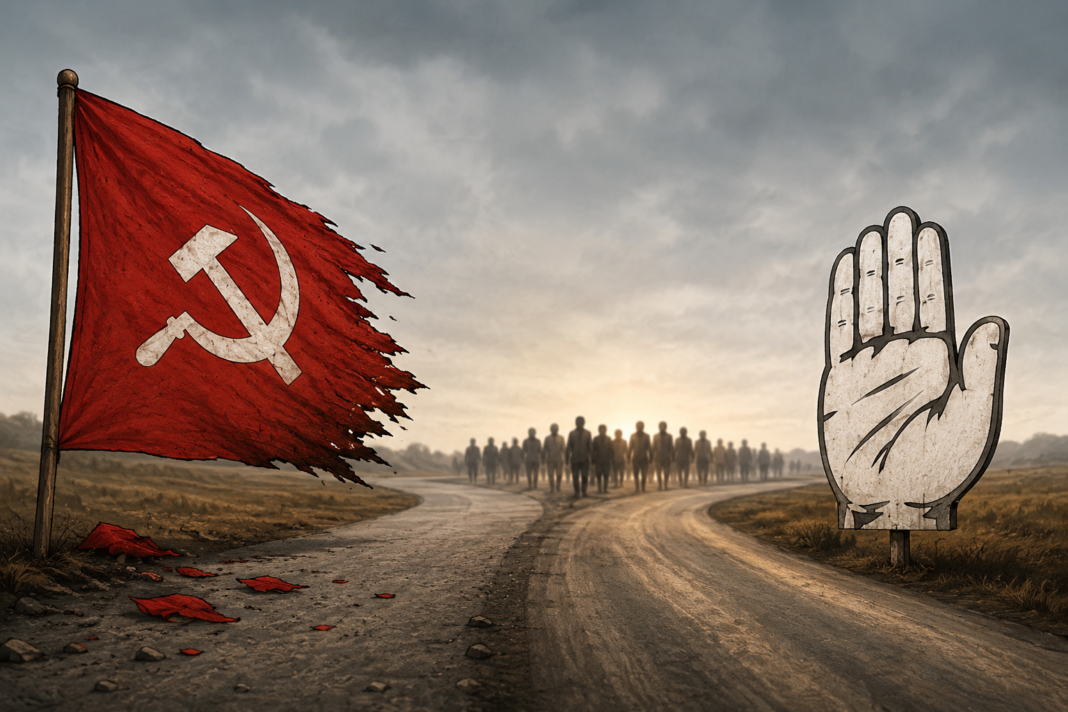
THE recent poll debacle has left the Left Front of Kerala visibly shaken. The party’s leadership, from top echelons to grassroots leaders, has yet to fully come to terms with the scale of their defeat in the recently concluded legislative election. While some strategists within the Left might have anticipated a setback, none could have predicted a loss of this magnitude. The electoral outcome has, in effect, buried the long-standing Left rule in Kerala — a political era that seemed almost unassailable until now.
There are, naturally, a multitude of reasons for the Communist Party’s catastrophic failure. Despite this, the party has refrained from issuing any official statement to address the debacle. Instead, the leadership appears to be struggling to identify the core causes behind their downfall. Various ideological rationalisations have been floated — the consolidation of communal forces, the inadequate promotion of the government’s welfare schemes, and the perceived alliance between the Congress-led United Democratic Front (UDF) and the Bharatiya Janata Party (BJP). Yet perhaps the most fundamental reason is the growing alienation between the people and the Communist Party itself.
The arrogance displayed by many party members has crossed a critical red line. Two consecutive electoral victories and a decade-long rule transformed even local party committees into entrenched power centres. These committees, originally meant to be democratic grassroots units, evolved into rigid control hubs wielding disproportionate influence over local affairs. This shift alienated ordinary citizens and grassroots activists alike, creating a widening gap between the party and the people it once represented. The UDF, for its part, effectively embraced the role of underdog and victim — a narrative that resonated deeply with the electorate’s desire for change.
Other factors also contributed to the Left’s collapse. Anti-incumbency sentiment, which naturally accumulates against any ruling party over a prolonged period, played a significant role. Sensitive issues such as the Sabarimala temple controversy further intensified the erosion of Left bastions, polarising voters and weakening support especially among conservative and devout communities.
The bottom line remains the widespread dissatisfaction of the electorate from both the party and its government. When political leaders begin to behave like “big brothers” — condescending, aloof, and disconnected from the grassroots — people naturally gravitate towards those who appear more approachable. In Kerala’s political culture, there is also a long-standing expectation for businessmen, traders, and public sector employees to contribute financially to political parties. This practice transcends party lines. Yet the manner in which funds are collected reveals a stark difference in approach. The UDF tends to solicit donations with a degree of respectful entreaty, while Left leaders have often resorted to what can only be described as coercive extraction — reflecting an arrogance that voters have now decisively rejected.
How party leaders treat their constituents is crucial. Rudeness and arrogance backed by political power ultimately lead to political rejection — and that is precisely what unfolded in Kerala, though many within the Left remain reluctant to acknowledge it openly.
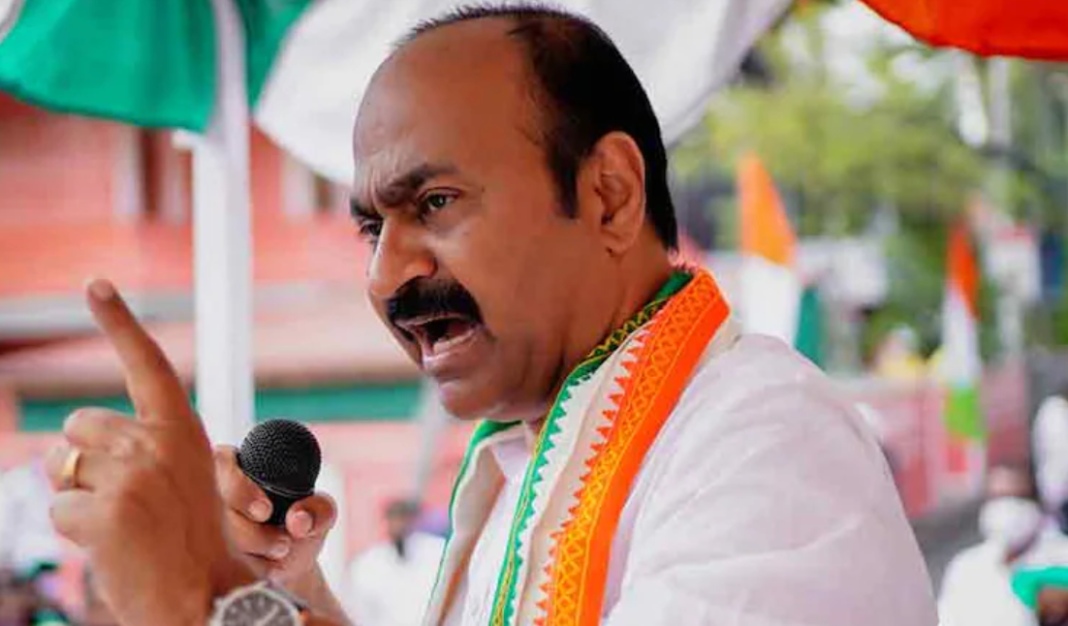
In the aftermath of their electoral rout, Left leaders have been quick to deflect blame, focusing particularly on Congress leader and Chief Minister V. D. Satheesan. The Left has accused him of exhibiting undue leniency towards the BJP. This blame game has spilled over into social media, where trolls and viral reels have singled out Satheesan for criticism. The CPM’s attempt to shift the entire blame onto the Congress — arguing that the UDF’s alleged proximity to the BJP contributed to the Left’s downfall — reflects a desperate effort to externalise responsibility. As the old adage goes: the winner needs no explanation; the loser is entitled to none. History teaches us that the defeated often scramble for excuses rather than confront the real reasons behind their failure.
In conclusion, the Left Front’s electoral defeat in Kerala stems from a complex interplay of political, social, and ideological factors — but at its core lies the alienation of people from a party that once commanded their unwavering loyalty. The arrogance of its leadership, the failure to adapt to changing political realities, and the erosion of grassroots connections have culminated in the dramatic end of an era.

O. Umarul Farooque is a Kerala-based journalist with a keen interest in politics, culture, and international affairs. His writing reflects a sharp, ground-level understanding of South Indian political dynamics and beyond.