
The three-word surname that has Kerala’s political class spinning, and what it quietly reveals about identity, theatre, and the anxieties of a brand-new government.
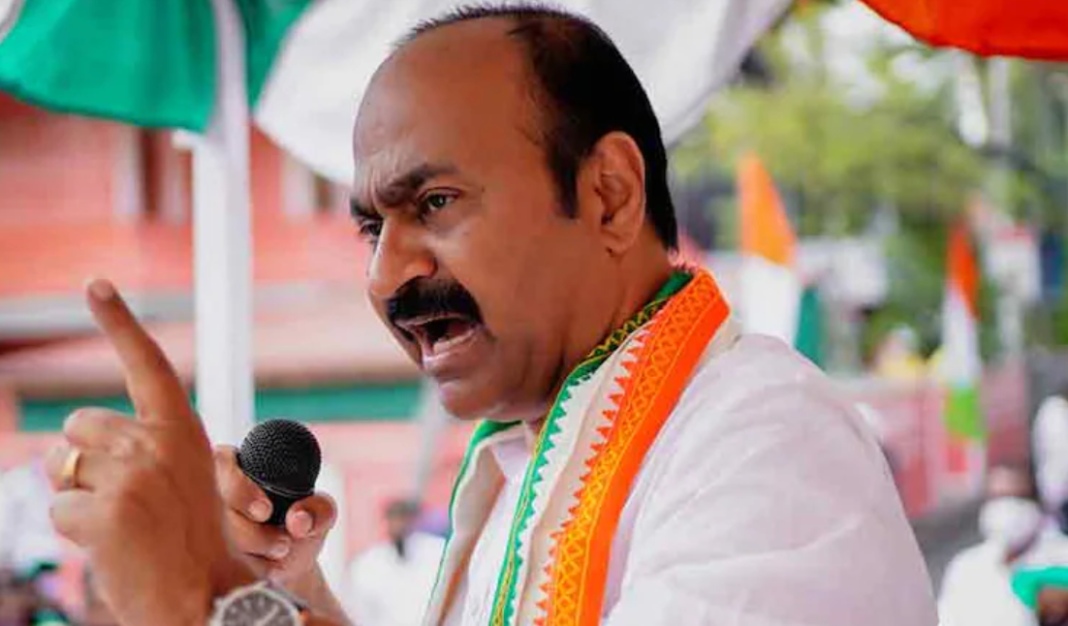
ON the morning of May 19, 2026, Kerala got a new Chief Minister. The UDF, led by the Indian National Congress, swept back to power after five years in opposition, and VD Satheesan stood before the Governor to take his oath. What followed was an unexpected political storm over three syllables: Menon.
Satheesan read out his full legal name, Vadasseri Damodara Menon Satheesan, and within hours, Kerala’s social media was ablaze. The contrast with his earlier public usage of “V D Satheesan” triggered heated debate.
He later repeated his full name during his MLA oath in the Assembly, turning what some saw as coincidence into intent.
“What is wrong if I mention my father’s name? Shouldn’t I remember him?”
— V D Satheesan
The Voices: What Everyone Is Saying
Within Congress: Internal debates emerged over caste surnames and political messaging. Some leaders viewed the moment as a signal toward upper-caste Hindu sentiment.
BJP & Sangh Parivar: The saffron camp interpreted the moment as either identity affirmation or political positioning within Congress strategy.
LDF / CPM: The Left criticized perceived inconsistency in Congress’s secular positioning.
Social Media: The discourse split sharply between identity politics, secular criticism, and dismissal of the issue as overblown symbolism.
The Historical Context of “Menon” in Kerala Politics
Kerala’s political history has never been devoid of caste identifiers. Chief Ministers have represented every major community.
E. M. S. Namboodiripad — CPI(M)
Pattom Thanu Pillai — PSP
R. Sankar — Congress
C. Achutha Menon — CPI
K. Karunakaran — Congress
E. K. Nayanar — CPI(M)
A. K. Antony — Congress
Oommen Chandy — Congress
V. S. Achuthanandan — CPI(M)
Pinarayi Vijayan — CPI(M)
C. Achutha Menon remains one of Kerala’s most respected leaders, associated with the Kerala Model of development and coalition governance.
The Pull of Identity vs Governance
Critics argue the surname signals caste assertion. Supporters see it as filial remembrance.
“What is wrong if I mention my father’s name? There was no scope to mention my mother’s name too. Otherwise, I would have done that as well.”
— Satheesan
Kerala’s political ecosystem, however, has always functioned within layers of community representation and identity balancing.
The Real Issues Behind the Noise
While the debate over “Menon” dominated discourse, Kerala faces pressing governance challenges:
Fiscal deficit management
Vizhinjam port development
Diaspora economic dependence
Rehabilitation in Wayanad
Youth unemployment among educated groups
None of these issues trended as widely as the surname debate.
The Larger Question
Even if the surname usage was intentional, the interpretation remains contested, caste signalling or personal remembrance. Kerala politics has long balanced identity, coalition arithmetic, and governance realities. Every party participates in this framework in different forms.
This episode reflects less about one individual and more about Kerala’s political culture — where symbolism often overshadows substance.
The real question is not what name was sworn, but what governance will follow.