
The football thrilled millions, but questions over politics, racism and FIFA’s neutrality lingered long after the final whistle.
WHEN the curtain fell on the world’s biggest football tournament, one of the biggest talking points was not just who lifted the trophy, but whether FIFA had done enough to protect its reputation for neutrality. Controversies are nothing new in international football, but this tournament saw politics and allegations of racism cast an unusually long shadow over the game.
The competition produced memorable matches, dramatic upsets and moments that reignited global passion for football. Yet concerns over refereeing decisions, political interference and FIFA’s handling of sensitive issues continued to dominate discussions even after the final whistle. Whatever one’s perspective, the tournament left FIFA facing renewed scrutiny over its ability to keep football above politics.
The controversies began even before the opening match. Iran’s participation attracted global attention following the escalation of hostilities involving the United States earlier this year. Questions were raised about whether the Iranian team would take part and whether its players could travel safely. US President Donald Trump made comments on Truth Social that were widely interpreted as questioning Iran’s security during the tournament. FIFA, however, repeatedly assured the Iranian delegation of its safety. As part of the tournament arrangements, Iran was based in Mexico, where the team received a warm welcome from local supporters despite the political tensions.
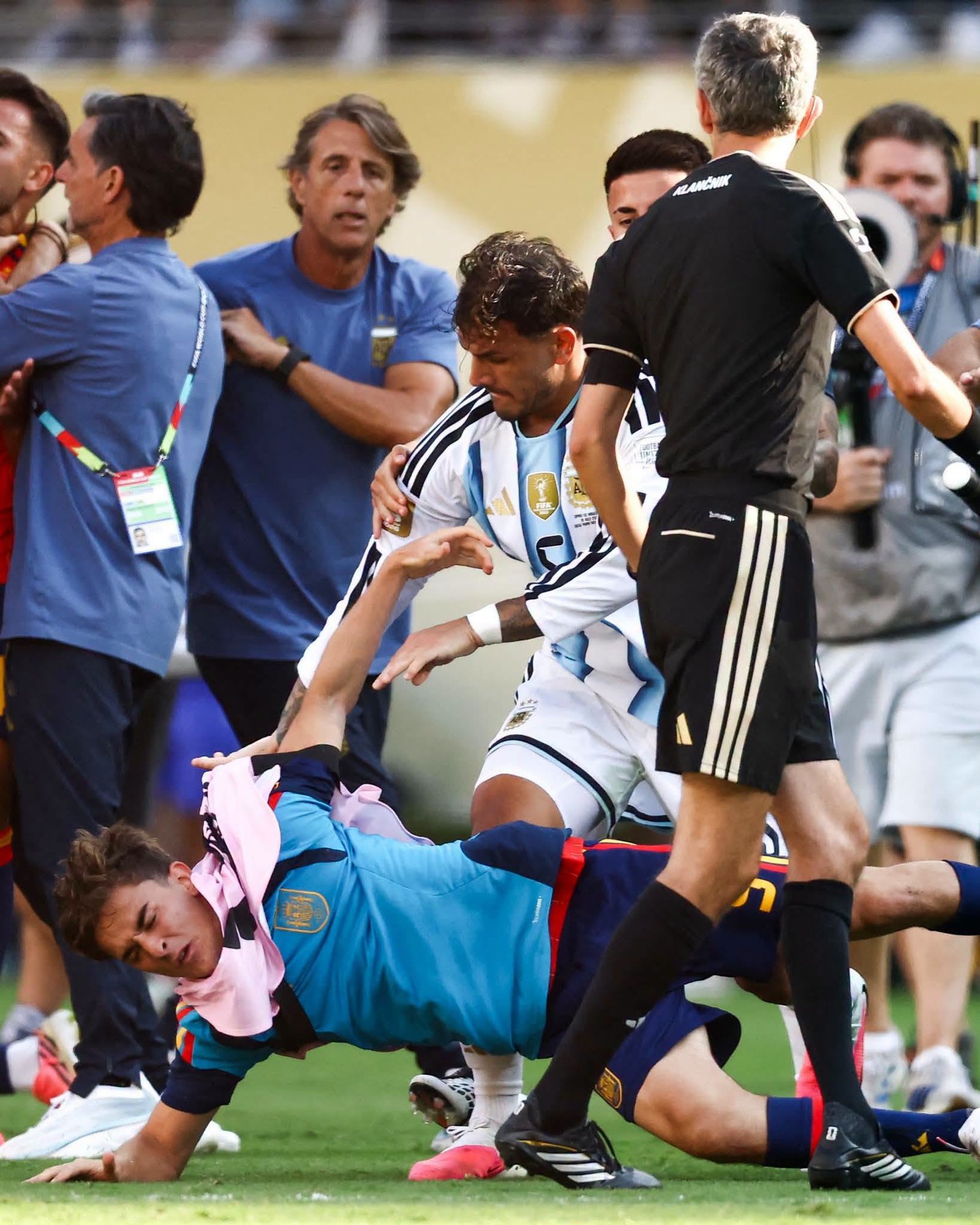
One of the most debated matches was Argentina’s meeting with Egypt. Egypt argued that star forward Mohamed Salah had been fouled inside the penalty area, but no penalty was awarded. Egyptian officials also questioned why VAR did not intervene and later lodged an official complaint over the refereeing. The referee continued to officiate later matches, further fuelling debate over consistency and impartiality. The political atmosphere extended into the stands, where some Argentine supporters displayed Israeli flags, adding another layer of controversy to an already tense fixture. Israeli Prime Minister Benjamin Netanyahu also publicly expressed support for Argentina during the tournament.
Politics resurfaced during Argentina’s match against England when Argentine players made a gesture supporting their country’s claim over the Falkland Islands, known in Argentina as the Islas Malvinas. The incident revived a decades-old territorial dispute between the two nations. Political messages are prohibited under FIFA regulations, and the gesture drew criticism from British political leaders, who argued that football should remain separate from international disputes.
Another controversy emerged during the United States’ match against Bosnia. American striker Folarin Balogun was sent off after receiving a red card. President Donald Trump later claimed that he had personally spoken to FIFA President Gianni Infantino regarding the incident. Balogun’s suspension was subsequently lifted, prompting critics to question whether political influence had played any role in the decision. FIFA has denied that sporting decisions are influenced by governments or political leaders.
Racism also resurfaced as a major concern. A Paraguayan senator triggered international condemnation after making a racist remark targeting French forward Kylian Mbappé following Paraguay’s defeat to France. Paraguay’s government quickly distanced itself from the comments, reaffirming that racism has no place in sport or society. Argentina also came under renewed scrutiny over previous allegations of racist behaviour involving some players and supporters, including criticism of remarks made by goalkeeper Emiliano Martínez about France and Mbappé after the 2022 FIFA World Cup final.
When nations compete on the football field, political tensions and historical disputes often find their way into the conversation. The Falkland Islands issue demonstrated how unresolved geopolitical conflicts can spill into sport. Likewise, the conflict in the Middle East was reflected in the stands, where supporters displayed both Palestinian and Israeli symbols, illustrating how global events continue to shape the atmosphere surrounding major sporting competitions.
Football has always had the power to unite people across borders, cultures and political differences. Protecting that spirit is FIFA’s greatest responsibility. The governing body must continue to ensure that political influence, racism and inconsistent decision-making do not overshadow the game itself. The tournament delivered unforgettable football, but it also served as a reminder that preserving the integrity of the sport is just as important as producing great champions.