
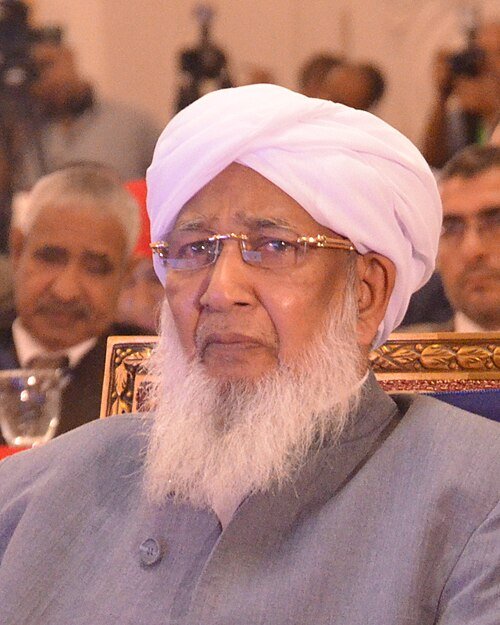
Women are like gold necklaces: they should be kept safely inside a box. They are not like grinding stones to be left out in the open, where they may rust.
That comparison, made by Kanthapuram A.P. Aboobacker Musliyar in Kochi at the end of August, triggered a familiar cycle of outrage, defence and counter-criticism. Within days, as always, the controversy began giving way to newer headlines.
But perhaps that is precisely where another question should begin.
If we are genuinely disturbed when a religious scholar suggests that women should remain within the confines of the home, can we look at our own institutions with the same scrutiny?
Consider Kerala’s Legislative Assembly.
Of its 140 members, only 11 are women, or 7.9 per cent. In 69 years of Kerala’s legislative history, the number of women in the Assembly has never crossed 10 per cent. The 21-member Satheesan ministry has just two women. Neither holds portfolios such as Finance, Home, Health or Revenue.
These figures are difficult to reconcile with Kerala’s reputation as a progressive and highly literate society.
The political record becomes even more revealing when we look at individual parties. Until 2026, neither the Indian Union Muslim League nor the Kerala Congress had elected a woman MLA. This year, Fathima Thahliya became the first woman MLA in the Muslim League’s 78-year history, winning from Perambra.
She is a young lawyer who wears the hijab.
Her story offers an important reminder: the real measure of oppression is not what a woman wears, but whether she is free to decide for herself.
That distinction matters because debates about women’s freedom in Kerala often become disproportionately focused on the clothing of Muslim women. A headscarf becomes a symbol to be examined and condemned, while the more consequential question of women’s access to power receives far less attention.
The national picture is hardly reassuring.
Among the five southern states, including Kerala, none has so far sent a Muslim woman to the Lok Sabha. Since Independence, only 18 Muslim women have been elected to India’s lower house, and in five Lok Sabhas not a single Muslim woman was elected.
These figures should not be used to single out one community. They should prompt us to examine political parties, candidate selection and, ultimately, our own voting behaviour.
The 2024 Lok Sabha election produced 73 women MPs, just 13.4 per cent of the 543-member House. Only about 800 women contested the election across the country, accounting for 9.6 per cent of all candidates.
Even that figure does not tell the whole story.
Where are women being asked to contest?
If winnable constituencies are routinely reserved for established male leaders while women are more often given seats where victory is unlikely, simply increasing the number of female candidates does not amount to sharing political power.
Kerala presents an especially striking contradiction.
At the grassroots level, women have been guaranteed 50 per cent reservation in panchayats, municipalities and corporations. Once reservation was mandated, Kerala was able to open half of its local political space to women.
But as power rises and decision-making moves into the hands of political parties, women begin to disappear.
The Women’s Reservation Act passed by Parliament in 2023, providing for one-third reservation for women in the Lok Sabha and state Assemblies, has yet to become operational. Its implementation is linked to a future census and delimitation exercise.
So the question is not simply whether Kerala has progressive laws. It is whether its political culture is willing to share power.
The same caution is necessary when the debate turns to the hijab.
Last year, when a Christian-managed school in Kochi reportedly denied entry to a student wearing a hijab, the episode exposed an uncomfortable double standard. A nun’s veil can be read as an expression of devotion, while a Muslim girl’s headscarf is readily interpreted as a symbol of oppression.
The real question is neither the colour nor the shape of the cloth.
It is whether the woman wearing it has the freedom to choose.
There is another uncomfortable truth Kerala should confront. Those who opposed women’s entry into Sabarimala, those who defend Kanthapuram’s remarks, and political parties that went decades without producing even a single woman legislator may appear to belong to very different ideological worlds. Yet when it comes to keeping women away from positions of power, the distance between them can become surprisingly small.
Hindu, Christian and Muslim communities; Left, Right and Centre; conservatives and progressives — Kerala has not been particularly successful in translating its rhetoric about women’s empowerment into equal political power.
And this is happening in a state where women slightly outnumber men.
So, yes, we should ask what Kanthapuram said.
But we should also ask what Kerala is doing.
Only then can we have a meaningful conversation about women’s freedom and rights.
Women’s empowerment cannot be measured by whether she appears on a stage, whether her head is covered or whether she wears a particular dress. It must also be measured by whether she has a chair at the table where decisions are made.
Count those chairs in Kerala’s political institutions, and the uncomfortable conclusion is difficult to avoid.
The question before Kerala is not merely what a religious scholar said about women.
It is what Kerala itself has done — and continues to do — with women.
If we are genuinely concerned about the freedom of Muslim women, that concern must extend equally to Hindu and Christian women. Otherwise, what is presented as a defence of women’s freedom risks becoming something narrower: a critique aimed primarily at one community.
Women’s freedom deserves better than that.