
MUMBAI, India, September 15, 2026: For several hours, Parag Shah was no longer surrounded by security personnel, expensive cars or the trappings of political office.
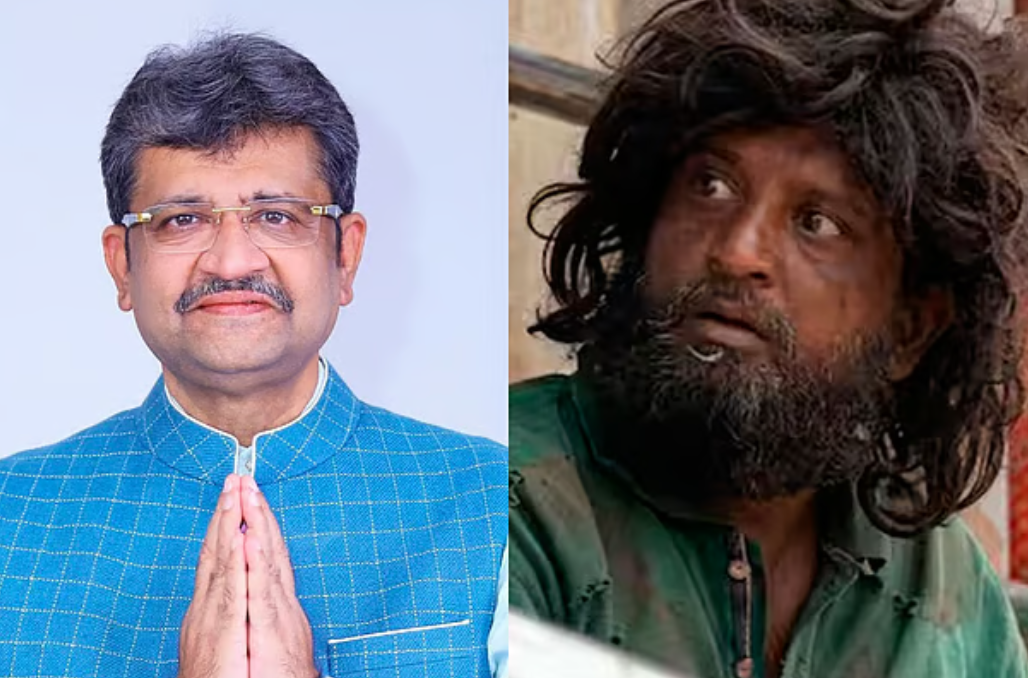
Instead, the Mumbai politician sat by the roadside in Ghatkopar, dressed as a beggar and asking strangers for help.
The contrast was striking. Shah, a BJP legislator from Ghatkopar East and one of Maharashtra’s wealthiest politicians, declared assets of more than Rs3,383 crore in his affidavit for the 2024 Maharashtra Assembly election.
His unusual exercise was carried out during the Jain religious period of Paryushan on the advice of spiritual leader Namramuni. Shah left behind his security arrangements, vehicles and expensive belongings, used makeup to conceal his identity and spent hours moving around the streets without the privileges normally associated with his position.
The exercise was intended as an encounter with a different side of life, rather than a political event.
A meal from a stranger
Among the moments that stayed with Shah was an encounter with a food vendor.
According to reports, someone gave him Rs20 and told him to eat. At a nearby samosa stall, the vendor gave him food without charging him.
For Shah, the experience offered a lesson about how people respond when they have no idea about another person’s wealth, profession or social standing.
He later reflected on the difference between the respect attached to his public position and the anonymity he experienced on the street.
“Someone gave me Rs20 saying, ‘Go baba, eat food’,” Shah said while describing the experience.
Wealth disappears with the disguise
The episode became widely discussed after videos of Shah in disguise circulated online.
People around him largely appeared unaware that the man asking for help was their local legislator. After removing his disguise, Shah reportedly returned to some of the same places, giving him an opportunity to see the difference between being recognised and being treated simply as someone asking for assistance.
Shah is also a businessman associated with the real estate sector. His declared assets made him one of the wealthiest candidates in the 2024 Maharashtra Assembly election.
The experience, however, could only offer a temporary glimpse of poverty. Shah knew he could remove the disguise and return to his normal life once the exercise ended.
That distinction is central to the story.
For people who depend on alms for survival, asking strangers for food or money is not a spiritual exercise lasting a few hours. It is an everyday reality.
For Shah, the experience was instead intended to strip away wealth and status long enough to observe how people behave when those things are invisible.
A lesson in humility
The exercise reflects a Jain emphasis on introspection, restraint and detachment from material possessions during Paryushan. The festival is traditionally a period of reflection and spiritual discipline.
Shah’s experiment brought those ideas onto the streets of his own constituency.
It also produced an unexpected observation: without the security detail, political identity and visible signs of wealth, he became almost anonymous.
And in that anonymity, he encountered people who offered what they could — including a meal from a street vendor and small amounts of money from strangers.
For one of Maharashtra’s wealthiest politicians, the experience lasted only a day.
But the lesson he took from it was about something money could not buy: seeing how people behave when they have nothing to gain from knowing who you are.