

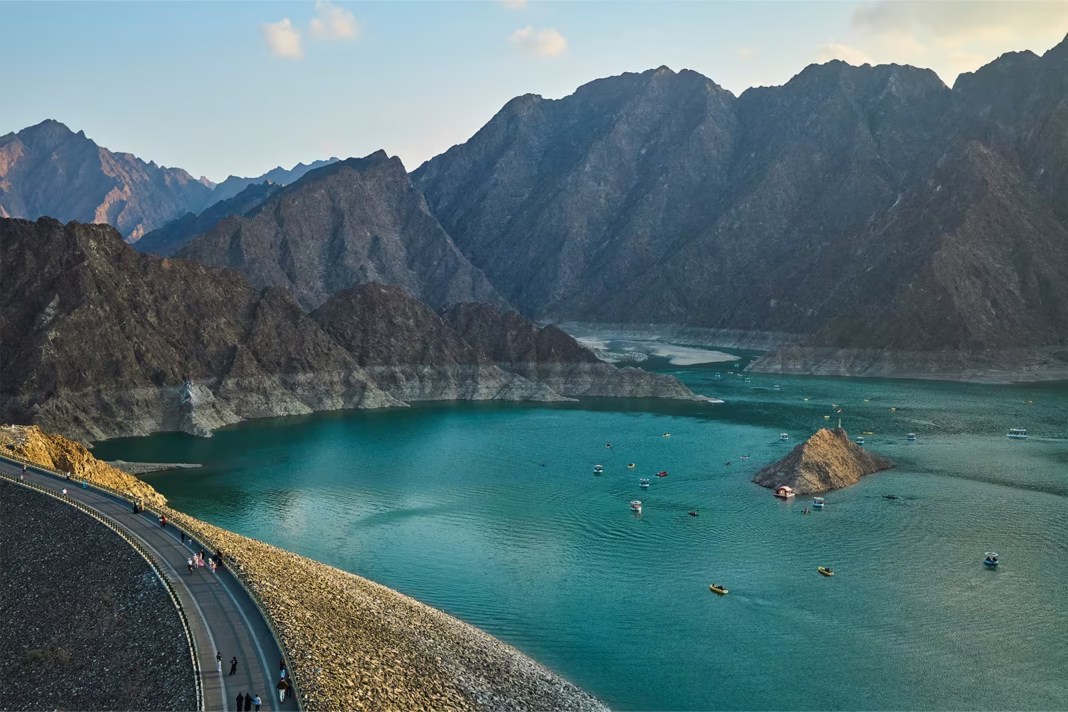
DUBAI, United Arab Emirates — Hatta Mountain Conservation Reserve is emerging as one of Dubai’s most important natural landmarks, protecting endangered wildlife, freshwater ecosystems and a significant share of the UAE’s biodiversity while supporting the emirate’s long-term sustainability goals.
Located in the southeastern part of Dubai, the protected reserve spans 21.56 square kilometers of mountainous terrain and freshwater wadis. It forms part of Dubai’s wider network of nature reserves, which preserve diverse environments ranging from deserts and wetlands to coastal habitats.
The reserve gained international recognition in 2019 when it was designated a Wetland of International Importance under the Ramsar Convention, becoming Dubai’s third site to receive the status after Jebel Ali Wetland Sanctuary and Ras Al Khor Wildlife Sanctuary.
According to the Dubai Environment and Climate Change Authority, Hatta’s unique geography creates an environment where mountain landscapes and freshwater habitats exist side by side, supporting an exceptional range of wildlife and plant species rarely found elsewhere in the emirate.
The reserve contains approximately 19% of all plant species recorded in the UAE, 79% of the country’s dragonfly species, 27% of bird species, 44% of mammal species, and 30% of documented reptiles and amphibians, highlighting its importance for national biodiversity.
Wildlife surveys have identified 128 bird species, 27 mammal species, 20 reptile species, 133 plant species, nine fish species, two amphibian species and 29 invertebrate species within the reserve.
Among its most notable inhabitants is the Arabian tahr, an endangered mountain goat that serves as the reserve’s official emblem. Hatta remains the species’ only known habitat within the Emirate of Dubai. The reserve also provides refuge for other threatened wildlife, including the Egyptian vulture.
Beyond wildlife conservation, Hatta Mountain Conservation Reserve has become an increasingly popular destination for residents and visitors seeking outdoor experiences in the UAE. Its hiking trails, mountain scenery and freshwater valleys offer opportunities for eco-tourism while promoting greater awareness of environmental protection.
Authorities say ongoing conservation efforts focus on preserving freshwater ecosystems, protecting mountain habitats and maintaining ecological corridors that allow native species to thrive over the long term.
More information about Dubai’s environmental initiatives and protected areas is available through the Dubai Environment and Climate Change Authority at https://decca.gov.ae.
As Dubai continues to expand its sustainability agenda, Hatta Mountain Conservation Reserve is expected to remain a key example of how conservation, biodiversity protection and responsible tourism can coexist within one of the region’s fastest-growing destinations.