SHARJAH, United Arab Emirates: Researchers at the University of Sharjah have developed experimental construction bricks using desert sand, industrial by-products and an alternative binding system, opening a potential new route toward lower-cement building materials in the UAE.
The research uses desert sand collected in the Sharjah region with alkali-activated binders. The formulation also incorporates industrial materials including blast furnace slag and industrial ash, giving waste products another potential use in construction.
The study was published in the Journal of Materials in Civil Engineering in November 2025 and was highlighted by the university in February 2026.
Turning a difficult material into a building resource
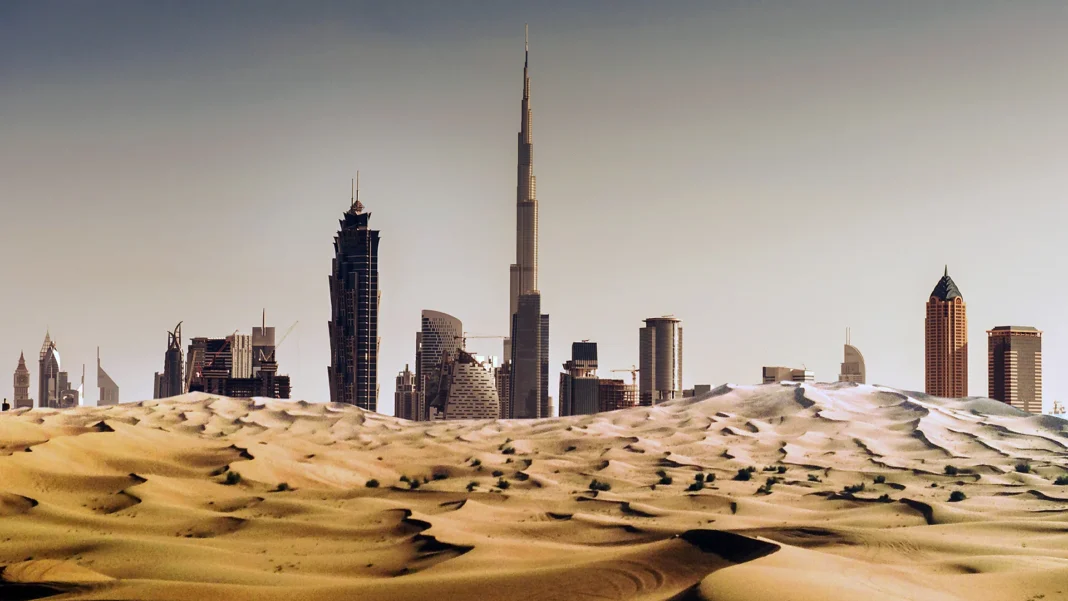
Desert sand is plentiful across the UAE, but its physical characteristics make it less suitable for conventional concrete applications than coarser aggregates commonly used in construction.
Researchers explored whether chemical activation could overcome those limitations and produce masonry units capable of meeting established performance requirements.
One notable feature of the experimental process is that the bricks were cured at room temperature. Unlike some manufacturing methods, the process does not require high-temperature thermal curing, which could reduce energy requirements during production.
Tests show promising durability
The research team subjected the bricks to a range of durability and performance tests, including water absorption, wetting and drying cycles, efflorescence and exposure to sulfate-rich conditions.
The reported results indicated that the materials met the ASTM standards referenced in the study. In some tests, the experimental bricks also showed stronger mechanical performance than conventional cement-based alternatives.
Their resistance to sulfate exposure is particularly relevant to the Gulf region, where construction materials can face demanding conditions involving saline environments, coastal locations and chemically aggressive soils or groundwater.
The researchers also reported lower water absorption, another factor that can influence the long-term durability of masonry materials.
Why reducing cement matters
Portland cement is a fundamental component of modern construction, but its production has a significant environmental footprint.
The University of Sharjah research points to the potential for alkali-activated materials to reduce dependence on conventional cement in certain construction applications while simultaneously incorporating industrial by-products.
For the UAE, the approach is particularly relevant because it combines two locally significant resources: abundant desert sand and materials generated by industrial activity.
The technology could therefore support broader efforts to develop construction materials that use locally available resources and reduce waste.
Not ready for large-scale construction yet
Despite the promising laboratory findings, the technology is not yet a commercially established replacement for conventional bricks or cement-based construction materials.
Further work is required to determine whether the process can be manufactured economically at industrial scale. This includes larger production trials, standardized quality testing, detailed cost assessments and a more comprehensive evaluation of its environmental impact.
The researchers also need to establish how the material performs under real-world construction conditions over extended periods.
A potential fit for Gulf construction
The research could have particular relevance across the Gulf, where rapid development, high construction demand and harsh environmental conditions create pressure to develop durable and resource-efficient building materials.
The UAE has also placed increasing emphasis on sustainability, resource efficiency and lower-carbon development across major sectors.
The desert-sand brick concept does not mean conventional cement can be eliminated from construction. Instead, the research points to a possible supplementary approach for masonry products where the material’s performance, cost and environmental benefits can be demonstrated at scale.
The next stage will be determining whether the laboratory results can translate into commercially viable production. If pilot manufacturing confirms the material’s durability, cost competitiveness and environmental advantages, desert sand could become a more useful component of the UAE’s future construction-materials industry.