
When the rain chatters and patters on the rooftops of Kerala, people simply rejoice. One reason is the relief from the scorching summer heat; another is, of course, the water. More importantly, perhaps, is the flip side—the possibility of unexpected days off in schools and educational institutions. Schoolgoers and teachers alike appreciate a day off and often spend it at home, glued to their smartphones.
Weather has not been much of a serious concern for the people of Kerala for centuries. But the situation is different nowadays. Landslides have become frequent in the hilly areas, and flash flooding in cities has made people more cautious. This has prompted authorities to rely heavily on weather forecasts and warnings. Recently, the administration has introduced an alarm system, almost like wartime sirens.
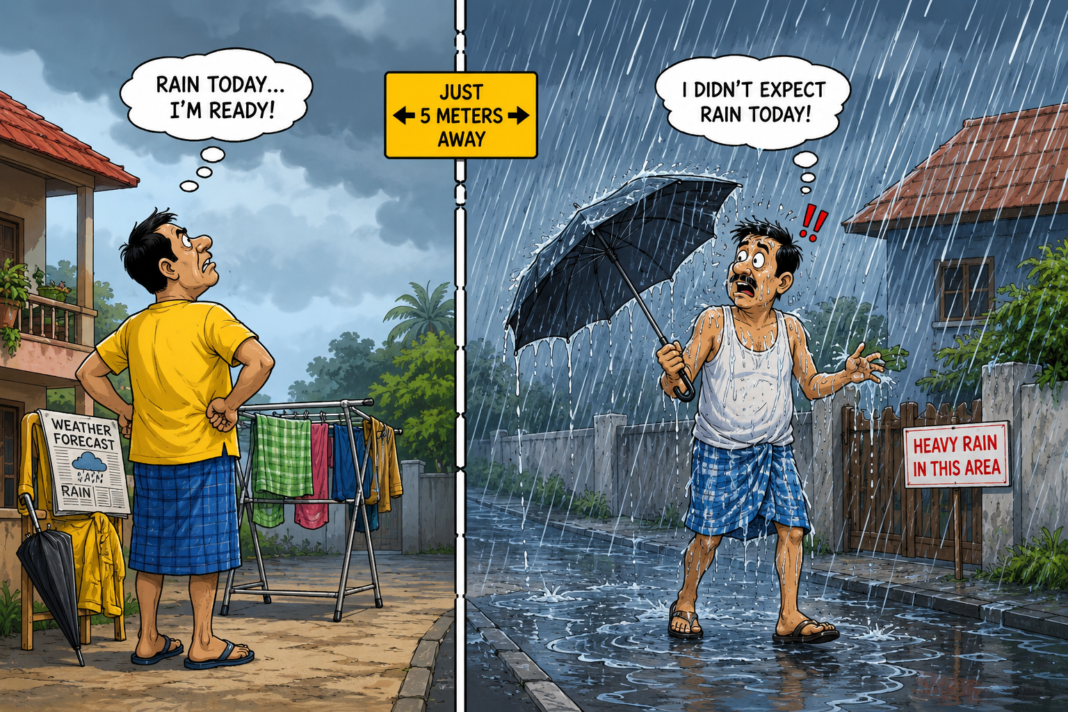
Interestingly, weather forecasts are often perceived as being far from reality. After all, weather keeps changing. The government is not willing to take chances, but the logic behind closing schools in certain districts while leaving neighboring ones open still remains somewhat ambiguous.
Kerala’s geography and climate present a continuous, interconnected weather system, especially during the monsoon. The idea that rainfall can be drastically different in districts lying side by side, such as Kozhikode and Malappuram, raises questions. These districts share borders without significant natural barriers like mountains or seas to separate their weather patterns, making it difficult for residents to understand how forecasts can vary so sharply.
This situation highlights the challenges meteorologists and district administrations face when trying to predict and manage monsoon rains. District boundaries are often narrow and intertwined, making it hard to justify sharply differing rainfall predictions. While it is true that regions separated by hundreds of kilometers experience varying rainfall due to geography and local climatic factors, the sharp contrasts between neighboring districts remain difficult to explain convincingly to the public. This sometimes leads to confusion and skepticism about the precision and reliability of forecasting models.
Despite these uncertainties, the administration’s cautious approach is understandable, given the potential consequences of underestimating monsoon risks. The decision to close schools is a practical measure to protect students and staff from floods and landslides, especially in vulnerable areas. For many, the announcement of a holiday during the monsoon is eagerly awaited, offering a welcome break from routine and a chance to enjoy the rain. In fact, the monsoon season, while challenging, also brings benefits such as replenishing water sources and easing the oppressive summer heat.
In some parts of Kerala, this seasonal phenomenon has even given rise to a form of “rain tourism,” where people travel to scenic areas like Wayanad to experience the beauty and freshness brought by the rains. Yet the monsoon is not without its darker side. In hilly regions prone to landslides and floods, the season can be terrifying and destructive, underscoring the need for effective early warning systems.
Anyhow, the people of Kerala have grown accustomed to living with the monsoon’s uncertainties. Their daily lives and responses to the rain are shaped by experience and resilience, accepting the monsoon as both a life-giving and potentially hazardous force.