

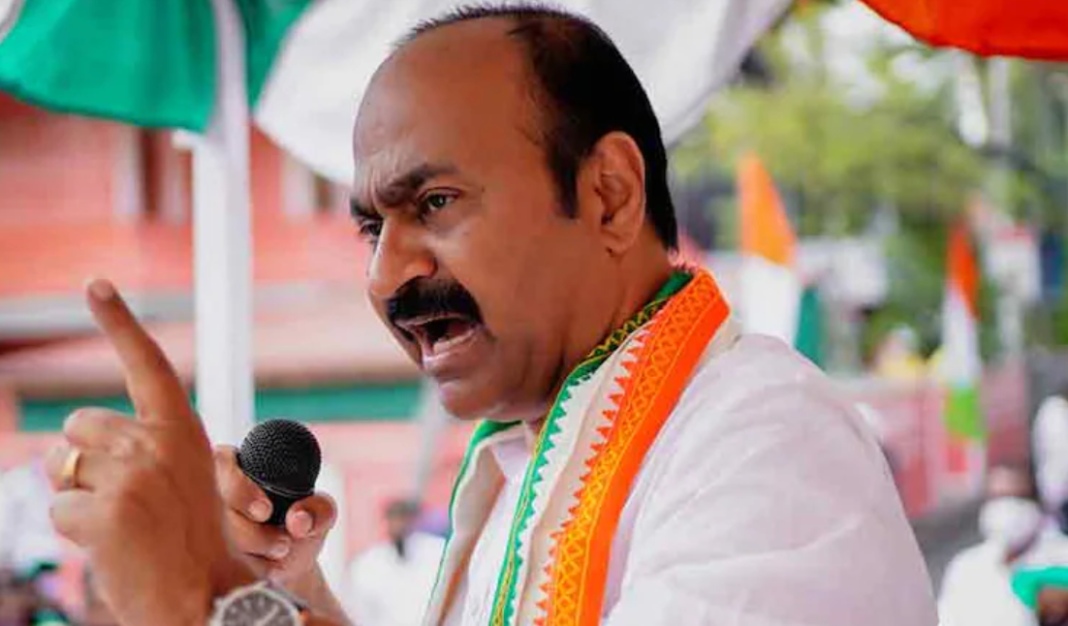
NEW DELHI/THIRUVANANTHAPURAM – It was supposed to be the party’s finest hour. When the Congress-led United Democratic Front swept Kerala’s 140-member Assembly on May 4, ending a decade of Left Democratic Front rule and capturing 102 seats in a landslide, celebrations erupted from Kasaragod to Thiruvananthapuram. The decades-long dream of defeating Pinarayi Vijayan’s iron-fisted rule had finally come true. And yet, nine days later, Kerala still does not know who its next Chief Minister will be — and the silence from Delhi is growing louder by the day.
A Victory Without a Victor
More than a week after the Congress-led UDF returned to power with a decisive mandate, the suspense over the next Chief Minister seems far from over. What began as a brief pause for consultation has ballooned into one of the most drawn-out leadership deliberations in Kerala’s political history, exposing the fault lines that even a historic electoral triumph could not paper over.
The three names circling at the centre of this storm are well-known to Kerala’s political watchers: AICC General Secretary K. C. Venugopal — seen as a strong organisational leader with deep influence at the national level; Leader of Opposition V. D. Satheesan — known for his legislative experience and strong connections within Kerala politics; and senior Congress leader Ramesh Chennithala — a veteran with long administrative experience and a strong grassroots presence across the state.
The Camps, the Claims, the Calculations
Each contender comes armed with a distinct argument, and each camp has been pressing its case with barely concealed urgency.
Sources cited by PTI have said that the majority of the 63 Congress MLAs want Venugopal to be made Chief Minister. But at the same time, many believe that Chennithala and Satheesan deserve the post.
Venugopal’s backers point to his organisational mastery — as the Congress General Secretary (Organisation) since 2018, he has been the engine room of the party’s national machinery. His supporters claim he commands the loyalty of most Congress MLAs and several MPs from Kerala, and that he possesses the strategic acumen to navigate the two by-elections his elevation would necessitate.
But it is precisely those by-elections that give his opponents their sharpest weapon. The Satheesan camp has argued that if Venugopal is appointed Chief Minister, the UDF would be forced to face two by-elections — one for Venugopal to enter the Assembly, and another for the Alappuzha Lok Sabha constituency seat he currently represents in Parliament. In today’s charged political climate, that is a gamble many in the party are unwilling to take.
Venugopal is also at a disadvantage in another sense — he has been in the national capital since 2009. Even though he has kept in touch with state politics, he is seen primarily as a central leader, triggering resentment among a section of the party rank and file.
Satheesan, who served as Kerala’s Leader of Opposition through Pinarayi Vijayan’s bruising second term, is widely perceived as the people’s choice. Leaders of the Muslim League, a key constituent of the UDF, publicly urged the Congress leadership to expedite the decision, and are understood to have conveyed their support for Satheesan, citing public perception in his favour. Yet, paradoxically, his very popularity may have hurt him. Venugopal’s supporters have alleged that Satheesan “overplayed his hand” by making the election campaign too centred around his own personality — an approach that became a source of friction with the central leadership. The manner in which his supporters have been building public pressure has also not gone down well with the high command.
The Chennithala camp, meanwhile, has maintained that he is the senior-most leader in the state unit who stood firmly with the party and the Nehru-Gandhi family during difficult periods, and that several leaders who worked under him later became chief ministers and Union ministers. Crucially, his supporters have been more restrained after the results — a quality that may count in his favour with a high command wary of factional theatrics.
Delhi Deliberates
The Congress high command has left no consultation untaken. Rahul Gandhi held one-on-one deliberations with several ex-Kerala Congress chiefs in a bid to end the uncertainty, meeting key party leaders including former state unit chiefs, working presidents and other senior figures at Sonia Gandhi’s 10, Janpath residence in New Delhi.
Earlier in the day, party leaders also met Sonia Gandhi at her residence to share their views on the leadership issue. It was reported that V. M. Sudheeran and K. Muraleedharan conveyed to the leadership that public sentiment appeared to favour Satheesan, while K. Sudhakaran was expected to support Venugopal.
After the discussions, former KPCC chief Muraleedharan told reporters: “Satisfied with my discussions with party leader Rahul Gandhi. A decision will be made on the Kerala CM by tomorrow.”
The Congress has now called a fresh meeting of its Kerala leaders to clear the confusion, with former Kerala Congress presidents summoned to Delhi.
Anger on the Streets, Wars on the Screens
Back in Kerala, patience has run thin. What started as quiet speculation has erupted into a full-blown public debate, with demonstrations by party workers, viral social media campaigns, and open demands — mostly for Satheesan — flooding timelines from Kochi to Kozhikode.
Supporters of all three leaders have waged a war on social media, only increasing the headache for the Congress top brass. A rift has also emerged over whether coalition allies should have a role in deciding the chief ministerial candidate — a question that has added a further layer of tension to the internal deliberations.
KPCC president Sunny Joseph acknowledged that the delay in naming the Chief Minister had somewhat overshadowed the party’s electoral victory, but added that a decision would be taken soon. In a moment of wry humour that captured the carnival-like atmosphere of the wait, Joseph, citing papal imagery, quipped that “white smoke will be seen soon.”
The Weight of History
Kerala’s political culture makes this choice unusually consequential. Politics in Kerala since 1980 has revolved around strong leaders on both sides — the Communists had EK Nayanar, VS Achuthanandan and Pinarayi Vijayan, while Congress had K. Karunakaran, AK Antony and Oommen Chandy. Unlike Tamil Nadu or Andhra Pradesh, Kerala does not have strong regional parties built around personality cults. The leader here is always “first among equals.”
There has also long been an informal demarcation between state and central politics in Kerala. The Congress Legislative Party leader or the Pradesh Congress chief are always the most important faces of the party — and when in Opposition, the Leader of Opposition is seen as the default CM face. That norm has historically favoured Satheesan — but norms, as this episode illustrates, bend under the weight of high-command arithmetic.
The Verdict Awaits
The Kerala Assembly elections delivered a decisive mandate in favour of the Congress-led UDF, marking its return to power after a decade. The internal race has triggered intense discussions within the party, as senior leaders and MLAs await clarity on who will take charge of the state government.
The final decision is likely either on the evening of May 13 or on May 14. Somewhere in Delhi’s corridors of power — in the measured silences between Rahul Gandhi’s conversations and the careful calculations of party managers — Kerala’s next Chief Minister is being chosen. Whether it will be the organisational heavyweight, the popular Opposition leader, or the steady veteran, one thing is certain: the longer the wait, the heavier the crown will feel when it is finally placed.
With additional inputs from PTI, ANI, The Federal, The Quint and India TV News.