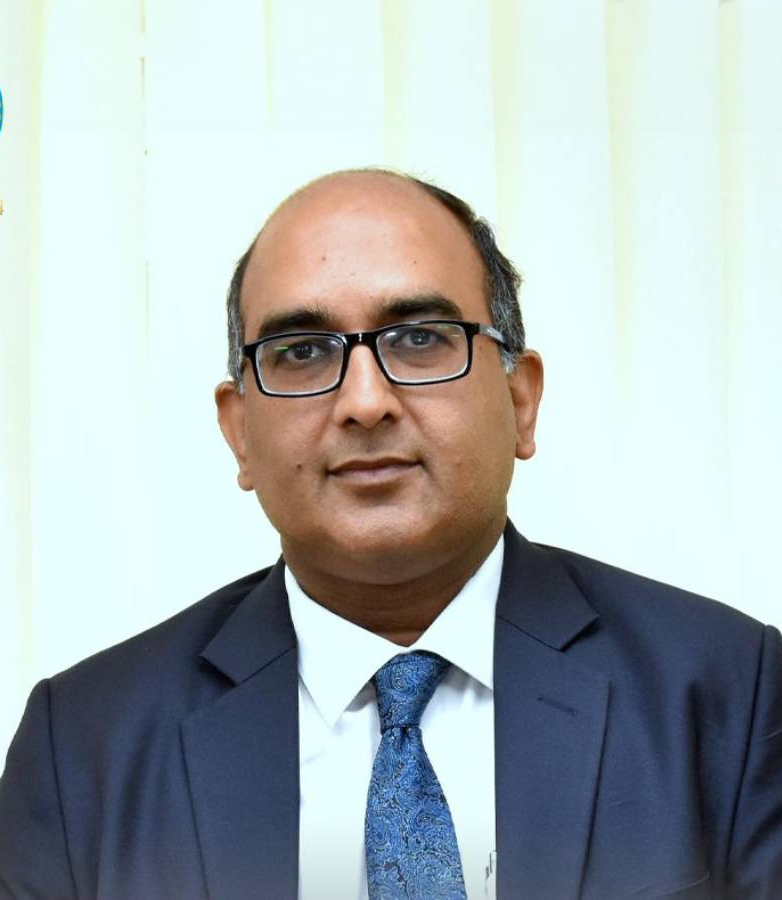
In Indian diplomacy, officials are usually identified by their full name, service batch and official designation. Vipul is different. Across the Gulf, where millions of Indians live and work, he is known simply as Vipul.
The familiarity reflects the reputation he built over nearly three decades in the Indian Foreign Service. Whether serving in Cairo, Colombo, Geneva, Dubai or Doha, he became known for a style of diplomacy that placed people at the centre of public service.
On June 2, 2026, India’s Ministry of External Affairs announced the appointment of Vipul, currently Ambassador to Qatar, as India’s next Ambassador to Saudi Arabia. The move places one of India’s most experienced Gulf hands in one of New Delhi’s most important diplomatic postings.
For many Indians in the region, the appointment comes as recognition of a diplomat whose career has been defined by accessibility, responsiveness and a close connection with the community he serves.
The Making of a Diplomat
A graduate in Mechanical Engineering from the Indian Institute of Technology Delhi, Vipul later earned an MBA from the Indian School of Business in Hyderabad before joining the Indian Foreign Service in 1998. His diplomatic career has covered a wide range of assignments. He has served in Indian missions in Cairo, Colombo, Geneva and Dubai, handling political affairs, commerce, development cooperation, international security and media relations.
The diversity of those assignments helped shape a diplomat equally comfortable discussing strategic policy in international forums and resolving the everyday concerns of Indian expatriates abroad.
Between 2014 and 2017, he served as Director and later Joint Secretary to India’s External Affairs Minister. The role provided him with a close view of India’s foreign policy priorities and its expanding engagement with the Gulf region.
Dubai: The Years That Defined His Public Image
If one posting shaped Vipul’s public reputation, it was his tenure as Consul General of India in Dubai from 2017 to 2020.
The Indian Consulate in Dubai is among the busiest diplomatic missions in the world, serving a vast Indian community spread across the UAE. Soon after assuming office, Vipul pledged to strengthen India-UAE relations and support the welfare of the Indian community.
Residents say those promises were reflected in his working style. Passport services were improved, community outreach expanded, and many difficult cases involving distressed workers and stranded residents received personal attention.
Then came the Covid-19 pandemic.
As international travel ground to a halt in 2020, thousands of Indians found themselves stranded in the UAE. The Indian government launched the Vande Bharat Mission, one of the largest repatriation exercises in modern history.
In Dubai, Vipul was at the centre of the operation.
The consulate introduced an online registration system that attracted tens of thousands of applications within days. Priority was given to distressed workers, medical cases, elderly residents, pregnant women and those who had lost their jobs.
During the early months of the operation, around 120,000 stranded Indians were repatriated from the UAE. The scale of the effort left a lasting impression on the community.
One memory remained particularly vivid for him.
“I won’t forget that in one flight to Kochi, we accommodated 75 pregnant ladies,” he recalled while preparing to leave Dubai in 2020.
The comment reflected the human dimension of a crisis often measured only in numbers.
When his own posting ended in July 2020, Vipul departed Dubai on a Vande Bharat Mission flight with his parents, wife and two young children.
A Personal Observation
For those of us who reported on Gulf diplomacy and community affairs, Vipul stood out for his accessibility.
His arrival in Dubai in 2017 came during a period of transition in my own journalistic career. Unlike earlier years, I was no longer in daily contact with the Indian Consulate. Yet the opportunities that arose through community events and, later, during the pandemic were enough to understand why he had earned such respect.
During Covid-19, he was not managing events from a distance. He was visible, approachable and constantly engaged. While many officials communicated through formal channels, Vipul often dealt directly with community concerns. It was a quality that became even more apparent during the most difficult months of the crisis.
Recognition from Community Leaders
Tributes at the end of his Dubai tenure reflected the regard in which he was held.
Yusuffali M.A., Chairman of Lulu Group, credited him with strengthening India-UAE ties and maintaining close engagement with both UAE leaders and the Indian community. He particularly praised Vipul’s efforts to assist residents during the pandemic.
Dr Azad Moopen, founder chairman of Aster DM Healthcare, described him as one of the most approachable diplomats he had encountered and highlighted his active role in supporting the Indian community during Covid-19.
From the community organisations that form the backbone of expatriate life, the voice was equally warm. Dr. Puthur Rahman, a senior leader of the Kerala Muslim Cultural Centre (KMCC) UAE, echoed those sentiments, reflecting the particular regard in which Vipul was held among the large Malayali community, for whom the Dubai consulate was often the first and most important point of contact in moments of difficulty.
Doha and Beyond
From 2020 to 2023, Vipul served as Joint Secretary for Gulf Affairs in New Delhi, overseeing India’s relations with countries across the region.
The assignment placed him at the centre of policymaking during a period when India’s Gulf ties were becoming increasingly important for trade, energy security and the welfare of millions of Indian expatriates.
In August 2023, he assumed charge as India’s Ambassador to Qatar.
During his tenure, he consistently emphasised community engagement while overseeing a relationship that spans energy cooperation, trade, investment and people-to-people ties.
At public events, he frequently acknowledged the contributions of the Indian community to Qatar’s development and pledged continued support for workers and residents.
Riyadh: The Next Chapter
Vipul’s appointment to Saudi Arabia comes at a significant moment in India-Saudi relations.
Saudi Arabia hosts about 2.5 million Indians, making it home to the largest Indian community in any single country. The relationship now extends far beyond energy and includes trade, investment, defence cooperation and emerging sectors linked to the Kingdom’s Vision 2030 programme.
With bilateral trade reaching nearly USD 42 billion in 2024-25, the importance of the posting is clear.
Vipul arrives in Riyadh with extensive experience of both policymaking and frontline consular work. Few Indian diplomats have spent as much of their careers dealing directly with the concerns of Gulf-based Indians while also helping shape New Delhi’s regional strategy.
A Career Defined by Presence
What distinguishes Vipul is not a single achievement but a consistent approach to public service.
Whether assisting distressed workers during the pandemic, engaging with senior Gulf officials, or recognising the efforts of community volunteers, he has built a reputation for being present and accessible.
For millions of Indians living far from home, those qualities matter.
As he prepares to begin his assignment in Riyadh, many across the Gulf will be watching with confidence that the same approach that earned respect in Dubai and Doha will continue in Saudi Arabia.
Dr. K.T. Abdurabb is a UAE-based writer, journalist, and media specialist who has been living and working in Dubai since 1989. He writes on Gulf affairs, diaspora issues, and the lived experiences of the expatriate community.