

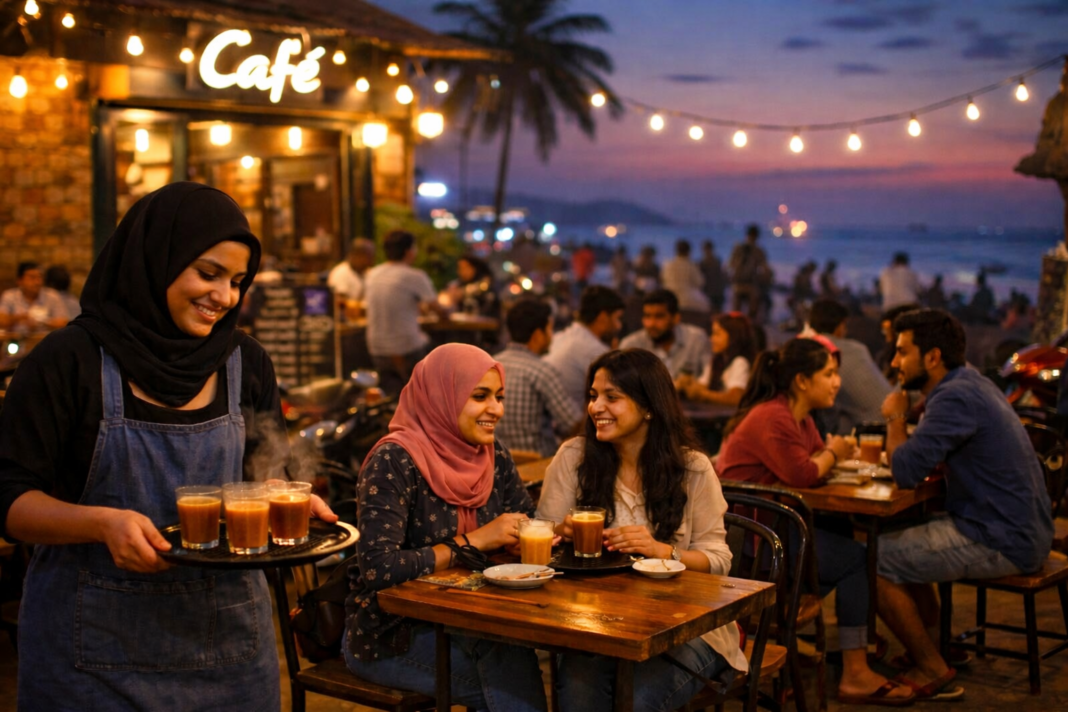
In the southern Indian state of Kerala, social transformations are unfolding in a way that is visible not through lengthy research or digital exploration, but simply by walking along the bustling beaches or quiet streets during the evening hours. These local scenes reveal a vibrant social shift that speaks volumes about the evolving lifestyle and culture of Kerala’s people.
As the sun sets, crowds gather in growing numbers around the rapidly emerging coffee shops and eateries that have become focal points of community life. People of all ages come together to enjoy tea and snacks in the company of their loved ones, while teenagers fill the streets with energy, riding motorbikes and cruising in decorated motorcars. This new trend of evening tea or coffee outings has effectively taken over the social evenings of Kerala, replacing older, more solitary routines with lively communal experiences.
What we experience is the new normal in many respects. The coffeehouse culture, which has its roots in the West, has transformed conventional concepts of time. The day does not end with the sunset; rather, it begins and often stretches late into the night. A Kerala version of nightlife, one might say. While it may not resemble the vibrant nightlife of Pattaya Beach or Amsterdam, the focus here is on enjoying food, beverages, and meaningful social interaction.
Notably, the booming eateries have been affected by ongoing geopolitical tensions and the gas supply situation. Yet, many have managed to adapt and survive through conventional and resilient methods, at least for now. The looming threat of rising fuel prices, which may come into effect after assembly elections in some states, remains a concern. As of now, the broader impacts of Middle East conflicts have not been severe, although there are signs of cooking gas shortages. The situation remains unpredictable, much like the global circumstances influencing it.
It’s interesting to note that the dishes are largely similar across these cafés. A wide variety of tea and coffee remains one of the main attractions of the evening café culture. At times, one may be overwhelmed when choosing from 40 to 60 types of tea. The differences may be subtle, but they exist. Cardamom, a favourite ingredient in Kerala and abundantly grown in its hills, features prominently in many of these beverages. A casual outing for tea or coffee in bustling cafés on the outskirts of cities has now become a necessity rather than an option.
A particularly notable and encouraging aspect of this change is the prominent presence of girls and young women. Far from being just customers, many of these women actively manage coffee shops, turning these venues into not only social spaces but also opportunities for entrepreneurship and income generation. Their involvement signals a shift in traditional gender roles and highlights the growing economic participation of women in Kerala’s evolving society.
This emerging café culture in Kerala’s evenings is more than just a trend; it is a reflection of broader social changes. It symbolises a move towards greater social interaction, gender inclusivity, and economic empowerment, all unfolding through the simple yet powerful act of sharing a cup of tea or coffee at a local café. If revolution is defined as change, then this can indeed be called a social — or perhaps even an entertainment — revolution.
O. Umarul Farooque is a writer and journalist based in Kerala.