
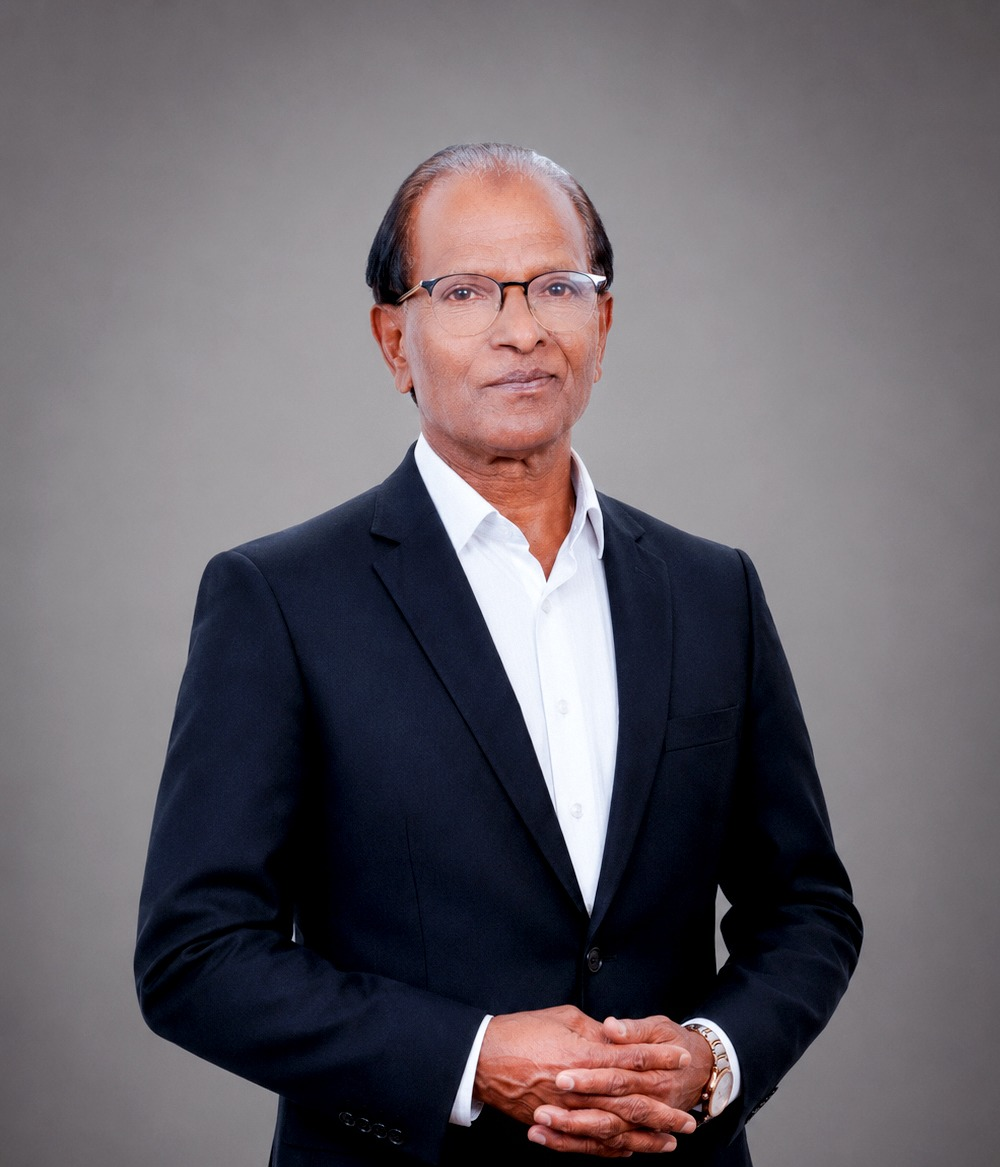
He arrived in the Emirates on 30 June 1979. Forty-seven years later, Advocate Y.A. Rahim remains the first number thousands of Indians dial in a crisis
The phone rarely stops ringing.
Sometimes it is a labourer stranded without wages. Sometimes a family searching for a missing relative. Sometimes a prisoner pleading for legal help, or a worker whose visa has lapsed and who fears arrest.
For more than four decades, Indians across the UAE have known exactly whom to call.
At the other end of the line is Advocate Y.A. Rahim.
In a region built by migrant labour, where millions left villages and small towns across India in search of opportunity, Rahim has become one of the most recognisable faces of community service in the Gulf. Lawyer, activist, fundraiser, mediator and institution-builder, he occupies a singular place in the story of the Indian community in the Emirates.
“Service to humanity is service to God,” he likes to say. The motto has guided a public life that now stretches well past forty years.
This reporter first encountered him in 1996, during the first amnesty declared in the UAE. I was then a journalist with Khaleej Times, covering the long queues of undocumented Indians hoping to regularise their status or return home. Rahim seemed to be everywhere at once. He moved between consular offices, immigration counters and labour camps, arranging outpasses, raising airfare and calming frightened men who had not seen their families in years. In the years that followed, through my time at Gulf Today in Sharjah and later in the Malayalam press, our paths crossed repeatedly, in good times and difficult ones, across countless community causes. The energy never dimmed.
From Sasthamkotta to Sharjah
Born in 1957 in Sasthamkotta, a quiet lakeside town in Kerala’s Kollam district, Abdul Rahim Yoonus Kunju was drawn to social work long before he entered a courtroom.
As a student he threw himself into volunteer work through the National Service Scheme. When floods devastated parts of Thiruvananthapuram in 1977, he joined teams rebuilding homes for affected families. The experience shaped his understanding of what public service demands.
He went on to take a university rank in Arabic and Islamic History, qualified as a lawyer, and carried those convictions with him to the Gulf.
He landed in the UAE on 30 June 1979, a young man of twenty-two arriving in a country that was itself barely eight years old. The Emirates he stepped into was a land of half-built skylines and crowded labour camps, where the great Indian migration was gathering pace. He has never really left.
His arrival coincided with a period of dramatic change. The oil boom had drawn hundreds of thousands of Indian workers, a great many of them from Kerala. The region offered opportunity, but it also produced new hardships: labour disputes, immigration troubles, workplace accidents, sudden deaths and families separated by thousands of kilometres.
For most migrants, formal systems of support were thin. Community organisations filled the gap, and few became more influential than the Indian Association Sharjah, one of the oldest Indian organisations in the UAE.
Rahim emerged as one of its most enduring leaders, serving multiple terms as president and helping transform the association into a major social, educational and humanitarian force.
Building a school, building a community
Among the association’s most significant achievements under his stewardship was the growth of Sharjah Indian School.
What began as a modest educational initiative grew into one of the largest Indian schools in the Gulf, educating thousands of children whose parents had crossed oceans for a better future. Rahim played a central role in securing land, expanding facilities and steering the institution’s development.
Yet those who know him say his most important work rarely happened at ribbon-cutting ceremonies.
It happened in labour camps. In hospitals. In police stations. And at airports.
Over the years he became a familiar figure helping workers navigate legal disputes, arranging emergency travel documents, raising funds for the stranded and standing beside families in their worst hours. During successive UAE amnesty programmes, he helped coordinate large-scale repatriation efforts that eventually saw thousands of Indians return home through the combined work of community volunteers, diplomatic missions and charitable donors.
When disaster struck
The humanitarian work intensified in moments of catastrophe.
After the earthquake that flattened parts of Kutch in Gujarat in January 2001, Rahim led relief efforts from the UAE, arranging a specially chartered aircraft loaded with relief materials for the victims. During the Covid-19 pandemic, he helped organise food distribution and emergency assistance for workers whose livelihoods vanished overnight in the lockdowns.
Colleagues describe a man equally at ease addressing senior officials and sitting on the floor of a labour accommodation listening to workers pour out their troubles. That ability has made him a bridge between worlds.
He has carried expatriate concerns to forums from Pravasi Bharatiya Divas to the Loka Kerala Sabha, pressing for educational opportunities for expatriate children, welfare schemes for Gulf returnees and stronger protections for migrant workers. His efforts extend even to services most expatriates never think about until tragedy strikes, including cremation facilities, embalming services and other end-of-life support for families living far from home.
Recognition has followed. Honours and commendations have come from community organisations, Indian institutions and UAE authorities, and he was among the expatriate leaders granted the UAE Golden Visa in acknowledgement of decades of contribution.
The story of a generation
Rahim’s story is, in the end, the story of a generation.
The first wave of Gulf migrants built the roads, ports, airports and skyscrapers that define the modern Emirates. Alongside them rose a smaller group of community leaders who built something less visible but no less vital: the support systems that hold people together far from home.
For thousands of Indians across the Emirates, Y.A. Rahim became part of that safety net.
Today, at an age when most have retired from public life, the calls keep coming.
And more often than not, he still answers.