

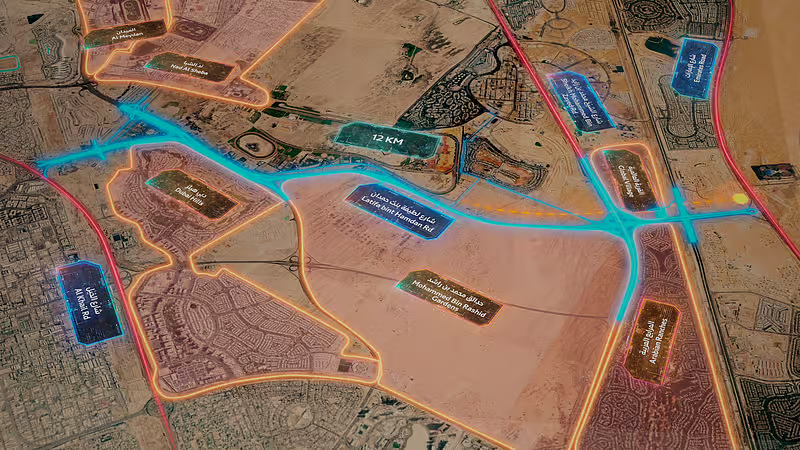
DUBAI, United Arab Emirates — A new major road corridor in Dubai is expected to cut travel time between Umm Al Sheif Street and Emirates Road by more than half once completed, as the emirate continues expanding its transport network to keep pace with growth.
The Roads and Transport Authority has awarded the contract for the Dh2 billion Latifa bint Hamdan Corridor Development Project. The 12-kilometer route is planned to reduce the trip from 33 minutes to 15 minutes, a drop of about 54%.
The corridor will connect six of Dubai’s major roads: Sheikh Zayed Road, Al Khail Road, Al Meydan Street, Sheikh Mohammed bin Zayed Road, Sheikh Zayed bin Hamdan Al Nahyan Street and Emirates Road.
RTA said the project is intended to ease pressure on some of the city’s busiest routes and improve movement between new and established neighborhoods. It is also designed to support Dubai’s ongoing urban expansion and future development projects.
Once finished by the end of 2028, the corridor is expected to carry more than 130,000 trips a day and serve about 650,000 residents and visitors.
The project will include seven bridges spanning 2,300 meters and eight tunnels totaling 900 meters. Together, the new road system is expected to handle about 16,000 vehicles an hour in both directions.
Mattar Al Tayer, director general and chairman of the board of executive directors of the RTA, said the project reflects Dubai’s approach of building infrastructure ahead of demand. He said the goal is to ensure the road network can support the city’s population and economic expansion.
The corridor is also meant to improve links between communities such as Nad Al Sheba, Al Barari, Dubai Hills, District One, Mohammed Bin Rashid Gardens, Living Legends, Majan and Global Village.
As part of the works, Latifa bint Hamdan Street will be widened to four lanes in each direction. The project also includes new free-flow interchanges, bridges and loop ramps, plus a road linking Al Khail Road to the extension of Latifa bint Hamdan Street.
RTA will also upgrade sections of Al Meydan Street and build a new interchange to improve access to nearby development areas.
The project includes 12.5 kilometers of cycling tracks that will connect with Dubai’s wider bike network, creating a continuous route from Al Qudra to Jumeirah.
Officials said the new corridor will improve traffic safety, strengthen east-west connectivity and support Dubai’s long-term growth. More construction milestones are expected as the project moves toward completion in 2028.