

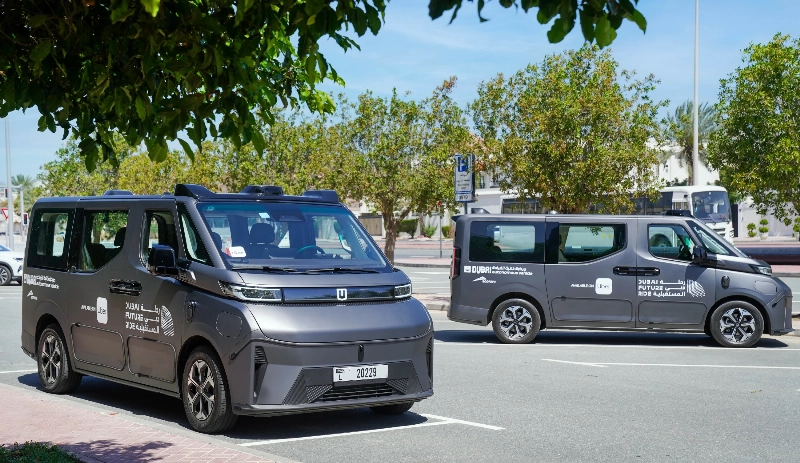
DUBAI, United Arab Emirates — Dubai’s new driverless taxi is now more than a tech showcase. It is a public service, and the first rides are offering an early look at how autonomous transport may fit into daily life in the city.
Apollo Go’s self-driving fleet is now operating in Jumeirah and Umm Suqeim with a promotional fare of 5 dirhams per trip. The fare replaces the free rides that were available during the trial phase.
Rides are booked through the Apollo Go app, but the service is not yet fully door to door. Pickups and drop-offs are limited to designated bus stops within the service area.
The app includes walking directions to the nearest pickup point. Once a car arrives, passengers have only a short window to board before the trip is canceled.
Getting into the car is straightforward. Riders enter the last four digits of their phone number on an exterior panel, which unlocks the doors.
Each vehicle currently carries up to three passengers. Payment is completed after the ride, and users can store card details in the app for later charging.
Inside, the vehicle is built for a more polished experience than a typical taxi. Passengers must fasten their seat belts and confirm it in the app before the car moves. The system will not start until everyone is secured.
The cabin includes small but practical touches, including seat temperature controls, a massage function in one rear seat, wireless charging, USB ports, cup holders and a small luggage area. There is also an emergency hammer and a help button linked to customer support.
The ride itself is designed to feel calm and controlled. The car responds smoothly to traffic lights, braking and acceleration, and adjusts quickly to unexpected movement around it.
At the end of the trip, the app signals arrival and shows a side camera feed before passengers open the door, letting them check for cyclists, cars or pedestrians nearby.
The main drawback for now is convenience. The stop-based pickup system adds friction, especially for riders outside the immediate service zone, but the low fare and smooth ride help make up for it.
Dubai’s Roads and Transport Authority plans to expand the Apollo Go fleet from 50 vehicles to more than 1,000 in the coming years as part of its wider self-driving strategy. The city aims to make a quarter of all journeys autonomous by 2030, and the early public response suggests that target may be closer than it once seemed.