

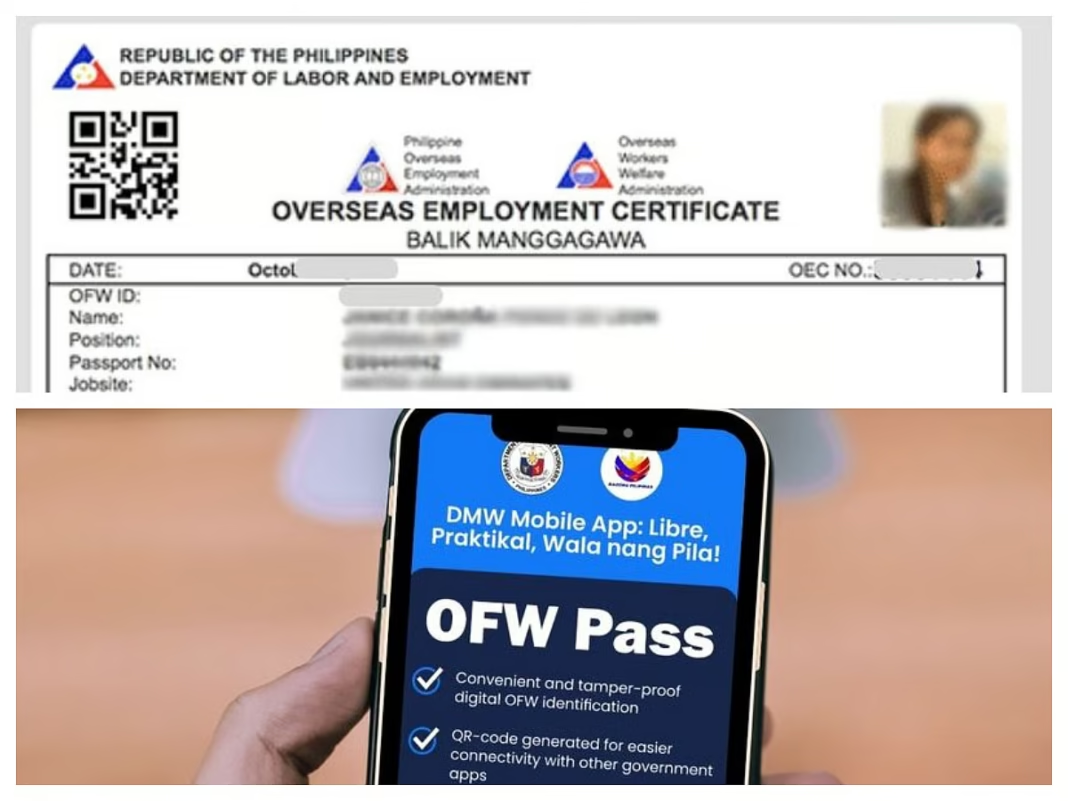
MANILA, Philippines: UAE-based Filipino workers returning from the Philippines are reporting different experiences with the Overseas Employment Certificate and the newer digital OFW Pass, highlighting the importance of checking departure requirements before heading to the airport.
The Philippine Department of Migrant Workers introduced the OFW Pass as a digital alternative to the traditional OEC. Both documents serve as exit clearances for overseas Filipino workers, but recent traveler experiences suggest the transition from the paper-based system to the digital document is not yet uniform at every point of departure.
For Filipinos returning to jobs in the UAE, that can mean being prepared with access to the OFW Pass while also having an OEC available if required during airport processing.
Why the OEC and OFW Pass matter
The OEC is traditionally obtained through the DMW and is generally valid for a single overseas departure within its validity period.
The OFW Pass, meanwhile, is designed as a digital clearance that can be accessed through the DMW mobile application or the eGovPH app. Its validity is linked to the worker’s employment contract.
The digital system was introduced to make the departure process more convenient and reduce reliance on printed documents.
However, travelers interviewed for the report said the practical experience can differ depending on the airport and stage of processing.
Some UAE-bound travelers still carry the OEC
Jeane Adriano, a health and safety manager who recently returned to the UAE through Clark International Airport, said airline and immigration staff asked her for a printed OEC despite having access to the OFW Pass.
She was directed to a DMW kiosk, where she completed the process to obtain and print an OEC before returning to the airline counter.
The process did not end there. Adriano said she was later sent back to the DMW kiosk for verification before immigration completed her departure processing.
The additional steps meant moving between different airport areas and going through security again, turning what she expected to be a routine departure into a longer process.
Experiences differ at Manila airport
Another UAE-based worker, Ressie Pineda, said she used an OEC when returning to the UAE through Ninoy Aquino International Airport in Manila.
Pineda, who works as a kids club coordinator, said the document was also relevant when she sought a travel tax refund and during subsequent OFW processing at the airport.
Her experience was different from Adriano’s in that the process proceeded without the same reported back-and-forth between counters.
Paulo Lagunay Jr., a food and beverage supervisor who also recently flew back to the UAE, said he continued using the OEC rather than trying the OFW Pass.
He reported no problems while presenting the traditional document.
Are both documents accepted?
An immigration officer at NAIA, who spoke on condition of anonymity because they were not authorized to comment publicly, said both the OEC and OFW Pass are currently recognized for OFW departure processing.
The officer said travelers using the e-gate system must have a valid clearance, whether in the form of an OEC or OFW Pass.
That means workers who have successfully obtained a valid OFW Pass do not necessarily need to revert to the paper document. However, the experiences of recent travelers indicate that carrying supporting documentation can provide an additional safeguard if questions arise at the airport.
What UAE-based OFWs should do before flying
For Filipino workers planning a holiday in the Philippines before returning to the UAE, the safest approach is to check their current DMW status well before the flight.
Travelers should make sure they can access their DMW account and OFW Pass, verify that their employment information is current and check the latest departure requirements applicable to their circumstances.
Those who have an OEC should also consider keeping a printed copy readily available, particularly if they are uncertain about how their departure airport is handling the digital system.
Keeping copies of employment and travel documents on a phone can also make it easier to resolve questions at airline or immigration counters.
The experiences reported by UAE-based OFWs underline a broader point: the digital transition is underway, but airport procedures may not yet feel identical to every traveler.
For workers flying back to the UAE in the coming weeks, checking the latest DMW requirements before leaving home — and allowing extra time at the airport — can help reduce the risk of an unexpected delay.