
MAKKAH — The journey of Hajj transport has evolved into a sweeping story of mobility, faith, and technology, reflecting Saudi Arabia’s long-term transformation of pilgrimage logistics.
In Makkah, where millions converge annually, pilgrimage once depended on camel caravans crossing vast deserts in arduous, months-long journeys. These convoys—carefully organized and supported by designated water and rest stations—were the only lifeline linking distant Muslim communities to the Holy Mosque.
The arrival of steamships marked the first major leap, funnelling pilgrims through the Red Sea toward Jed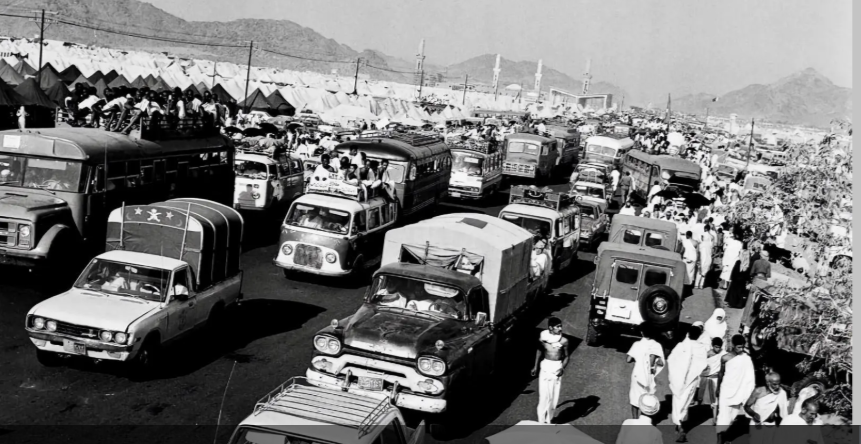 dah. Later, civil aviation compressed journeys that once took months into mere hours, with modern hubs such as King Abdulaziz International Airport in Jeddah enabling streamlined digital arrivals.
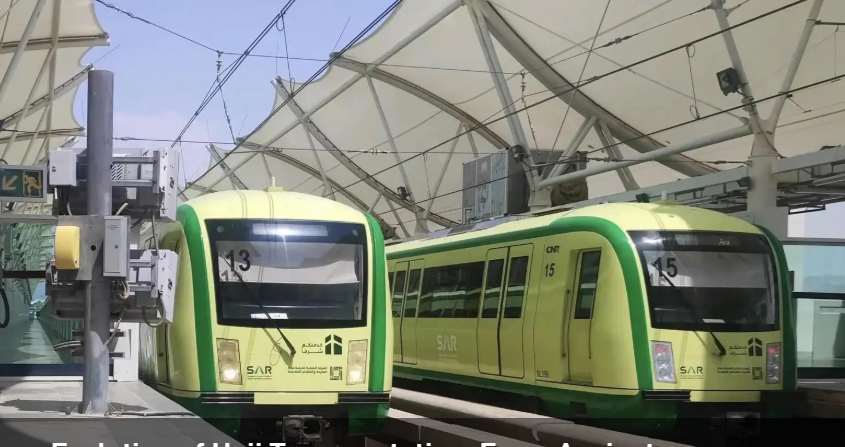
Today, the Kingdom operates a fully integrated mobility ecosystem under Vision 2030, blending infrastructure with artificial intelligence and real-time data systems. The Haramain High-Speed Railway connects Makkah and Madinah in a fast, electric corridor via Jeddah and King Abdullah Economic City, while the Al-Mashaaer Al-Mugaddassah Metro Line eases peak pilgrim movement between Mina, Arafat, and Muzdalifah.
Smart shuttle fleets, automated traffic management, and AI-driven crowd analytics now coordinate millions of daily movements, allowing authorities to monitor density and adjust flows in real time through digital platforms.
The transformation extends beyond transport. In Prophet’s Mosque, cleaning and maintenance operations continue around the clock during the Hajj season, covering prayer halls, courtyards, rooftops, and intricate architectural elements to preserve both sanctity and comfort for worshippers.
Meanwhile, the Miqat Dhu Al-Hulayfah Mosque has undergone major expansion and modernization. Capacity has risen from 5,000 to over 15,000 worshippers, supported by advanced sound systems, expanded walkways, thousands of lighting fixtures, surveillance infrastructure, and new commercial and service facilities.
Together, these developments reflect a unified national effort: transforming pilgrimage from a physically demanding expedition into a seamless spiritual journey shaped by technology, efficiency, and care.
With Inputs from SPA