

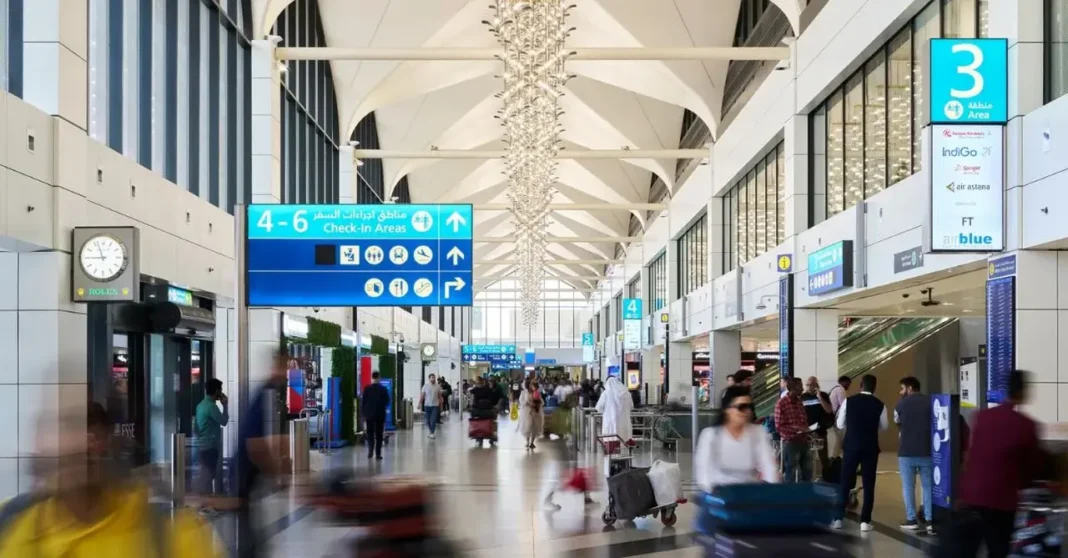
DUBAI, United Arab Emirates — Air travel across the UAE remains largely normal on Monday, but several flights to Kuwait have been canceled as regional tensions continue to affect schedules in parts of the Gulf.
Emirates, Etihad Airways and Air Arabia have all suspended selected Kuwait services, while airlines continue to monitor security conditions and adjust operations where needed.
Passengers traveling today are being urged to check their flight status directly with their airline before heading to the airport, leave extra time for travel and stay updated on any new advisories.
Etihad Airways said flights EY653 and EY654 between Abu Dhabi and Kuwait were canceled for operational reasons. The airline said affected travelers are being offered alternative arrangements.
Emirates has canceled Dubai-Kuwait flights EK853, EK855, EK857 and EK859 on July 21, along with return services EK854, EK856, EK858 and EK860 from Kuwait to Dubai.
Air Arabia also canceled several flights between Sharjah, Abu Dhabi and Kuwait, including G9068, G9124, G9121, G9069, G9125, G9122, 3L020, 3L022, 3L021 and 3L023. Some of those cancellations affect July 21 departures.
Flydubai is still operating its network, and Dubai Airports’ flight status board showed a scheduled Kuwait service at 3:35 p.m. on Monday.
Other UAE carriers are also continuing regular operations, although some flights have faced delays as airlines respond to changing conditions in the region.
Dubai’s flagship carrier said passengers should arrive early at Dubai International Airport during the busy summer travel period. Flydubai has also told passengers to confirm schedules before traveling and to allow extra time at the airport.
The disruption comes as several foreign governments continue to update travel guidance for the region. Kuwait has drawn advisories from the U.S. and Canadian governments, which have told travelers to reconsider or avoid non-essential trips.
The U.K. has said schedules remain reduced and advised passengers to confirm arrangements with airlines before departure.
Other countries in the region are also seeing fresh guidance. Bahrain has been flagged by the U.S. Embassy over a potential security threat, while Saudi Arabia, Jordan, Oman, Qatar and the UAE remain under varying levels of travel caution from foreign governments.
Some international airlines have also adjusted Gulf schedules because of airspace restrictions and security concerns. Routes to and from Dubai, Abu Dhabi, Riyadh, Doha, Amman and other cities have been suspended or rerouted by carriers including Singapore Airlines, British Airways, Lufthansa Group, Cathay Pacific, KLM, Aegean Airlines, Air France, ITA Airways, Wizz Air, AirBaltic, Finnair, Air Astana and Scoot.
Travelers with bookings on affected routes are being advised to check directly with airlines for refund, rebooking and waiver options.
Airlines say flight times may be longer on some routes because of detours, while tighter schedules, rerouting and heavier traffic at alternate airports could also lead to baggage delays or missed connections.
For passengers in the UAE, the main advice remains the same: verify flight details with the airline, update contact information, avoid relying on social media rumors and plan for possible short-notice changes.
UAE airports remain operational, but travelers should expect continued schedule shifts as airlines review the situation. Further adjustments are likely if regional conditions change again.