
DUBAI — DMCC has recorded 9.4 percent growth in its Chinese business community over the past 12 months, the free zone authority announced Thursday, as bilateral trade between the UAE and China reached record levels.
More than 1,000 Chinese companies now operate from DMCC, with over 60 percent concentrated in energy, engineering, machinery, and technology and telecommunications sectors. The composition reflects the increasingly technology and industrial-led nature of commercial ties between China and Dubai.
The growth comes against a backdrop of record UAE-China bilateral non-oil trade, which reached US$111.5 billion in 2025, up 24.5 percent year-on-year.
DMCC recently concluded a three-city Made For Trade Live roadshow across Shanghai, Wuxi and Xi’an aimed at strengthening China-UAE trade and investment ties. Each city was selected for its commercial alignment with Dubai’s ecosystem.
Shanghai discussions centred on global trade, finance and technology; Wuxi focused on advanced manufacturing, artificial intelligence and industrial technology; and Xi’an on energy, engineering and advanced industry.
“UAE-China trade reached record levels in 2025, and this momentum is increasingly reflected in the number and profile of Chinese companies scaling internationally through Dubai,” said Ahmed Bin Sulayem, executive chairman and chief executive officer of DMCC.
“DMCC’s Chinese business community has grown 9.4 percent over the past 12 months, with over 60 percent of our 1,000-plus Chinese companies operating across energy, engineering, advanced machinery, and technology.”
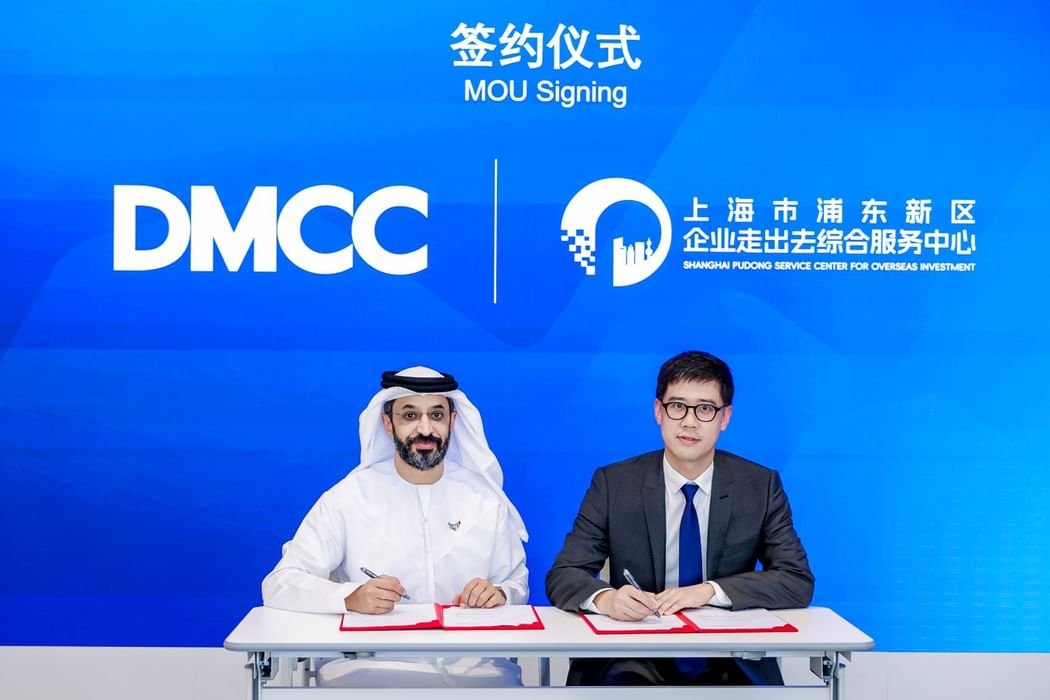
As part of the roadshow, DMCC strengthened institutional links through new agreements with the Xi’an Chamber of Commerce and Shanghai Pudong Service Center for Overseas Investment. The agreements will establish frameworks to deepen trade and investment cooperation and facilitate business matching and commercial exchanges.
DMCC research finds that South-South trade now accounts for approximately 35 percent of global trade, compared with around 25 percent for traditional North-North flows. This underscores the growing commercial importance of corridors connecting Asia, the Middle East, Africa and other high-growth economies.
In Shanghai, DMCC convened a dedicated roundtable coinciding with the launch of the Chinese-language version of its Future of Trade 2026 report, which examines the changing geography of global commerce and implications for Chinese businesses.