
ABU DHABI, United Arab Emirates: Migrant worker protection, fair recruitment and social security are expected to feature prominently in the next cycle of the Abu Dhabi Dialogue as the Philippines prepares to take over the regional forum’s chairmanship for 2026 to 2028.
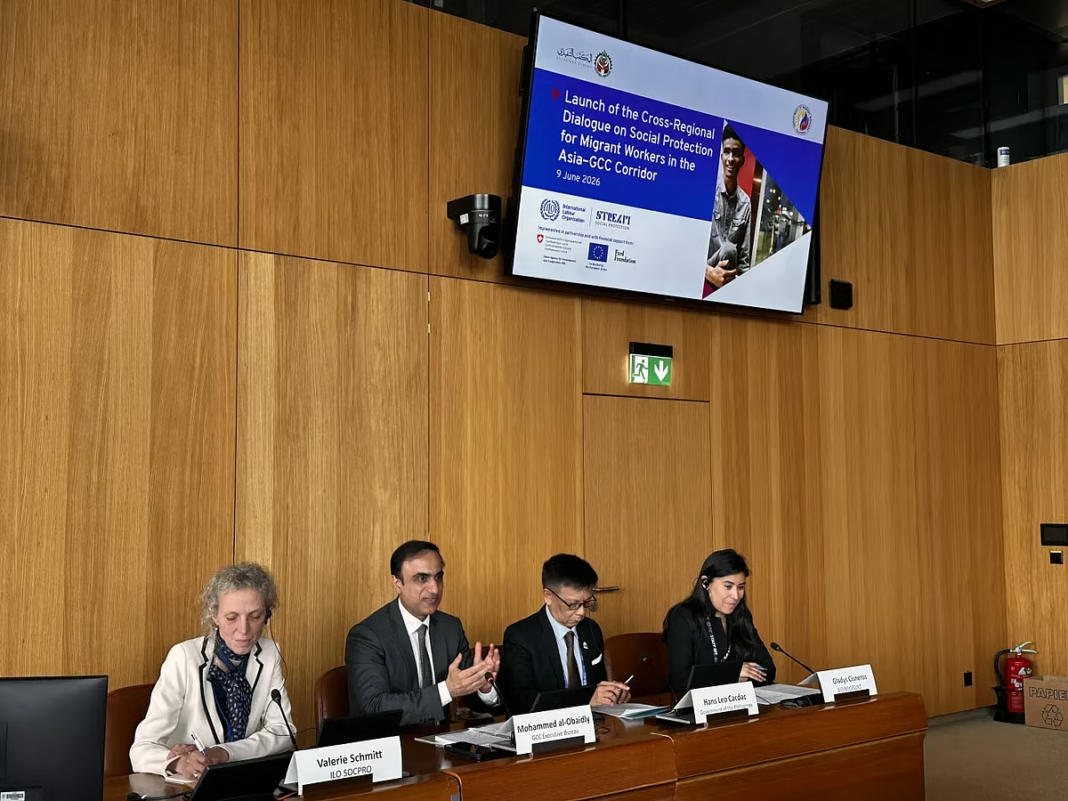
The Philippines’ Department of Migrant Workers held a consultation Sept. 1 with representatives from government agencies, industry and civil society to help shape the country’s priorities for the ninth cycle of the dialogue.
The Abu Dhabi Dialogue is a regional platform that brings together countries that send and receive migrant workers. Its discussions cover labor mobility, recruitment practices, worker protection and cooperation between participating governments.
Four areas set for discussion
The upcoming cycle is expected to concentrate on four broad areas: responsible digital transformation in labor mobility; remittances, financial inclusion and social protection; ethical recruitment and migration governance; and skills development and pathways from education into employment.
The priorities are particularly relevant to the Gulf, which remains a major destination for migrant workers from across Asia.
The Philippines estimates that about 2.5 million Filipino workers are employed overseas, with Gulf countries representing a significant part of the regional migration landscape.
The UAE is among the seven migrant-receiving countries participating in the Abu Dhabi Dialogue. The group also includes Bahrain, Kuwait, Oman, Qatar, Saudi Arabia and Malaysia.
The Philippines is one of the forum’s labor-sending countries.
Greater focus on social protection
The Philippine government is also looking to use the dialogue to compare approaches to social protection and labor welfare across sending and receiving countries.
Areas under consideration include social insurance, benefits coverage, recognition of skills and opportunities for workers to upgrade their qualifications.
Such discussions could be significant for Filipino workers in the Gulf, where employment and social protection systems differ from those in the Philippines.
The consultation is intended to identify practices that could be shared across countries and examine how existing systems can better support migrant workers throughout their employment cycle.
Domestic workers included in discussions
The protection of domestic workers is also expected to form part of the Philippines’ agenda.
Officials are consulting stakeholders on how the country can develop a coordinated position on issues affecting domestic workers and ensure their concerns are represented in regional policy discussions.
Domestic workers form an important part of the wider migration workforce across the Gulf, making the issue particularly relevant to the UAE and other receiving countries.
From regional dialogue to policy
The Abu Dhabi Dialogue has increasingly moved beyond the exchange of national policies toward broader regional cooperation and the development of measures that can be implemented at the national level.
Previous areas of cooperation have included wage protection, technology-enabled recruitment, dispute resolution and systems for verifying workers’ skills.
Philippine officials are now seeking recommendations from stakeholders to help determine which issues should receive greater attention during the country’s chairmanship.
Preparations to continue
Further technical meetings and consultations are expected before the Philippines formally advances its priorities through the dialogue’s upcoming conferences.
The latest consultation also covered other Philippine labor-migration matters, including proposed arrangements with Saudi Arabia and Japan.
With the Philippines set to lead the Abu Dhabi Dialogue through 2028, the coming discussions are likely to influence how participating countries approach recruitment, worker welfare, skills mobility and cooperation across major migration corridors.
For Gulf-based migrant workers, the outcome could help shape future regional initiatives on employment protection and access to social and financial support.