

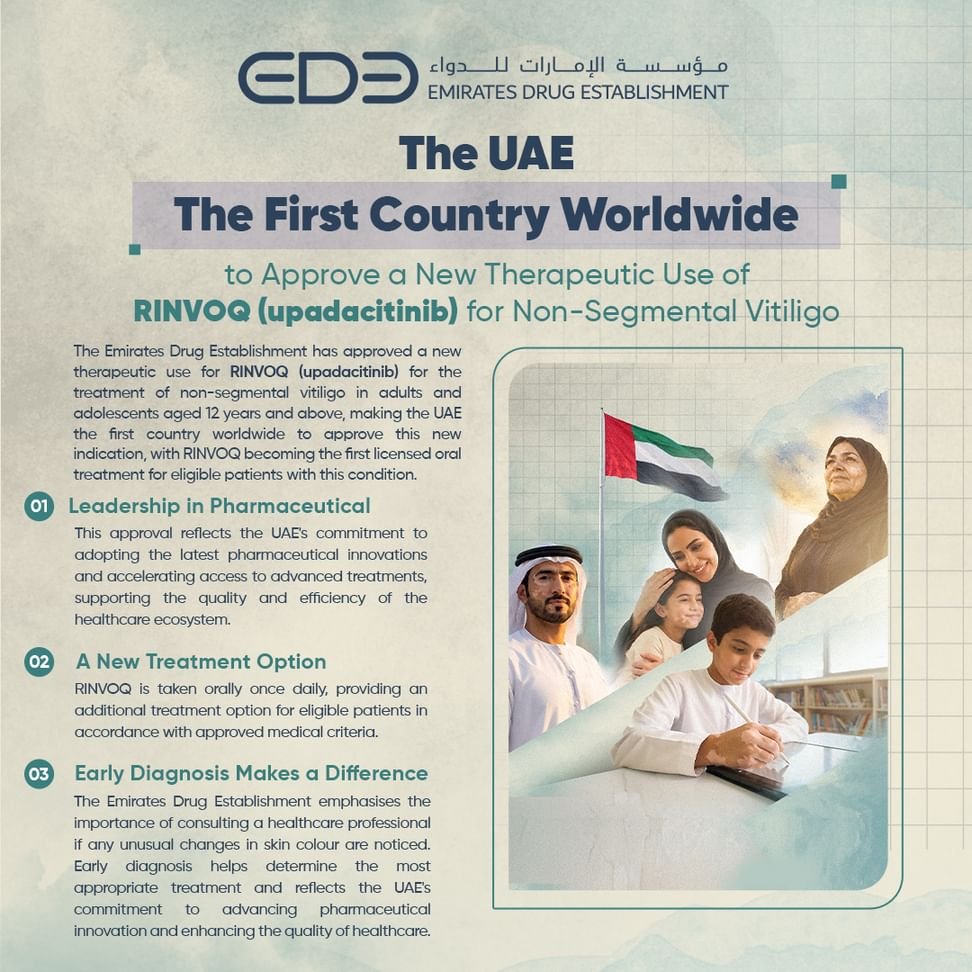
DUBAI, United Arab Emirates — The UAE has become the first country in the world to approve an expanded use of the drug RINVOQ for treating non-segmental vitiligo, a chronic autoimmune skin condition that causes patches of skin to lose their color.
The Emirates Drug Establishment announced Monday that it has approved a new therapeutic indication for RINVOQ, also known as upadacitinib, to treat non-segmental vitiligo in adults and adolescents aged 12 years and older whose condition requires systemic therapy.
This makes it the first licensed oral treatment for this group of patients, according to the EDE.
The medicine is taken orally once a day, offering an additional treatment option for eligible patients in line with approved medical criteria.
Officials said the UAE’s decision to approve the expanded use of RINVOQ ahead of any other country reflects its leading position in adopting the latest pharmaceutical innovations and accelerating patient access to them.
The Emirates Drug Establishment said the approval forms part of an advanced regulatory framework that responds to global scientific developments, helping to strengthen the UAE’s pharmaceutical sector and improve treatment outcomes for patients.
The Establishment also urged members of the public to consult a specialist if they notice any unusual changes in their skin color, to support early diagnosis, proper assessment and the selection of the most appropriate treatment for each patient.
Vitiligo is a chronic autoimmune skin condition that causes patches of skin to lose their natural color, resulting in pale or white patches that can appear anywhere on the body.
It is thought to be caused by changes in the immune system, with potential genetic factors involved, and can be triggered by environmental factors, sun or chemical exposure, stress and chronic physical trauma.
Doctors classify vitiligo into two categories. Non-segmental vitiligo, the most common form, causes symmetrical patches on both sides of the body, often on the face, neck, scalp, hands and areas prone to friction, and tends to spread gradually over time.
Segmental vitiligo, seen in around 10% of cases, causes smaller patches confined to one side of the body, usually starts earlier in life and tends to stabilize more quickly.
Vitiligo is generally considered an autoimmune disorder, where the immune system mistakenly attacks and destroys the skin’s pigment-producing cells, called melanocytes.
It has also been linked to other autoimmune conditions, including thyroid disease, psoriasis, rheumatoid arthritis, alopecia areata and diabetes, though the exact trigger remains unclear.
Vitiligo affects between 0.5% and 1% of the world’s population, though some researchers believe the true figure could be as high as 1.5%, as many cases go unreported.
It can develop at any age, though onset is typically in the mid-20s.
World Vitiligo Day is observed globally every year on June 25, raising awareness of the condition and supporting those living with it, while pushing for better access to diagnosis, treatment and mental health support worldwide.
Beyond the physical symptoms, vitiligo often carries a heavy psychological toll, with many patients reporting anxiety, low self-esteem and social stigma, making awareness and mental health support as important as medical treatment.
The approval is expected to provide new hope for patients in the UAE and across the region who have been seeking effective treatment options for this challenging condition.