I do not remember the first time I heard S. Janaki’s voice. I must have been five, perhaps a little older, when “Irul Moodukayo En Vaazhvil” entered my world and stayed there. In those days, I knew nothing of credits, playback singers, or the architecture of cinema songs. I only knew that the voice was unusually tender, unusually exact, and impossible to forget.
Later, I realised that the song carried a familiar shadow. The Malayalam version was an adaptation of Hemant Kumar’s “Mera Dil Ye Pukare Aaja,” with new lyrics by P.N. Dev. In Kerala, both songs lived side by side in memory, with Lata Mangeshkar’s Hindi version and S. Janaki’s Malayalam rendering each claiming the same melody in its own language.
That is how Janaki lived in our minds for decades, not merely as a singer, but as a companion to memory.
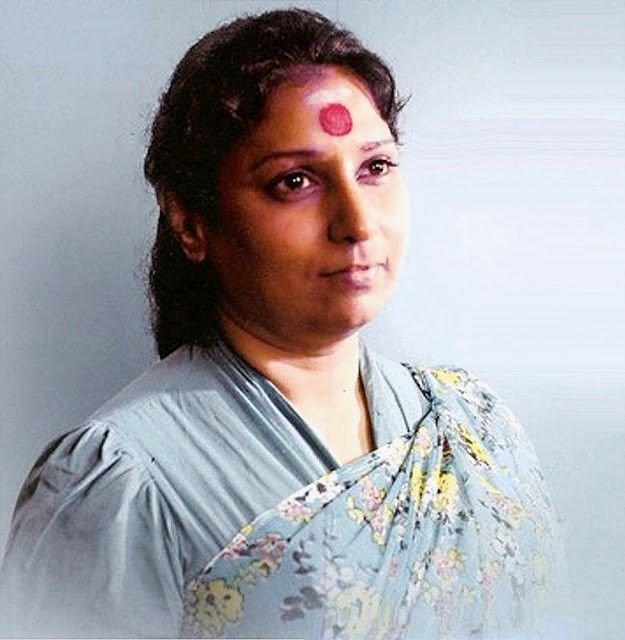
Sistla Janaki, affectionately known as Janaki Amma, the “Nightingale of South India,” died on July 11, 2026, in Mysuru at the age of 88. With her passing, Indian cinema lost one of its most enduring and versatile voices, a singer whose career stretched across more than six decades and whose recordings in Malayalam alone remain part of everyday nostalgia for generations of listeners.
Born on April 23, 1938, in Andhra Pradesh, Janaki did not come from the polished world of formal classical training. She learnt music by ear, under the guidance of a nadaswaram vidwan, and slowly built a style that was entirely her own. That lack of formalism, rather than holding her back, became one of her greatest strengths. She sang with instinct, precision and emotional intelligence, and she could make a line sound intimate without ever forcing it.
For Malayalam listeners, Janaki was never a distant South Indian star. She was our singer too.
Her Malayalam songs entered the culture quietly and stayed there. “Irul Moodukayo En Vaazhvil” was among her earliest Malayalam recordings, and later came a long line of unforgettable songs that belong to the golden memory of Malayalam cinema. “Unarunaroo Unnipoove,” “Thumbi Vaa Thumbakudathin,” “Kiliye Kiliye” and “Aadivaa Kaatte” are not just songs; they are part of the emotional landscape of the language itself. Her voice could sound playful in one song, maternal in another and achingly melancholic in a third.
What made her Malayalam singing special was not only range, but accent and feel. She treated the language with care, and listeners could hear that respect in every phrase. For many Malayalis in Kerala and across the Gulf, especially the architects, nurses, traders and teachers who built lives far from home, her songs became a thread back to Kerala. For Gulf households, her voice was a form of cultural continuity, a familiar presence that made distance bearable. Her songs became the background music of childhood, school days, bus rides, evening radios and homes where nostalgia never really left.
Her career began in the 1950s, and from there it expanded across Tamil, Telugu, Kannada, Malayalam and several other languages. She recorded tens of thousands of songs, becoming one of the most prolific playback singers in Indian history. Yet numbers alone cannot explain her stature. What made Janaki irreplaceable was her ability to inhabit a song completely. She could sing as a child, a teenage girl, a lover, a mother or an elderly woman, and each performance felt truthful.
She worked with some of the biggest names in South Indian music, including M.S. Viswanathan, Ilaiyaraaja and A.R. Rahman. Across changing musical eras, she remained relevant, always moving with them, always central to the evolving landscape. In Malayalam cinema, her collaborations produced some of the most cherished melodies of the last century, songs that continue to circulate through nostalgia, radio compilations and family playlists.
Her life was not untouched by pride or principle. In 2013, she declined the Padma Bhushan, saying the honour had come too late and that her contribution deserved more recognition. It was a rare public stand from an artist who had otherwise let her work speak louder than her words. The refusal reflected conviction, a sense that the South had long been under-recognised, and that achievement should be acknowledged while the artist is still alive.
There was something deeply fitting about the way her journey moved. A voice that began in obscurity ended in legend, but never lost its intimacy. Even at the height of fame, Janaki’s singing retained the warmth of something personal, as if she were still singing for a single listener somewhere in the room.
For those of us who grew up with her songs, the news of her death does not feel like the end of a career alone. It feels like the closing of a familiar door in the house of memory.
Some singers entertain. Some impress. S. Janaki remained.
And that is why, years after first hearing “Irul Moodukayo En Vaazhvil,” the song still returns, not as a relic, but as a living trace of a voice that once made the whole of South India listen.