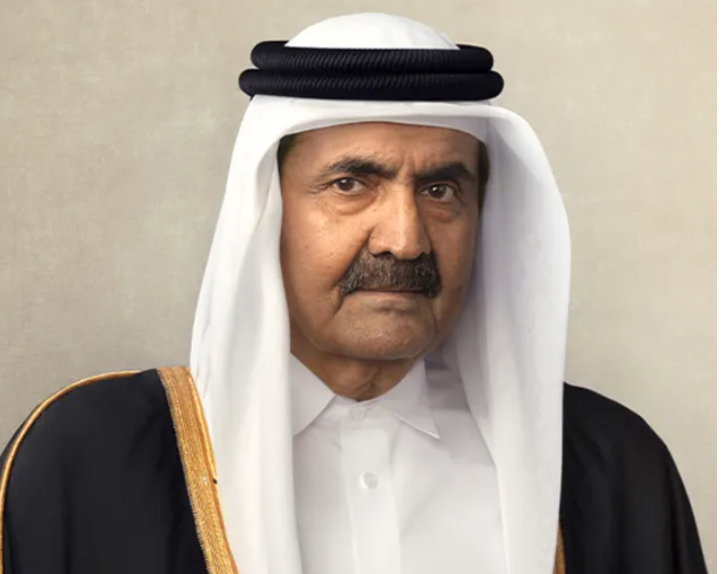
DOHA: Sheikh Hamad bin Khalifa Al Thani, the former Emir of Qatar, widely regarded as the architect of the country’s modern transformation, has died at the age of 74, the Amiri Diwan announced on Sunday.
“With hearts steadfast in faith in God’s decree and destiny, the Amiri Diwan mourns the great loss to the nation… His Highness the Father Emir Sheikh Hamad bin Khalifa Al Thani, who passed away this morning,” the statement said.
Sheikh Hamad ruled Qatar from 1995 until 2013, overseeing a period of rapid economic growth and far-reaching political, social and cultural reforms that elevated the country’s global standing.
During his leadership, Qatar emerged as a major international player, extending its political influence across the Middle East, North Africa and Asia. The country also successfully hosted the FIFA World Cup in 2022, the first Arab nation to do so.
A defining feature of his tenure was the strategic use of Qatar’s vast natural gas reserves. Under his leadership, the country became the world’s largest exporter of liquefied natural gas by 2006, with production capacity reaching 77 million tonnes annually. Qatar’s GDP expanded more than twentyfold during this period.
Sheikh Hamad also spearheaded key institutional and democratic developments, including the launch of Al Jazeera in 1996, the establishment of Qatar Foundation, and the introduction of the country’s first permanent constitution in 2004. Municipal elections were introduced, granting women the right to vote and contest.
In a rare move in the Gulf region, Sheikh Hamad voluntarily abdicated in 2013, transferring power to his son, Sheikh Tamim bin Hamad Al Thani, then aged 33.
Born in Doha in 1952, Sheikh Hamad graduated from the Royal Military Academy Sandhurst in the United Kingdom. He became Qatar’s defence minister in 1977 and assumed power as emir on June 27, 1995.
Beyond domestic transformation, he played a significant diplomatic role, positioning Qatar as a mediator in regional conflicts, including in Lebanon, Sudan’s Darfur region, and Palestinian political divisions. Qatar also facilitated dialogue with the Taliban, paving the way for negotiations with the United States.
During the Arab Spring, Qatar backed popular uprisings in several countries. It supported NATO operations in Libya and took a firm stance against the Syrian government during the early stages of the conflict.
The Palestinian cause remained central to Sheikh Hamad’s foreign policy. He made a historic visit to Gaza, becoming the first head of state to do so in over a decade, and funded major reconstruction projects in the territory.
Leaders across the region expressed condolences following his death. UAE President Sheikh Mohamed bin Zayed Al Nahyan extended his sympathies to Sheikh Tamim and the Qatari people, while Egypt’s President Abdel Fattah el-Sisi and Pakistan’s President Asif Ali Zardari praised Sheikh Hamad’s leadership and contributions to regional stability.
Sheikh Hamad’s legacy is closely tied to Qatar’s rise as a modern, influential state, with his policies shaping the nation’s economic strength and global reach for decades.