

India has seen too many sudden deaths of powerful men to treat shock as unusual. Yet the death of Ajit Pawar — abrupt, violent and unresolved — lands with a particular weight. It is not only because Pawar was Maharashtra’s deputy chief minister, or because Baramati was his political fortress, or because he embodied one of the most complicated careers in modern Indian politics. It is because his death sits at the intersection of history, distrust and a social media ecosystem that no longer waits for facts.
By early afternoon on January 28, investigators were saying what investigators almost always say in the first hours: no foul play established, no suspects, no conclusions. A chartered Bombardier Learjet 45, 16 years old, attempting a second landing at a small regional strip without advanced navigational aids, crashed and burned. The DGCA and the Aircraft Accident Investigation Bureau have taken charge. Black boxes will be read. Maintenance logs will be checked. Weather, pilot judgment and machine will be examined. Weeks, perhaps months, will pass before clarity.
 This is how aviation accidents work. Reuters and the AP, in their early dispatches, have stuck closely to this script: verified facts, official statements, restraint. India’s mainstream newspapers — The Indian Express, Hindustan Times, NDTV — have done largely the same. That discipline matters. It is also precisely what makes the noise outside newsrooms louder.
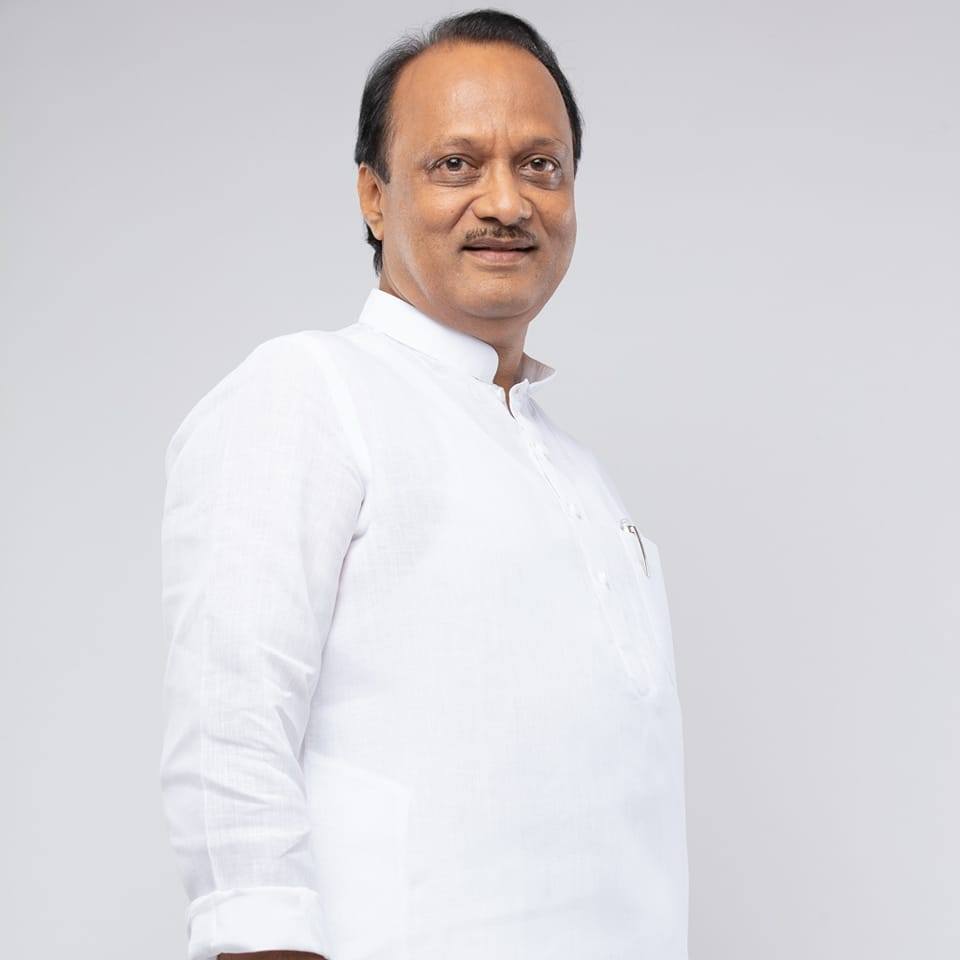
Because Ajit Pawar was not just another VIP. He was a master operator — admired, feared, resented — whose career graph rose and fell through audacity. Nephew of Sharad Pawar, he grew up in the shadow of a political patriarch and spent decades trying to escape it. He ran Baramati like a command post, held the finance portfolio with a reputation for control and calculation, and split his own party to ally with the BJP when it suited him. To supporters, he was decisive. To critics, ruthless. To allies, indispensable — until he wasn’t.
Such figures do not die quietly in public memory. India’s political past has trained its citizens to ask questions whenever aircraft fall from the sky. From Sanjay Gandhi to Gopinath Munde, from military helicopters to VIP choppers, every crash becomes a cultural memory. Most are ultimately ruled accidents. None fully erase doubt.
So when Pawar’s jet went down, suspicion arrived almost instantly — not from investigators, but from politics. Opposition leaders demanded Supreme Court–monitored probes. Some hinted darkly at timing: local body elections, uneasy alliances, whispered talk of reconciliation with Sharad Pawar, friction with the BJP over civic contests. On social media, conjecture hardened into certainty within hours. “Inside job.” “Calculated hit.” “Files on rivals.” The plane’s earlier incident in 2023 was resurrected as proof. Facts became props.
This is the new political afterlife: death followed by algorithmic trial.
There is, as of now, no evidence to support sabotage. None. Aviation experts quoted across media have pointed instead to the banal killers of flight — visibility, approach angles, mechanical failure, human error — especially at small airstrips. To jump from tragedy to murder is emotionally understandable, politically useful, and journalistically reckless.
And yet, dismissing the suspicion entirely would also be dishonest. India’s institutions suffer from a credibility deficit earned over years of delayed reports, unpublished findings and quiet closures. When people say “wait for the probe,” they are also saying “trust the system.” Trust, today, is in short supply.
Ajit Pawar’s death exposes that fracture. It is a test not only for investigators but for political restraint. Leaders who exploit grief to score points corrode the very legitimacy they later demand. Social media, which now functions as India’s loudest newsroom, amplifies the most extreme interpretation first and rarely returns for corrections.
Pawar himself would have understood this dynamic better than most. He thrived in ambiguity, survived betrayal, reinvented alliances. In life, he controlled narratives ruthlessly. In death, he has lost that power.
What remains is a responsibility — for the state to investigate transparently and publish its findings in full; for the media to resist the intoxication of rumor; and for politicians to remember that tragedy is not evidence.
Ajit Pawar’s career will be debated for decades: the administrator versus the splitter, the nephew versus the heir, the pragmatist versus the opportunist. His death, however, demands patience, not projection. Until facts replace fog, anything else is not vigilance. It is gossip dressed up as concern.
India owes the dead — and itself — better than that.