
K.T. Abdurabb
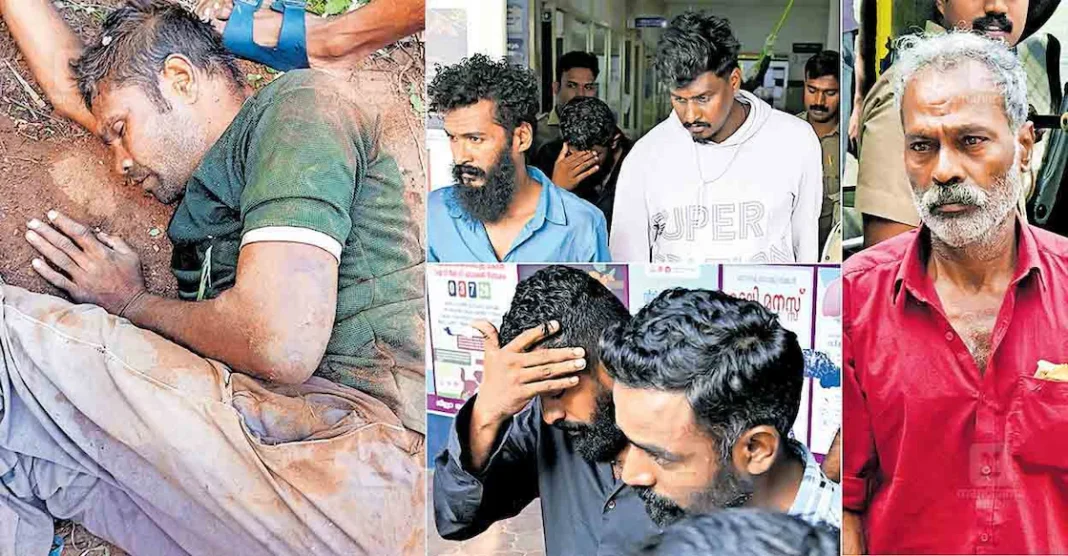
The autopsy report of Ramnarayan—a 31-year-old Dalit construction worker from Chhattisgarh—lists over eighty injuries. His ribs were broken, his spine fractured, and medical examiners noted there was “no part of his body without injuries.” Beaten to death by a mob at Walayar on the mere suspicion of theft, mistaken for a Bangladeshi national, his killing is not just a crime. It is a visceral exposure of the fracture between Kerala’s celebrated history of migration and its present-day moral failures.
Ramnarayan, whose full name was Ram Narayan Baghel, had been in Kerala for only four days. He came, like millions before him, seeking a livelihood to support his wife and two school-going children, and was planning to return home soon. His death holds up a dark mirror to a society whose economic and social history has been fundamentally shaped by the very same pursuit of work and dignity.
Few regions embody the migration story as fully as Kerala. Long before the Gulf boom, Malayalis travelled to Madras, Mumbai, and Rangoon. Later, millions crossed seas to West Asia, their remittances—over ₹2 lakh crore annually—becoming the cornerstone of the state’s prosperity. Migration is not incidental to Kerala; it is its modern identity.
It is against this profound backdrop that the xenophobic and communal slurs shouted during the attack on Ramnarayan feel especially catastrophic. Kerala today relies heavily on an estimated 3.5 million workers from other Indian states, even as it continues to send its own abroad. This dual reality ought to have cultivated deep empathy. Instead, we see a brutal moral dissonance.
Notably, Malayali migrants abroad, from skilled professionals to business leaders like M.A. Yusuffali, , Dr. B. Ravi Pillai and P.N.C. Menon are often celebrated for their contributions. Their safety is a matter of diplomatic priority. Within Kerala, however, the narrative around inter-state migrants is often poisoned by rumours linking them to crime, creating a tinderbox of suspicion that can erupt, as it did at Walayar
The government’s response—the swift arrest of five individuals on murder charges and the suo motu probe initiated by the State Human Rights Commission—is necessary but insufficient. True accountability requires acknowledging what activists on the ground are demanding: that this be officially recognized as a “mob lynching,” and that the state’s famed literacy translates into constitutional ethics that protect every worker.
Kerala’s high literacy rate has long been a marker of social progress. Yet, this incident proves that literacy alone cannot combat the deep-seated Islamophobia and caste prejudice that fueled this violence. The moment calls for a broader civic education—one that actively teaches respect for labour and pluralism.
Ramnarayan was, in every meaningful sense, a migrant like any Malayali who ever left home. That he was Dalit, poor, and spoke a different language made him exponentially more vulnerable. His death is our collective moral reckoning. How Kerala responds—whether it grants the ₹25 lakh compensation sought for his family and fundamentally reforms labour protections—will define its soul.
In an era of mobility, selective empathy is a failure of civilisation. The challenge before Kerala is to ensure that the dignity it fiercely seeks for its people abroad is extended, without exception, to the Ramnarayans within its borders. His broken spine is the breaking point for our conscience.
The writer is a social commentator based in the UAE.