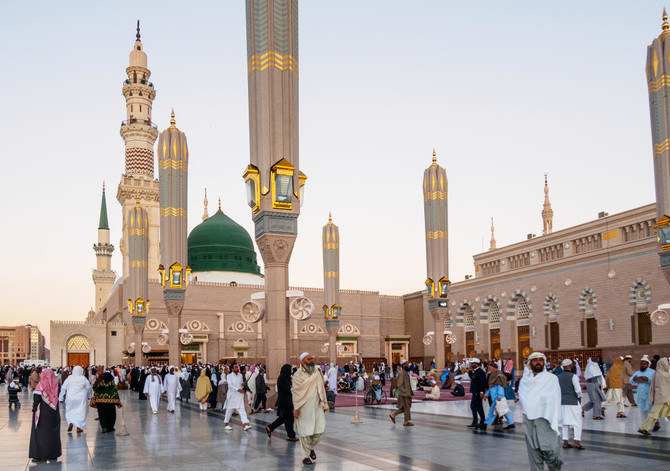


MADINAH, Saudi Arabia,28, Jan (GDM) — As millions of worshippers stream into the Prophet’s Mosque each year, the centuries-old heart of Islam’s second-holiest site is quietly being guided by some of the most advanced technology in the Kingdom.
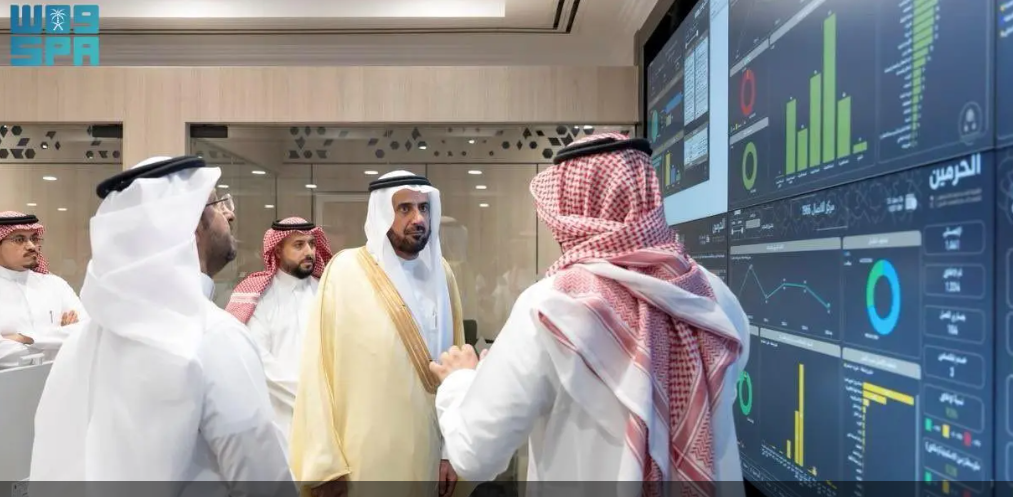
This week, Saudi Arabia inaugurated the Smart Engineering Command and Control Center at the Prophet’s Mosque, a move officials say reflects how the historic complex is evolving to serve rising visitor numbers while preserving its spiritual character.
 The center was launched by Minister of Hajj and Umrah Tawfiq Al-Rabiah, who also chairs the board of the General Authority for the Care of the Affairs of the Grand Mosque and the Prophet’s Mosque. The inauguration comes ahead of the holy month of Ramadan, one of the busiest periods of the Islamic calendar.
Operating around the clock, the command center functions as a digital nerve center for the mosque. Interactive screens display real-time data on assets, services, visitor feedback and regulatory compliance, allowing staff to respond quickly to crowd movements, maintenance needs and service disruptions. Digital performance indicators and analytical reports — based on historical, current and predictive data — help planners prepare for peak seasons such as Ramadan and Hajj.
Officials say the system represents a shift toward proactive, data-driven management of one of the world’s most visited religious sites, in line with Saudi Vision 2030’s focus on operational excellence and innovation.
 That modernization comes as visitor numbers continue to climb. During the month of Rajab alone this year, more than 25 million people visited the Prophet’s Mosque, according to the General Authority. Nearly 1.3 million worshippers prayed in the Rawdah Al-Sharifah — the area believed to lie between the Prophet’s pulpit and his chamber — while about 2.6 million offered greetings at the Prophet’s resting place and those of his two companions.
Alongside technology, authorities are also expanding religious and educational outreach. The Hidayah Center at the mosque distributes guidance books and delivers dawah messages aimed at enriching visitors’ spiritual and intellectual experiences. Officials say technology is increasingly being used to ensure these messages reach a global audience while promoting moderation and understanding.
Founded in 622 CE by the Prophet himself after his migration from Makkah, the mosque began as a modest structure of mud bricks and palm trunks that doubled as a community center, court and shelter. Today, it stands as a vast architectural landmark, meticulously maintained and rich in symbolism. The mosque features 100 ornate doors, each inscribed with the Prophet’s name, spread across its main halls, roof and outer walls.
Just steps away, visitors can also explore the International Exhibition and Museum of the Life of the Prophet and Islamic Civilization, a major cultural attraction designed to complement the spiritual journey. Spanning 5,000 square meters over two floors, the museum houses 25 pavilions featuring interactive displays, virtual- and augmented-reality exhibits, and more than 500 antique items linked to the Prophet’s era.
The exhibition is available in seven languages, including Arabic, English, French, Urdu and Indonesian, and includes a 4DX theater screening films about the Prophet’s life. One pavilion highlights the role of women and children in early Islam, while another uses immersive technology to recreate the Prophet’s personal belongings. Others explore holistic medicine, astronomy in Islam, the lives of earlier prophets, and the 99 names of Allah.
Among its most significant displays are the Constitution of Madinah — an early charter outlining peaceful coexistence among the city’s diverse communities — shown alongside the 2019 Makkah Declaration, a modern statement condemning extremism and promoting shared human values.
Together, the smart command center, educational initiatives and cultural attractions reflect a broader effort to manage growing crowds while deepening the visitor experience — blending innovation with reverence at one of Islam’s most sacred destinations. (With input from SPA)