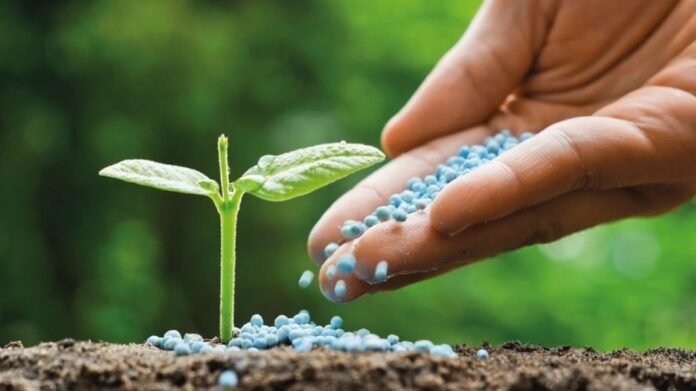


Abu Dhabi, UAE, Feb 3, 2026 (GDM) — Khalifa University of Science and Technology today announced that its researchers have developed a cost-effective, sustainable technology to enhance sandy soils using nanocellulose fibers extracted from pineapple peel waste. The innovation addresses critical challenges in water scarcity, soil degradation, and food security in arid regions.
The study, titled “Evaluating nanocellulose from food waste as a functional amendment for sandy soils: Linking fiber structure to water dynamics, soil mechanics, and plant-microbe interactions,” was published in the Journal of Bioresources and Bioproducts, a top 1% journal. The research demonstrates that nanocellulose fibers can transform sandy soils into fertile ground by improving water retention, mechanical stability, and nutrient availability. Researchers also assessed fiber-soil mixtures for long-term durability and nutrient retention for plants.
Professor Ebrahim Al Hajri, President of Khalifa University, said, “Our researchers have developed a novel method capable of transforming arid regions into productive land. This work aligns with the UAE’s objectives to ensure food security and tackle water scarcity, offering a scalable, low-cost solution that leverages local waste streams to restore degraded soils and promote sustainable agriculture.”
The paper was authored by M. Haidar Ali Dali, Dr. Mohamed Hamid Salim, Malak AbuZaid, Maryam Omar Subhi Qassem, Dr. Faisal Al Marzooqi, Dr. Andrea Ceriani, Alessandro Decarlis, Ludovic Francis Dumée, and Blaise Leopold Tardy. Khalifa University researchers represent the Department of Chemical and Petroleum Engineering, the Food Security and Technology Centre (FSTC), the Research and Innovation Centre on CO2 and Hydrogen (RICH), and the Centre for Membrane and Advanced Water Technology (CMAT).
 Patent Achievements:
Khalifa University also announced that it secured 60 patents in 2025, marking its strongest single-year performance in applied innovation and surpassing other UAE universities. The number of granted patents rose from 22 in 2023 to 32 in 2024, reaching 60 in 2025—a 173% increase over two years—reflecting the university’s growing capacity to translate research into intellectual property aligned with national priorities.
Professor Al Hajri noted, “Applied innovation and knowledge protection are central to the UAE’s long-term competitiveness. Our focus on patent generation ensures that research discoveries are translated into deployable solutions and innovation-led enterprises.”
To date, Khalifa University has recorded over 850 invention disclosures, more than 800 pending patent applications, and over 350 granted patents across areas such as artificial intelligence, autonomous systems, advanced materials, healthcare technologies, and sustainability.
Commercialization of research outputs is supported by the Khalifa Innovation Centre and the Khalifa University Enterprises Company (KUEC). Notable startups originating from the university include Nutrigenics Care, an AI-powered clinical nutrition platform; Deep Forecast, offering AI-based geospatial environmental monitoring; DroneLeaf, developing autonomous UAV solutions; and Kumrah AI, specializing in neuromorphic vision systems. Other ventures span medical wearables, rehabilitation technologies, smart city planning, and sustainable agriculture.