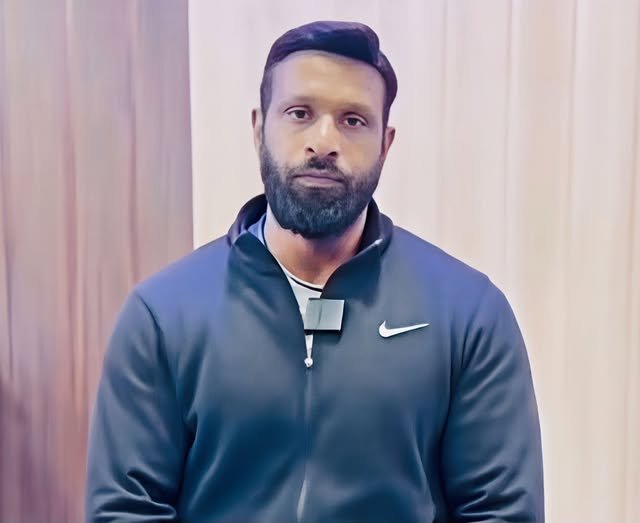


Recently, a video from northern India captured a tense confrontation that quickly went viral. A group of men, claiming affiliation with a Hindu nationalist organisation, harassed an elderly Muslim shopkeeper, demanding that he remove the word “Baba” from the name of his store. Amid the intimidation, one bystander stepped forward in defence, calmly stating his name: “Mera naam Mohammad Deepak hai” (My name is Mohammad Deepak).
Deepak Kumar, a gym owner and practicing Hindu, used this gesture of solidarity to underline something that should be obvious in a constitutional democracy: intolerance and coercion have no place in a plural society. An ordinary man standing up against an extraordinary threat to basic decency.
Yet the response was almost immediately hostile: he faced multiple police complaints, protests outside his gym, and, most disturbingly, death threats from fringe groups. Even mainstream media channels, many aligned with the ruling Bharatiya Janata Party (BJP), a right-wing Hindu nationalist party, questioned his integrity and circulated false claims, turning the spotlight on the defender rather than the harassed.
Rising Hate Speech in India
To understand why this moment resonated beyond Uttarakhand, it helps to look at the broader terrain of hate speech and sectarian rhetoric in India today. According to the Washington-based India Hate Lab, 1,318 distinct hate speech events were documented across the country in 2025, up from 1,165 in 2024 and just 668 in 2023, an almost doubling in two years. Nearly 98% of these speeches explicitly targeted Muslims, while anti-Christian hate speech also rose steeply.
These events were not limited to fringe rallies. They included political rallies, religious processions, and gatherings where inflammatory language went largely unchecked or was amplified in mainstream public spaces. In several documented cases, high-profile leaders of the ruling party were identified among the most frequent speakers, giving voice to polarising narratives.
The Real-World Consequences
It is one thing to document rhetoric; it is another to prevent its real-world harm. Independent rights groups, including Amnesty International and Human Rights Watch, have long warned that hate speech correlates with discrimination, marginalisation, and violence against minorities.
Critics point out that under the current administration, in power since 2014, legislative changes, from citizenship laws to anti-conversion policies, have at times been perceived as targeting specific communities, further eroding confidence among minority populations that the state will protect them.
The stakes are not academic. When leaders, local or national, signal that certain groups are outsiders or inherently problematic, it creates a backdrop against which ordinary citizens feel emboldened to harass or exclude neighbours. This is not merely about political disagreement: it goes to the core of social trust and the rule of law.
Breaking the Silence
For years, minorities in India have learned to navigate around threats that come in the language of religion, nationalism, and “local sentiment.” Many prefer silence over complaint, choosing calculation over confrontation. And when they do speak up, their protests frequently disappear into delayed investigations, selective action, or a shrug from authorities who fear the political cost of neutrality.
Deepak’s gesture punctured that silence. He acted not because he belonged to the community under attack, but because he believed the incident contradicted the idea of India he recognises. That, in itself, is telling – it should not take unusual bravery to uphold a principle inscribed in the Constitution.
Courage, But at What Cost?
What happened next is even more telling. The backlash against him – the FIRs, the threats, the media trials- reveals an ecosystem that discourages solidarity and rewards intimidation. A country cannot claim to be the world’s largest democracy if a man risks his safety for doing something as basic as defending a neighbour’s dignity.
India today does not lack people who understand what is at stake. It lacks the conditions that allow them to speak without fear. If the state will not draw a hard line against hate, then the fabric of the republic depends on individuals who choose to do so, individuals like Deepak.
But one Deepak is not enough. India needs many more citizens and leaders willing to disrupt the casual cruelty of everyday bigotry, to challenge mobs rather than appease them.
The irony is that these people already exist. What they need is a society and a media landscape that does not treat courage as a crime.