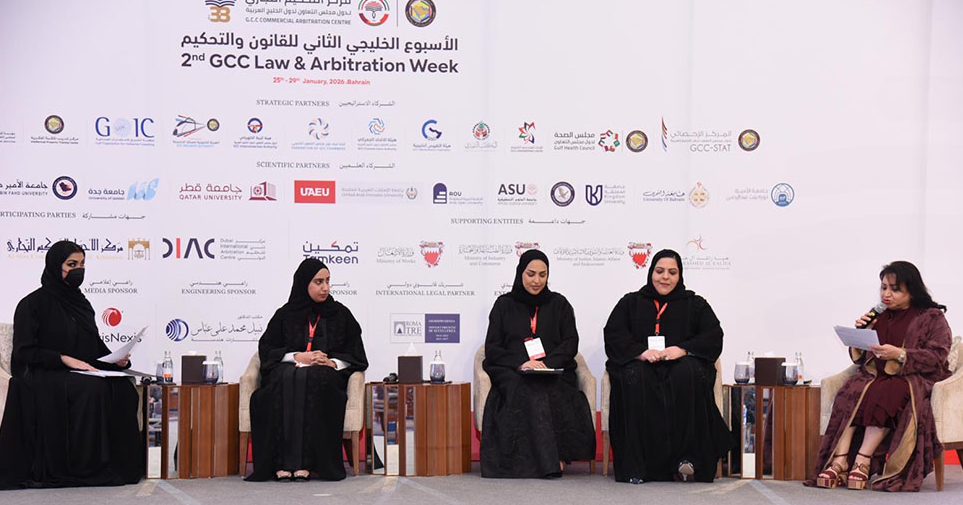
MANAMA, Bahrain (Feb. 5, 2026) —Women are playing an increasingly prominent role in arbitration and judicial systems across the Gulf, Qatari officials said this week, pointing to a steady rise in female arbitrators and leadership roles as the region moves to modernize legal frameworks and strengthen its investment climate.
The trend was highlighted during the second GCC Law and Arbitration Week conference held in Bahrain, which brought together legal experts and specialists from across Gulf Cooperation Council countries to discuss developments in legislation, dispute resolution and judicial reform.
Qatar’s Ministry of Justice said women have taken on expanded responsibilities within the country’s legal system, including senior positions in arbitration and judicial administration. Mariam Jassim Al Tamimi, a legal researcher with the ministry’s Arbitration Affairs Department, said the growth in female participation reflects a professional environment increasingly shaped by merit and competence.
Al Tamimi cited data showing a rise in the number of women serving as arbitrators between 2019 and 2025, describing the shift as part of broader reforms aligned with Qatar National Vision 2030, which places women’s empowerment at the center of sustainable development goals.
Participants at the conference said similar changes are underway across the Gulf, where governments are updating legal and commercial frameworks to attract investment and manage complex infrastructure and development projects. Arbitration has emerged as a key mechanism for resolving disputes tied to cross-border trade and major projects.
Legal experts noted that increased diversity in arbitration panels is gaining recognition as a factor that strengthens institutional credibility and decision-making, particularly in international commercial disputes.
Conference discussions also focused on legislative updates, investment-related arbitration and the role of dispute resolution in maintaining commercial stability, reflecting a broader regional push to align legal systems with economic diversification efforts.
Organizers said cooperation among GCC states in legal and arbitration fields remains essential as the region adapts to rapid economic and regulatory change.