

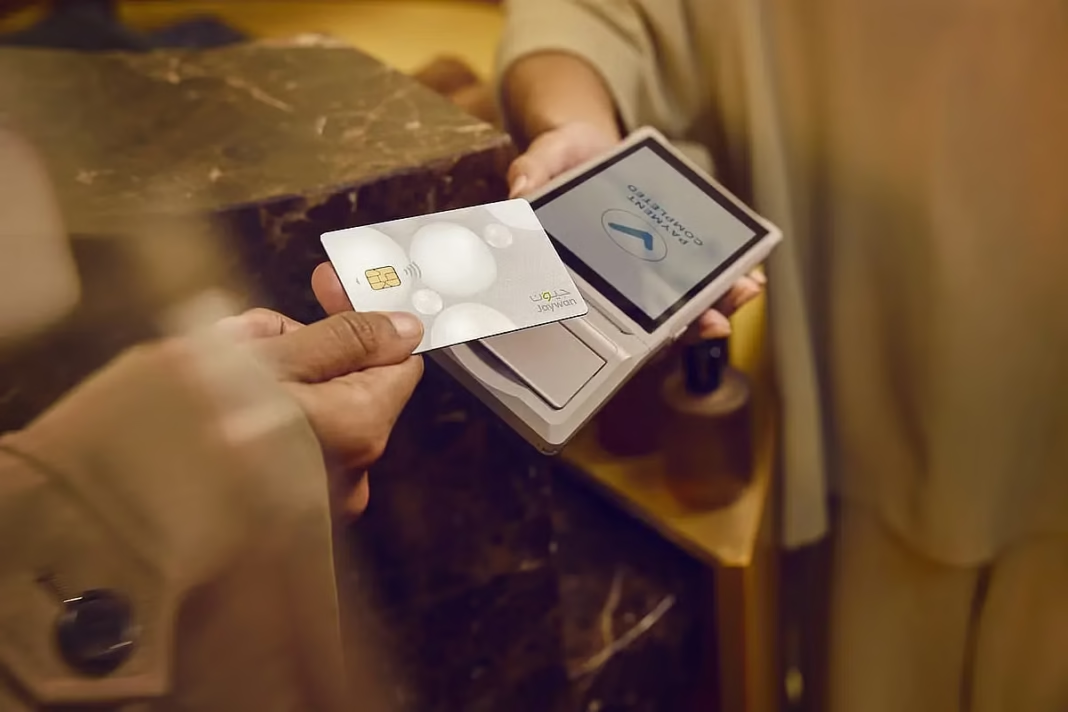
The UAE has introduced Jaywan, its first domestic card payment network, giving residents a new locally operated option for debit and prepaid transactions alongside established global payment providers.
Developed by Al Etihad Payments, a subsidiary of the Central Bank of the UAE, Jaywan is designed to strengthen the country’s financial infrastructure by creating a homegrown payment ecosystem.
The rollout is taking place gradually, with banks, financial institutions and licensed exchange companies introducing Jaywan cards to customers in phases.
The launch places the UAE among a group of countries that operate their own national payment networks, including India’s RuPay, Saudi Arabia’s mada and China’s UnionPay.
How Jaywan works
Jaywan cards function as a domestic payment option that can be used for everyday purchases, online transactions and ATM withdrawals.
The scheme is built to process UAE transactions through local infrastructure, reducing dependence on international card networks for domestic payments.
The system supports modern security features including chip technology, contactless payments, PIN verification and 3D Secure protections for online purchases.
Several UAE financial institutions have already begun preparing to issue Jaywan cards, with more banks, fintech companies and exchange houses expected to join the network.
Benefits for residents and businesses
The introduction of a national payment network is expected to create additional competition within the payments sector and could contribute to lower transaction costs over time.
For consumers, Jaywan offers another payment choice, while businesses may benefit from more efficient local transaction processing.
The scheme also keeps payment processing and related data management within the UAE, supporting the country’s broader digital economy goals.
Domestic transactions are supported through the UAE’s existing payment infrastructure, including UAESWITCH, which enables local payment connectivity between participating financial institutions.
Where can Jaywan cards be used?
Jaywan cards can be used for:
- In-store purchases
- Online payments
- ATM withdrawals
- Supported digital payment platforms
International usage is also being introduced gradually, with acceptance planned across more than 100 countries depending on the card type and issuing bank.
Customers travelling overseas are advised to check their individual card terms before using Jaywan internationally.
Available Jaywan card types
The initial rollout includes:
- Jaywan Prestige Debit Card
- Jaywan Royal Debit Card
- Jaywan Prepaid Card
Credit card options are expected to be introduced at a later stage.
Premium Jaywan cards may include additional benefits such as travel-related offers, airport lounge access, purchase protection, entertainment memberships and discounts from participating merchants.
UAE-India connection
The development of Jaywan follows a partnership between Al Etihad Payments and NPCI International Payments Limited (NIPL), the international arm of India’s National Payments Corporation of India.
NIPL is behind India’s RuPay card network, which became one of the world’s largest domestic payment schemes.
The collaboration supports the UAE’s effort to develop a nationally managed payment system while drawing on international expertise in digital financial services.
What happens next?
As more banks and financial institutions join the Jaywan network, the range of available services, merchant acceptance and customer benefits are expected to expand.
The initiative forms part of the UAE’s wider push toward digital transformation and greater independence in critical financial infrastructure.
Residents interested in obtaining a Jaywan card can check availability directly with their bank or financial service provider.