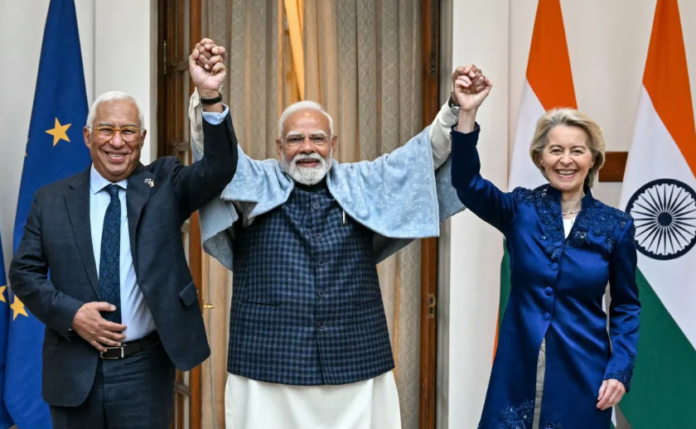


New Delhi/Brussels — After almost two decades of fits and starts, the European Union and India have sealed what leaders are calling a landmark free-trade agreement that could reshape global commerce, touching nearly 2 billion people and about a quarter of the world’s economic output.
On January 27, 2026, European Commission President Ursula von der Leyen and Indian Prime Minister Narendra Modi formally concluded political negotiations on the pact — hailed on both sides as the “mother of all deals.” The agreement still needs legal vetting and ratification by the European Parliament, EU member states and India’s cabinet, with implementation expected next year.
At its core, the deal dramatically expands market access by slashing or eliminating tariffs on the vast majority of goods traded between the EU’s 27 nations and India, easing the movement of services and deepening investment ties. European exporters stand to benefit from reduced duties on machinery, cars, pharmaceuticals and wine, while Indian manufacturers — especially in textiles, engineering, leather and gems and jewellery — gain easier entry to affluent European markets.
The pact comes amid rising global trade tensions, particularly high U.S. tariffs and supply-chain shifts that have prompted both Brussels and New Delhi to diversify economic partnerships. By linking two of the world’s largest democratic markets, the agreement aims to spur economic growth, jobs and investment on both continents while reinforcing strategic ties.
For India, the deal marks a significant step in its economic ascent. Exporters predict a surge in demand for Indian goods, with some trade bodies forecasting that gems and jewellery exports alone could double in value over the coming years. Sectors that employ millions — from textiles in Tirupur to leather in Kanpur — could see new opportunities, enhancing “Make in India” aspirations and helping reduce dependence on traditional markets.
From Europe’s perspective, companies gain preferential access to one of the fastest-growing major markets, expanding opportunities for everything from aerospace parts to luxury foods and beverages. Industry groups are already touting potential cost savings of billions in tariffs and the chance to strengthen supply chains that span continents.