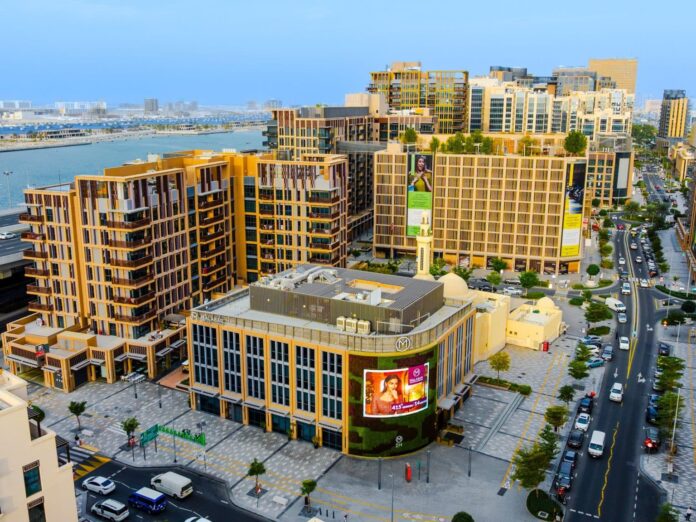


Dubai has always known how to turn commerce into spectacle. Gold, perhaps more than anything else, has defined the city’s trading soul — gleaming in shop windows, stacked in souks, flowing through vaults and cargo holds. Now, the emirate is preparing to give that legacy a new address: the world’s first Gold Street.
Planned as the centrepiece of the newly launched Dubai Gold District, the street will be built using gold elements, transforming what has long been a symbol of wealth into an immersive urban landmark. Developers say designs and construction details will be unveiled in stages, but the ambition is already clear — to reimagine Dubai’s relationship with gold for a new era of tourism, trade and experience-driven retail.
For decades, Dubai’s Gold Souk in Deira has been a magnet for buyers from across the world, drawn by choice, price and trust. That reputation helped earn the city its enduring nickname, the “City of Gold.” Today, the trade has scaled far beyond the souk. Between 2024 and 2025, the UAE exported about $53.41 billion worth of gold, with Switzerland, the United Kingdom, India, Hong Kong and Türkiye among its key partners, making the country the world’s second-largest physical gold trading destination.
The Dubai Gold District aims to bring that vast ecosystem together in one purpose-built hub. Spread across a mixed-use development, it will house more than 1,000 retailers spanning gold, jewellery, perfumery, cosmetics and lifestyle segments. Major names already operating there include Jawhara Jewellery, Malabar Gold and Diamonds, Al Romaizan and Tanishq Jewellery, while Joyalukkas has announced a 24,000-square-foot flagship — its largest in the Middle East.
Gold Street itself is designed to complement this infrastructure rather than stand apart from it. Developers describe it as a focal point within the district, blending retail, visual drama and destination appeal. The area is also supported by more than 1,000 hotel rooms across six hotels, catering to international buyers, traders and visitors. Sightseeing access has expanded too, with bus tour routes added in 2025.
Officials say the project reflects Dubai’s long-standing approach to trade: preserve heritage, scale it globally and package it with ambition. Gold, they note, is not just a commodity here, but part of the city’s cultural and commercial identity.
When Gold Street opens, visitors may walk across a surface shaped by precious metal, but the deeper message will be familiar. In Dubai, gold is never just something you buy. It is something the city builds upon — and now, quite literally, walks on.