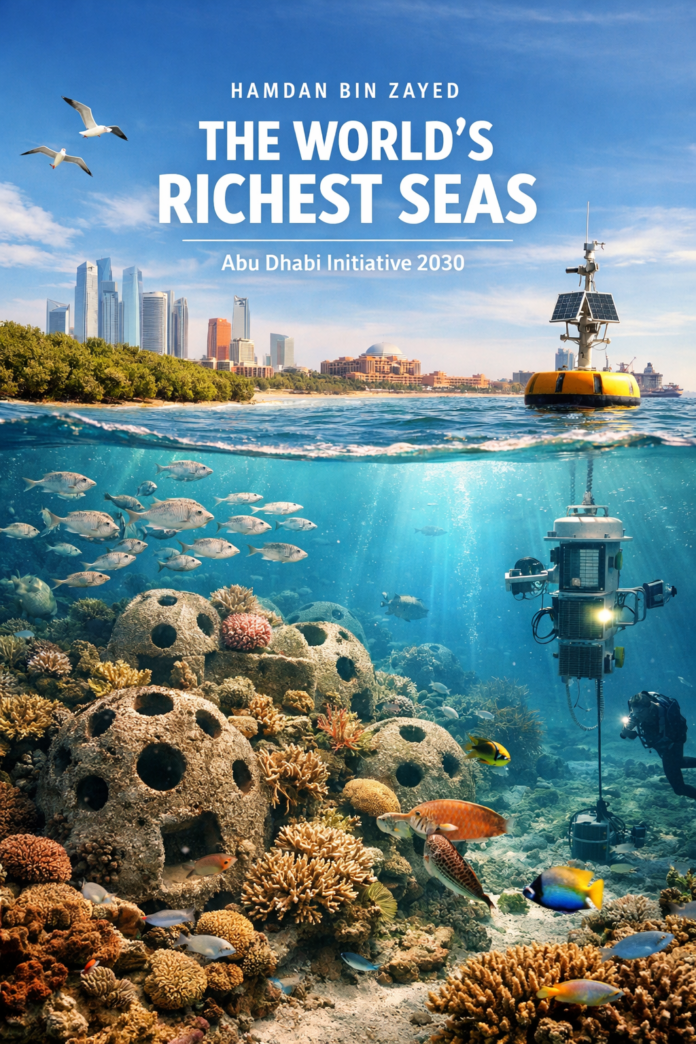


ABU DHABI, United Arab Emirates — Abu Dhabi has launched a wide-ranging marine conservation programme aimed at sharply increasing fish stocks by 2030, building on recent gains in fisheries regulation as the emirate seeks to strengthen food security and protect fragile marine ecosystems.
The initiative, called “Hamdan bin Zayed: The World’s Richest Seas,” was announced by the Environment Agency – Abu Dhabi and sets an ambition to achieve one of the highest fish densities globally within the next five years. It combines tighter fishing controls, large-scale habitat restoration and technology-driven monitoring to boost marine productivity without disrupting ecological balance.
The launch comes after Abu Dhabi achieved a full score in its Sustainable Fishing Index by the end of 2025, up from just 8% in 2018. Officials say the improvement reflects years of science-based fisheries management, stricter enforcement and long-term planning of marine resources.
The milestone was highlighted during a meeting of the Global Councils for Sustainable Development Goals, held alongside the World Government Summit 2026, which brought together representatives from 17 countries to discuss sustainability and food systems.
Sheikh Hamdan bin Zayed Al Nahyan, Ruler’s Representative in the Al Dhafra Region and chairman of the Environment Agency – Abu Dhabi, said the programme underscores sustained institutional backing for marine conservation, with a focus on research, innovation and regulated marine activity.
A key pillar of the initiative is the Abu Dhabi Coral Gardens project, which will deploy artificial reef modules to create new underwater habitats. About 40,000 modules are planned in the initial phase, with the number expected to rise to 80,000 by 2030 through public- and private-sector partnerships.
The broader plan also includes cultivating four million coral colonies under a Coral Rehabilitation Project and planting 50 million mangrove trees by 2030. Authorities said advanced monitoring systems and artificial intelligence tools will be used to track environmental conditions and guide future conservation efforts.
Officials said the combined measures are intended to safeguard sensitive marine habitats, support sustainable fisheries and increase the supply of locally sourced fish as part of a renewable, resilient food system.