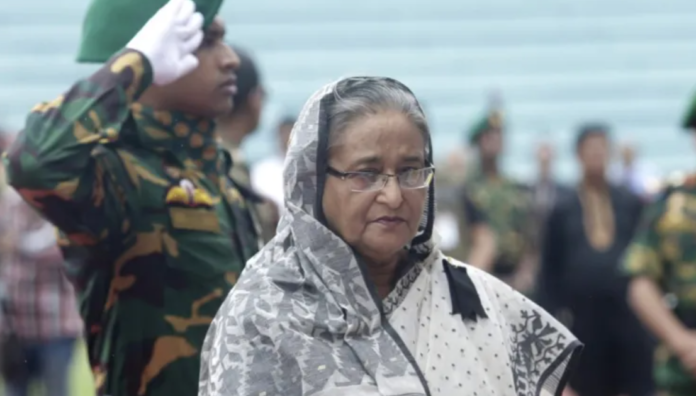


DHAKA/NEW DELHI, Jan 29 (GDM) — Exiled former prime minister Sheikh Hasina has denounced Bangladesh’s Feb. 12 general election and the interim government’s decision to bar her Awami League from participating, a move that critics say could deepen political divisions and trigger unrest ahead of the pivotal vote.
Hasina, whose 15‑year rule ended after a mass uprising in 2024, said in a statement published by The Associated Press that excluding her party effectively disenfranchises millions of voters and undermines confidence in democratic institutions. “A government born of exclusion cannot unite a divided nation,” she wrote, warning that denial of political participation breeds resentment and instability.
The Bangladesh interim government led by Nobel laureate Muhammad Yunus, which assumed power after Hasina fled to India in August 2024, has defended its approach, pledging to deliver a free and orderly poll and inviting international observers, including from the EU and Commonwealth, to monitor the process.
But opposition figures and rights groups have raised concerns about civil liberties, security and press freedom, saying that restrictions on political activity — including a ban on Awami League rallies, media presence and online campaigns — risk undermining the credibility of the election.
Hasina’s critics in Dhaka say the interim government’s actions reflect security concerns and legal proceedings, including trials for alleged crimes against humanity linked to the 2024 unrest, which have also prevented Hasina and some senior party figures from contesting the polls.
Her party’s boycott call has been echoed by nationwide protests and strikes by Awami League supporters, who argue that the election schedule and political environment fail to guarantee neutrality or broad participation.
Amid the turmoil, Tarique Rahman, leader of the rival Bangladesh Nationalist Party (BNP), has become a leading contender in the race, with campaigning under way in Dhaka and other regions.
Tensions remain high as Bangladesh prepares for what many observers say is one of its most consequential elections in decades