
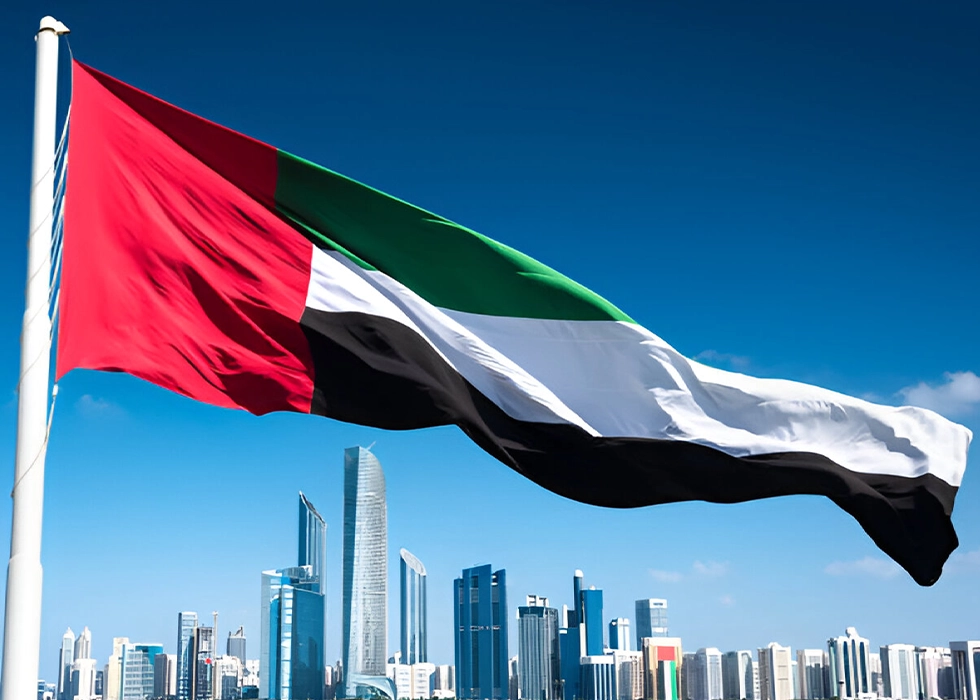
DUBAI, United Arab Emirates — The UAE attracted $48.2 billion in foreign direct investment in 2025, making it the top destination in the Arab world and accounting for 40.4% of total regional inflows, according to a new report.
The country also ranked first in the Arab world and 17th globally in Dhaman’s 2025 Composite Investment Climate Index, improving by two places from the previous year.
The report, released in Kuwait, said foreign investment flowing into Arab countries fell 10% in 2025 to $119.3 billion. More than 80% of those inflows were concentrated in just three Arab states, while the region’s share of global FDI slipped to 7.3%.
Dhaman’s annual report said the average Arab ranking in its investment climate index remained at 102nd globally, far below the global average of around 23rd. Still, 13 Arab countries improved their positions in the 2025 ranking.
The corporation said Arab countries should adopt more flexible and integrated policies to strengthen their investment climates. Its recommendations focused on political stability, legal and institutional reform, economic measures and stronger production capacity.
On the political side, the report called for more effort to resolve conflicts peacefully and greater regional cooperation to tackle terrorism, organized crime and instability.
It also urged governments to modernize investment laws, simplify procedures, speed up digital services and improve legal protections for investors. The report said stronger governance, arbitration and risk insurance would help attract and protect capital.
Economically, Dhaman called for tighter inflation control, stronger currency stability, tax and customs reform, and better infrastructure and logistics. It also stressed the need to support the private sector and give incentives to targeted industries.
The report said Arab states also need to invest more in training, education and labor flexibility to close skills gaps and support growth. It added that local supply chains, financing channels and research capacity should be strengthened.
Among Arab economies, the UAE led the region, followed by Qatar, Saudi Arabia, Oman, Kuwait and Bahrain. Jordan and Morocco also ranked above the Arab average, while Tunisia and Egypt placed 95th and 100th globally, respectively.
The report said 11 other Arab countries remained near the bottom of the global list. Further policy reforms and investment measures are expected to remain a priority as regional governments seek to compete for capital in a more challenging global environment.