ABU DHABI, United Arab Emirates — Passenger traffic through UAE airports reached a record 156.8 million in 2025, up 6.1% from the previous year, as the country continued to expand its role as a major global aviation hub.
Aircraft movements also rose, climbing 6.8% to 855,300, according to data released by the Federal Competitiveness and Statistics Centre. The figures point to sustained growth across the UAE’s airport network, supported by investment in infrastructure, logistics and aviation services.
Officials said the results reflect the country’s long-term strategy to strengthen its air transport sector and support economic growth. The UAE has positioned its airports as a key link between East and West, as well as North and South.
Abdulla bin Touq Al Marri, minister of economy and tourism and chairman of the General Civil Aviation Authority, said the performance reflects the leadership’s vision to build a modern and sustainable aviation system.
He said the sector continues to boost the national economy while reinforcing the UAE’s place among the world’s leading aviation centers. He added that work will continue with local and international partners to improve airports, airlines and air navigation routes, while also developing national talent and improving the passenger experience.
Hanan Mansour Ahli, managing director of the Federal Competitiveness and Statistics Centre, said the aviation figures show the strength of the national system supporting the sector’s growth. She said the UAE continues to use data to guide policy, improve decision-making and support sustainable development.
The total passenger count included arrivals, departures and transit travelers. Arrivals rose 6.1% to 44.2 million, while departures increased 3% to 43 million. Transit passengers climbed 8% to 69.5 million.
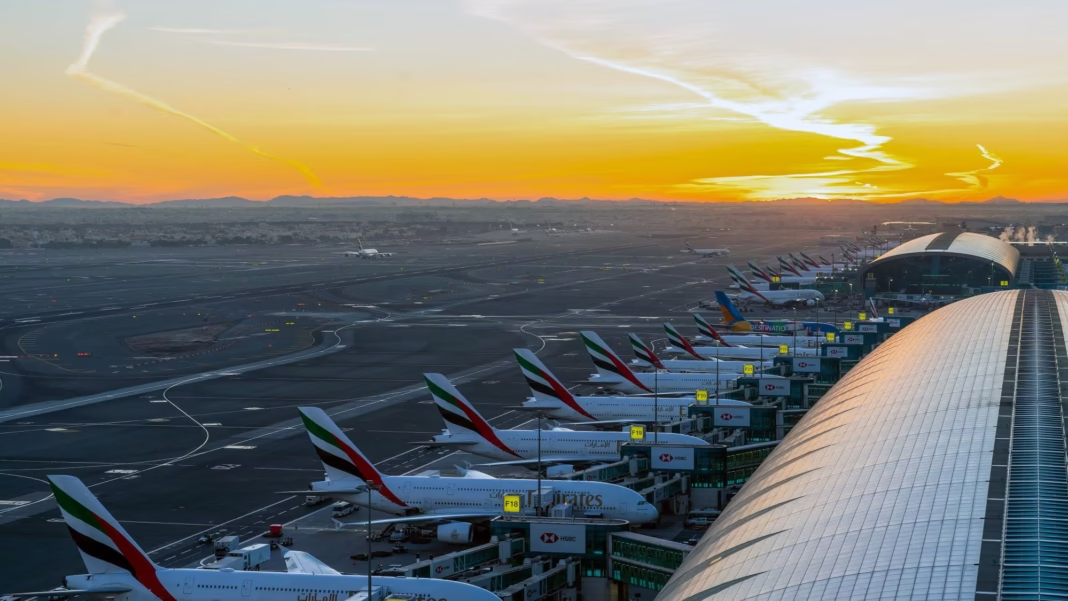
Dubai remained the country’s busiest airport market, handling 104.5 million passengers in 2025, up from 100.9 million in 2024. That total included 30.2 million arrivals, 29.5 million departures and 44.7 million transit passengers.
Abu Dhabi airports recorded 34.2 million passengers, up 10.7% from a year earlier. Sharjah International Airport also grew 10.7%, carrying 16.9 million passengers.
Smaller airports posted even sharper gains. Ras Al Khaimah International Airport passed 1 million passengers for the first time, while Fujairah International Airport saw traffic rise sharply to 164,600.
The increase in activity was reflected in flight movements, with incoming aircraft up 7.3% to 414,300 and outgoing flights also up 7.3% to 414,100.
The UAE’s aviation strength also showed up in global rankings. It placed first worldwide for air transport quality in the 2026 IMD World Competitiveness Yearbook and ranked highly in connectivity, service efficiency and airline network measures in other international reports.
Officials say the country’s aviation expansion will remain a major part of its economic strategy as it looks to support tourism, trade and wider logistics growth in the years ahead.