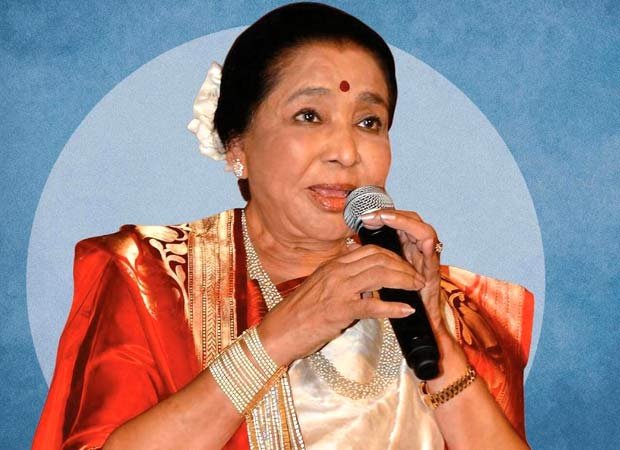

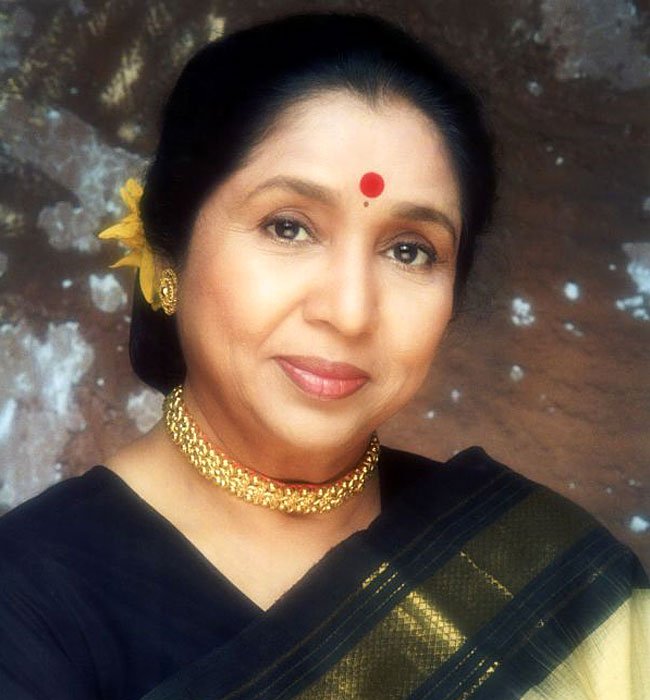
Remembering Asha Bhosle (September 8, 1933 – April 12, 2026)
Some names you do not learn. They arrive with you — on your lips before you know what lips are for, part of the air of a house, part of the particular evening light of a childhood you only fully understand when it is gone.
My father had a shelf of cassettes. In the middle of the 1970s, when I was perhaps in the fifth standard, that shelf was the closest thing our home had to a hall, and a confessional rolled into one. He would play them in the evenings. The house would change. Something would enter the rooms that was not there before.
A portion of that collection came from Dubai. My father’s close friend PSA Saleem — Salam, we called him — had settled in the Gulf, and every few months a package would arrive. New cassettes. When they came, the excitement was something children and adults shared equally. We would gather. We would listen. And someone — my father, an uncle, whoever was in the room — would say, almost reverently: “This one is from the cassette Salam sent.”
I should say something here. We are from Kerala. Our language is Malayalam. Hindi was not spoken in our home — not a word of it in daily life. I did not understand most of what these songs were saying, not in any literal sense. And yet they moved through the house as though they belonged there. That, I think, is what separated the truly great voices from the merely popular ones. Lata, Rafi, Kishore — and Asha. They did not need you to understand the words. The feeling arrived first. The meaning, if it came at all, came later.
I did not know it then, but those evenings were an education. Not in music theory or film history. In something harder to name — the understanding that a voice, the right voice, can make a room feel larger from the inside.
Many of the songs were Lata Mangeshkar’s. Many were Mohammed Rafi’s. But gradually Asha Bhosle’s voice began to fill more and more of those evenings. And unlike most things from childhood, it never left.
Asha Bhosle died on Sunday, April 12, 2026, at Breach Candy Hospital in Mumbai. She was 92. Her son Anand confirmed the news outside the hospital. The cause was multi-organ failure. Her last rites were held at Shivaji Park the following afternoon — a public farewell in keeping with a life that had, for over eight decades, belonged as much to others as to herself.
She was born Asha Mangeshkar on September 8, 1933, in Maharashtra. Her father Deenanath was a classical singer. He died when she was nine. The family moved to Mumbai. She and her elder sister Lata began singing in films to keep the household alive. Her first recorded song — “Chala Chala Nav Bala” for the Marathi film Majha Bal — was made in 1943. She was ten years old.
That fact bears sitting with for a moment. Ten years old. And she would not stop for another eighty-two years.
The songs from those cassettes on my father’s shelf — I can hear them now without trying.
Yeh Raatein Yeh Mausam (1958, Dilli Ka Thug) — her voice alongside Kishore Kumar’s, the two of them winding around each other like the river wind the lyrics described. You did not need to understand what the words meant. The feeling arrived before the meaning did.
Abhi Na Jao Chhod Kar (1961, Hum Dono), with Mohammed Rafi — a plea so restrained, so precisely calibrated in its ache, that it made the parting feel like yours. Like something being taken from you personally, in that room, on that evening.
Dum Maro Dum (1971, Hare Rama Hare Krishna). Piya Tu Ab To Aaja (1971, Caravan). O Haseena Zulfonwali (1966, Teesri Manzil), with Mohammed Rafi. Churaliye Hai Tumne (1973, Yaadon Ki Baaraat).
These were the fast ones, the light ones, the ones that made my father tap his hand on the armrest without realising he was doing it. But Asha Bhosle was never only one thing. That was precisely what set her apart.
Years later — when I was old enough to understand what longing actually costs — I heard In Aankhon Ki Masti from Umrao Jaan (1981) with different ears. Composer Khayyam had lowered her pitch by half a note for that film. What came out was something no one, including perhaps Asha herself, had heard her do before. Those ghazals — “Dil Cheez Kya Hai,” “Justuju Jiski Thi,” “Yeh Kya Jagah Hai Doston” — were so still, so inhabited, that they seemed less like performances than like confessions overheard through a wall. They won her the National Film Award. More than that, they permanently retired the argument that she was the lesser Mangeshkar.
She was not lesser. She was different — and the difference was not one of quality but of character. Where Lata’s voice arrived like something classical and settled, Asha’s kept moving. It had warmth where Lata’s had purity. It had risk where Lata’s had refinement. Mohammed Rafi could dissolve into devotion or grief as if the emotion had always lived inside him. Asha could do that too — but she could also be mischievous, provocative, weightless, and then, in the next breath, devastatingly precise. No other singer of her generation covered that range without losing coherence at the edges.
Over those eight decades she recorded more than 12,000 songs. The Guinness World Records noted it. The music industry knew it. The real measure, though, was simpler: there was almost no mood, no moment, no particular quality of an evening for which she had not already provided the exact right song.
She received the Dadasaheb Phalke Award, the Padma Vibhushan, two National Film Awards. She performed in concert in Dubai in 2023 at ninety years old. In early 2026 — months before her death — she appeared on a Gorillaz studio album. She worked until she could not. That was simply who she was.
Her personal life asked as much of her as her career. She eloped at sixteen with a man fifteen years her senior, against the wishes of her family. The marriage collapsed. She left with three children and rebuilt both her life and her standing in an industry that had largely assigned her to its second tier. She later married composer R.D. Burman — her great musical partner — in 1980. He died in 1994. She did not speak publicly of these things in the way that has become fashionable. She sang instead. And if you listened carefully enough, the songs told you everything.
The great quartet is now silent.
Mohammed Rafi in 1980. Kishore Kumar in 1987. Lata Mangeshkar in 2022. Asha Bhosle in 2026. Four voices that, between them, defined what longing sounds like in the Hindi language — what joy sounds like, what midnight sounds like, what it sounds like when you are twenty-three and in love and the whole world feels like it was arranged specifically for you.
There is a grief reserved for those who have lived in your heart since before you chose them. They were not discovered. They were just there — part of the furniture of childhood, part of the frequency of home. When they go, they do not simply die. They take something back with them: an evening, a shelf of cassettes, a voice in the room saying this one is from the cassette Salam sent, and a father sitting in a chair with his eyes closed and his hand moving slowly on the armrest.
I did not know, in those evenings, that I was being given something. That is perhaps how the best gifts work.
Abhi na jao chhod kar — dil abhi bhara nahin.
Don’t leave yet. The heart is not yet full.
*Dr.KT Abdurabb is a Gulf-based writer and social commentator.