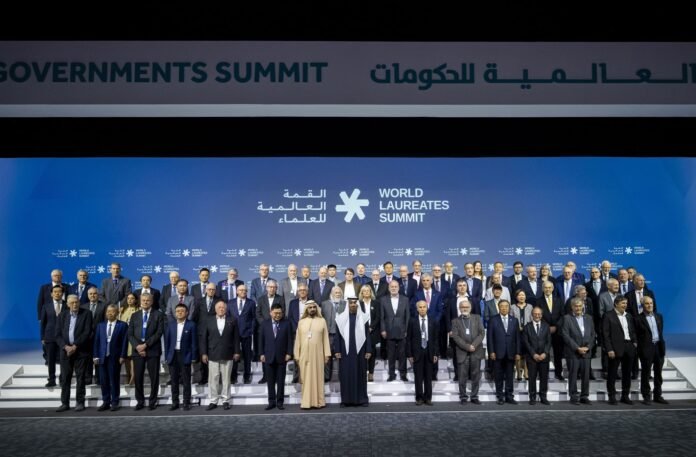


DUBAI, Feb 2, 2026 — In a sun-drenched hall at Madinat Jumeirah, more than 100 Nobel laureates, Turing, Wolf, Lasker and Fields medalists sat shoulder-to-shoulder with heads of state, ministers and tech titans on Saturday, launching what organizers billed as the largest single gathering of scientific prize-winners in history outside Stockholm’s Nobel week.
The World Laureates Summit (WLS) 2026, running Feb 1-3 and timed to overlap with the World Governments Summit, is the first time the UAE has hosted such a concentration of scientific royalty. President Sheikh Mohamed bin Zayed Al Nahyan and Vice-President Sheikh Mohammed bin Rashid Al Maktoum personally opened the proceedings, signalling that science is now core to Dubai’s soft-power playbook.
Theme, tone and substance Under the banner “Basic Science: Addressing Global Challenges Through Scientific Consensus,” the summit is deliberately short on ceremony and long on policy translation. Day one’s Mobius Forum focused on AI, disruptive technologies, new energy and the frontiers of discovery; subsequent sessions pair laureates with policymakers to hammer out actionable frameworks rather than academic papers. Nobel laureate Duncan Haldane received a special honour for his work inspiring the next generation, while South African mathematician Abdon Atangana told reporters the gathering felt like “the future of research happening in real time.”
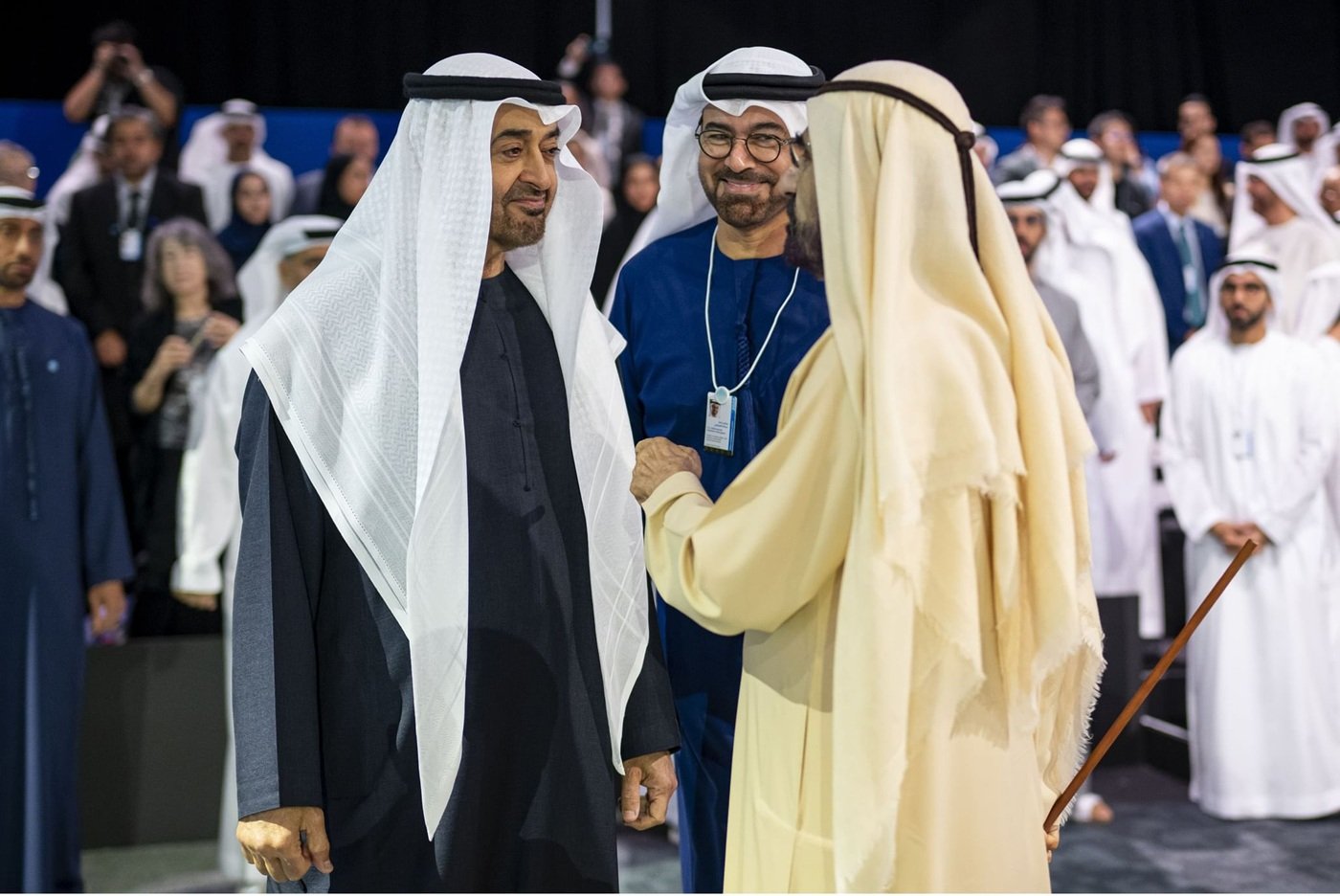 A moment of national recognition Amid the global scientific spotlight, a significant domestic honour took place during the opening ceremony. UAE President Sheikh Mohamed bin Zayed Al Nahyan conferred the prestigious Order of the Union — one of the country’s highest civilian awards — upon His Excellency Mohammad Al Gergawi, Minister of Cabinet Affairs and Chairman of the World Governments Summit Organisation. The award recognizes Al Gergawi’s decades-long dedication to advancing UAE government work, his pivotal role in elevating the nation’s global competitiveness, and his distinguished public service. With more than 35 years in government, Al Gergawi has been instrumental in shaping innovative policies, driving administrative excellence, and positioning the UAE as a forward-looking hub for international dialogue and progress. Sheikh Mohamed described him as a national figure who has set an exemplary standard of service, while Al Gergawi expressed deep gratitude for the trust placed in him by the leadership.
Scale and symbolism More than 150 participants, 100+ of them Nobel-level, are present — a figure that dwarfs most annual scientific congresses. The joint day with the World Governments Summit (Feb 3) will bring 45 heads of state into the same rooms, creating what one organiser called “the only venue where a prime minister can ask a Nobel physicist how to regulate frontier AI before breakfast.”
UAE context The summit is the latest milestone in the Emirates’ decade-long bet on knowledge economies: from the establishment of the Mohamed bin Zayed University of Artificial Intelligence to hosting COP28 and now this. Hosting the World Laureates Association’s flagship event outside its traditional Shanghai base is a clear statement that the Gulf intends to become a permanent node in the global science network.
Echoes in other capitals Dubai is not inventing the concept; it is scaling and accelerating one with deep precedent:
• Lindau Nobel Laureate Meetings (Germany, since 1951) — born in the rubble of World War II to rebuild European science ties. Still the gold standard: 30-65 laureates meet 600 young researchers each summer in a Bavarian island town. • Heidelberg Laureate Forum (Germany, since 2013) — the math-and-computer-science sibling, pairing Abel, Turing, Fields and Nevanlinna winners with 200 young talents. • World Laureates Forum (Shanghai, since 2018) — the direct ancestor of this week’s event, now an annual Asian fixture that has grown from a modest gathering to Asia’s highest-profile science summit. • Hong Kong Laureate Forum (inaugural 2025) — the newest addition, already positioning the city as a bridge between East and West.
What sets Dubai apart is the deliberate fusion with government: no other laureate meeting has ever shared a venue and a programme day with sitting world leaders in quite this way. The message is unmistakable — science is moving from advisory footnote to co-author of national strategy.
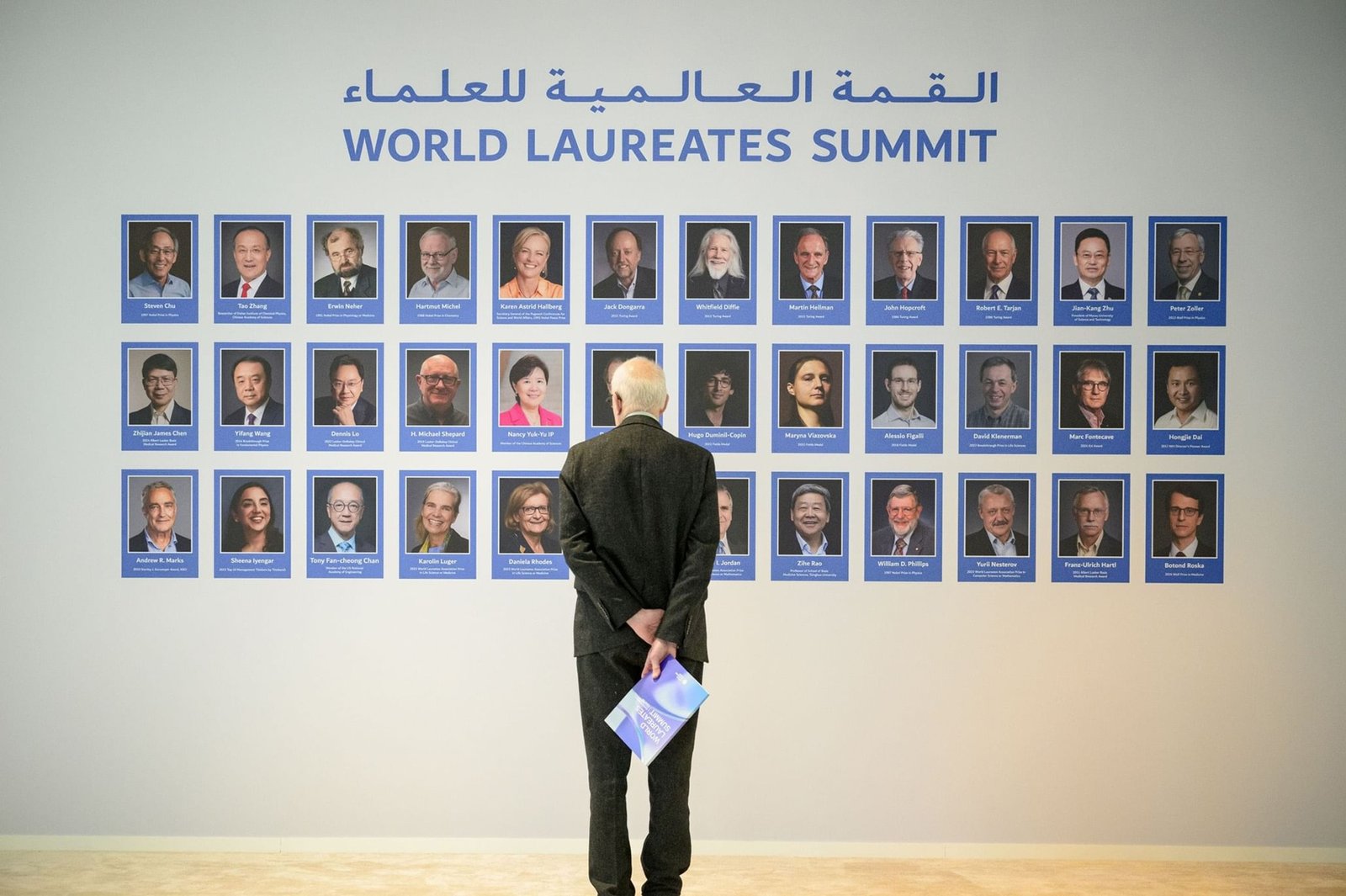 Looking ahead If the first two days are any indication, the summit is less about medals and more about deadlines. Discussions on AI governance, climate modelling and pandemic preparedness are being fed directly into ministerial briefings. Whether those conversations produce concrete commitments by Tuesday’s close will determine if Dubai’s laureate moment becomes a one-off spectacle or the launchpad for a new global science-policy architecture.
For now, the city’s skyline glitters, the halls hum with Nobel accents, and a quiet but profound shift is underway: the world’s most decorated minds are no longer just honoured in Stockholm or Shanghai — they are being asked, in Dubai, to help steer the future.