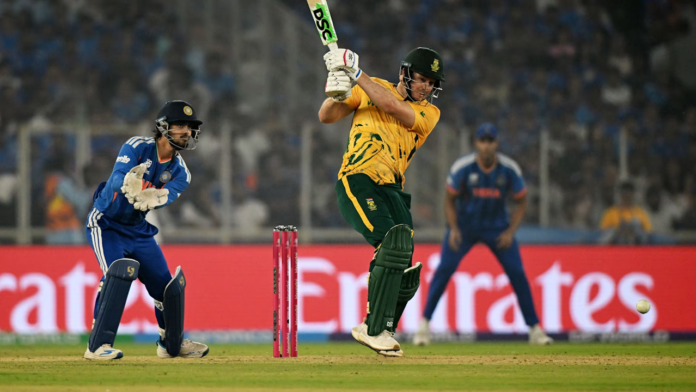

Ahmedabad, INDIA — Defending champions India suffered a stunning 76-run defeat to South Africa in their ICC Men’s T20 World Cup 2026 Super Eight clash on Sunday — a result that has ignited fresh scrutiny of selection, batting frailties and captain Suryakumar Yadav’s controversial dismissal of calls to include Sanju Samson in the playing XI.
South Africa posted 187/7 at the Narendra Modi Stadium, then exposed India’s weak chase as they were bundled out for 111, marking India’s biggest T20 World Cup loss by runs and ending a 12-match winning streak in the event.
Here’s what went wrong for India:
Early Batting Collapse — No Partnerships, No Plan
India’s chase derailed within the first six overs. Ishan Kishan fell for a duck, Tilak Varma managed just one, and Abhishek Sharma couldn’t convert starts, leaving India reeling at 26/3 and never recovering. Lack of strategic batting and absence of consolidation shattered any momentum.
Aggressive Brand Backfires
Suryakumar Yadav’s insistence on aggressive power hitting — even against a disciplined Proteas bowling attack — proved costly. India’s top order repeatedly lost wickets trying to force the pace instead of building innings, an approach many critics say showed tactical naivety rather than calculated risk-taking.
Selection Questions: Samson Snub and XI Choices
In the pre-match press conference, Suryakumar was asked about including in-form Sanju Samson in place of out-of-form players like Abhishek Sharma or Tilak Varma. He laughed off the suggestion, rhetorically asking “Do you want me to drop Abhishek or Tilak to include Samson?” — a remark that has since gone viral and sparked questions about leadership attitudes and selection rigidity.
Middle Order Misfires
Despite promising starts, middle order batters failed to build any meaningful partnerships. Shivam Dube (42) and Hardik Pandya (18) tried to stem the collapse, but the lack of a calm, anchoring presence in a crunch chase was glaring.
Opponent’s Clinical Execution
South Africa’s bowlers — especially Marco Jansen (4/22) and Keshav Maharaj (3/24) — bowled with control and tactical ingenuity, exploiting India’s impatience and technical gaps. Their disciplined execution kept India’s scoring in check and triggered repeated top-order collapses.
Captain’s Mixed Messages
Critics argue that Suryakumar’s leadership lacked urgency in adapting tactics mid-game. While he later acknowledged that losing too many wickets upfront cost the chase, his public refusal to rethink selection or batting order before the match has drawn fire from pundits and fans alike.
Pressure Points Exposed
India’s defeat hasn’t just dented their Super Eight campaign — it has exposed deeper issues in batting balance, role clarity and decision-making under pressure. With must-win games ahead, selectors and coaches now face tough questions about reshaping the lineup and restoring confidence.
Captain Suryakumar, in his post-match remarks, attempted to soften the blow by promising a bounce-back and insisting the core strategy remains the same; but analysts say India’s uprising will require not just promise but a stark reassessment of strategy and personnel.