
ABU DHABI, United Arab Emirates — Abu Dhabi is continuing to expand its role as a global center for culture and tourism through a long-term strategy aimed at developing major cultural projects and strengthening the sector’s contribution to sustainable development and economic diversification.
Officials say the approach is designed to reinforce the emirate’s position as a leading destination for knowledge, creativity and dialogue among civilizations, while integrating culture into broader economic and social development plans.
At the heart of that strategy is the Saadiyat Cultural District in Abu Dhabi, which brings together a collection of major museums and cultural institutions intended to highlight the shared heritage of humanity and encourage cultural exchange between societies.
The district is designed to provide visitors with a wide range of cultural and educational experiences that combine learning with interactive engagement, drawing art lovers, scholars and tourists from around the world.
The Department of Culture and Tourism – Abu Dhabi (DCT Abu Dhabi) said museums and cultural sites across the emirate continue to welcome visitors as usual, particularly the landmark institutions within the Saadiyat Cultural District. Officials say these sites are playing a growing role in enhancing the visitor experience and strengthening Abu Dhabi’s reputation as a global cultural destination.
The Saadiyat Cultural District includes several internationally recognized institutions. Among them is the Louvre Abu Dhabi, which presents artworks and historical objects from multiple civilizations and aims to foster dialogue across cultures by tracing connections in the history of humanity.
The district will also be home to the Zayed National Museum, which focuses on the story of the United Arab Emirates and the legacy of the country’s founding father, the late Sheikh Zayed bin Sultan Al Nahyan. The museum highlights the social, cultural and historical development of the region.
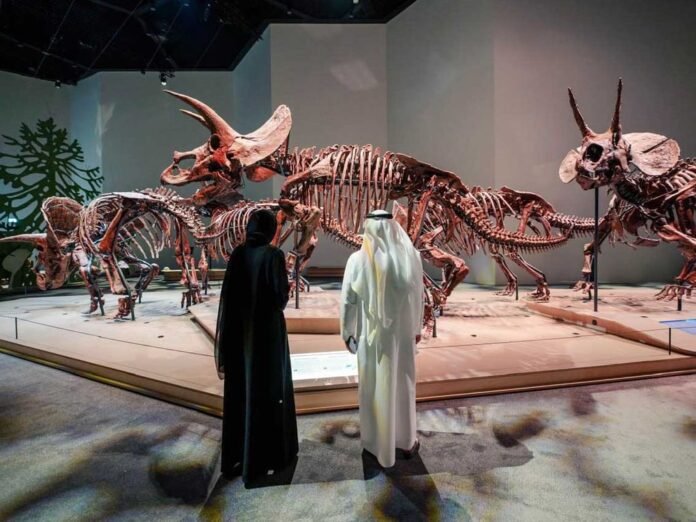
Another key institution is the Natural History Museum Abu Dhabi, which is designed to provide a scientific and educational exploration of Earth’s history, biodiversity and the evolution of life.
The district also includes teamLab Phenomena Abu Dhabi, an immersive digital art space that combines technology and creativity to create interactive experiences for visitors. In addition, the upcoming Guggenheim Abu Dhabi is expected to further strengthen the emirate’s standing as a global center for modern and contemporary art.
Mohamed Khalifa Al Mubarak, chairman of DCT Abu Dhabi, said culture plays a central role in shaping Abu Dhabi’s identity and contributes significantly to sustainable growth.
He said preserving and sharing cultural heritage with the world reflects the values of society and helps guide the path toward a shared future, a vision rooted in the legacy of Sheikh Zayed.
Al Mubarak said culture represents a living legacy built on generations of values, experiences and traditions, forming an essential foundation for building cohesive communities.
He added that cultural initiatives also reinforce identity and belonging, create opportunities for dialogue among cultures and encourage innovation and creativity while helping address social challenges.
Officials say Abu Dhabi’s continued investment in the cultural sector is producing visible results as new museums, exhibitions and cultural institutions move from planning stages into operational spaces.
These institutions, they say, are becoming centers for learning and inspiration that connect the past with the present while helping shape the future of the emirate’s cultural landscape.