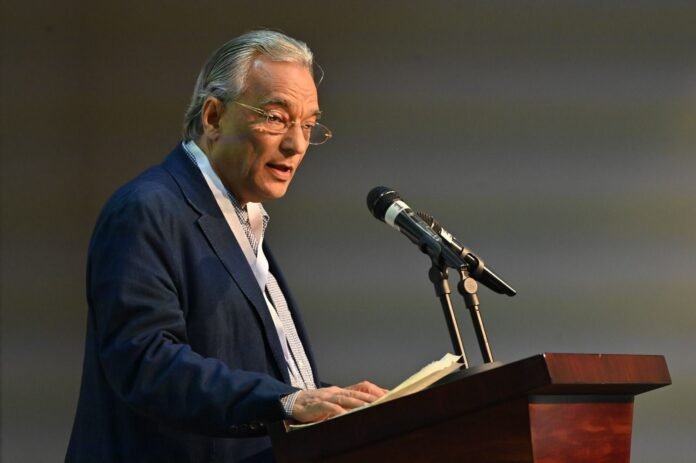

For decades, Dr. Puthur Rahman has been among the first people his party turns to whenever the Gulf requires organising — whether it is mobilising a vast expatriate network, arranging relief efforts or rallying the 60,000-strong KMCC community. By most accounts, he has delivered each time, quietly and efficiently. Yet when election seasons arrive and candidate lists begin to take shape, his supporters say the Gulf’s long-serving organisers rarely feature in the conversation. Rahman himself does not publicly dwell on it. Those who know him say that restraint reflects his style — a man who has spent decades working behind the scenes, content to let the work speak for itself.
____________________________________
FOR more than four decades, Dr. Puthur Rahman has lived in the emirate of Fujairah, helping generations of Indian expatriates navigate life in the Gulf — arranging medical care, organising emergency flights, raising relief funds and guiding community organisations.
Among Malayali expatriates in the United Arab Emirates, his name is widely known. Yet in Kerala’s political establishment, supporters say, the long arc of his work has received far less recognition than many believe it deserves.
Now in his seventies, Rahman’s story stretches across two countries and more than 45 years of public life — from a politically active student in Malappuram district to one of the most prominent community organisers among Gulf-based Keralites.
A turning point in 1980
Rahman was born on May 15, 1956, in Kottakkal in Kerala’s Malappuram district to Puthur Palliparamban Moidu Musaliyar. Friends from his early years recall a modest upbringing in which educational opportunities often depended on the support of others in the community.
He studied in Kottakkal and later at Farook College, earning a Bachelor of Arts degree in Arabic from the University of Calicut along with the traditional Afzal-ul-Ulama qualification.
During his student years he became active in the Muslim Students Federation (MSF), the student wing associated with the Indian Union Muslim League. He served as a district secretary of MSF and as a councillor at Calicut University, later becoming secretary of the Muslim Students Movement.
But events in July 1980 dramatically changed his life.
Thousands of MSF and Youth League activists had gathered at the Malappuram district collectorate to protest the removal of Arabic, Urdu and Sanskrit from the school curriculum. Police opened fire during the demonstration, and Rahman was among those injured.
After his discharge from hospital, he said, he faced legal accusations linked to the death of a police officer who had collapsed during the protest. Supporters insisted the charges were unfounded, but friends advised him to leave the country temporarily.
Within weeks, he obtained a visa and travelled to Fujairah in the United Arab Emirates.
“I never planned to come to the UAE,” Rahman has often said in public speeches. “But sometimes destiny has other plans.”
A difficult beginning
Life in the Gulf began with hardship. Despite his academic qualifications, Rahman spent his first year working as a mechanic in a workshop.
In later interviews he recalled the emotional strain of that period.
“I cried many nights,” he once said. “Young people today cannot imagine that someone with a degree would be cleaning engines. But when you have no other choice, you accept whatever work comes.”
A chance event soon altered his path
One afternoon in 1981 he joined a local football game where a team was short of a player. His performance drew the attention of Sheikh Saleh, a member of Fujairah’s ruling circle, who asked about his education and later offered him employment.
Over the following years Rahman moved into administrative work within the ruler’s private office. By the early 1990s he had become a manager in the private affairs department of the office of Fujairah’s ruler, a role he continues to hold.
Building a diaspora network
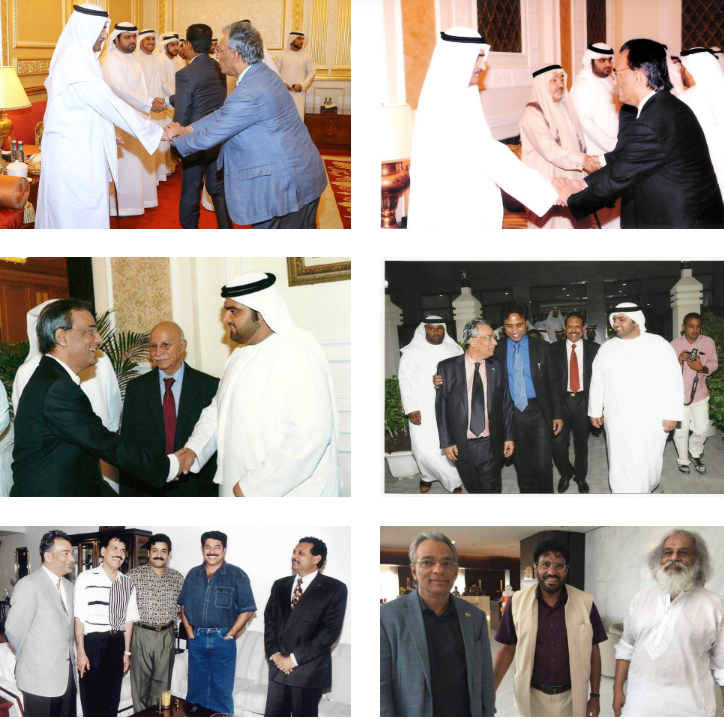
Alongside his professional career, Rahman built a parallel life in community service.
In the mid-1980s he became involved in the Kerala Muslim Cultural Centre (KMCC), which had been established to support expatriates from Kerala living in the Gulf.
Over time the organisation grew into a vast volunteer network with tens of thousands of members across the United Arab Emirates. Rahman eventually rose to become president of the KMCC’s UAE national committee.
The group assists migrant workers with medical aid, blood donations, legal advice and emergency financial support. It also helps arrange the repatriation of deceased expatriates and provides scholarships for students in Kerala.
Those who have worked with Rahman say his leadership helped transform the organisation into a rapid-response network during times of crisis.
Floods and pandemic
When severe floods devastated Kerala in 2018, the KMCC mobilised fundraising campaigns across the Gulf. Containers of relief supplies were dispatched from the UAE while expatriate workers contributed portions of their salaries to support recovery efforts.
But the scale of the organisation’s work became most visible during the COVID-19 pandemic.
As flights were suspended and many expatriates lost their jobs, Rahman and his colleagues helped coordinate charter flights for stranded workers returning to Kerala. Volunteers also distributed hundreds of thousands of food and grocery kits during lockdown periods.
Special arrangements were organised for pregnant women, the elderly and those with serious medical conditions.
Community organisers say the effort involved coordination with airlines, volunteers and donors across multiple Gulf countries.
A personal health battle
Rahman himself faced a life-threatening medical challenge in 2012. After a long wait for treatment, doctors at King’s College Hospital in London informed him that a compatible liver donor had been found. The transplant surgery, carried out by a team led by prominent specialists, was successful.
Rahman later described February 24, 2012 — the day of the surgery — as his “second birthday”. Within months he returned to Fujairah and resumed his work.
Scholar and author
Beyond his humanitarian work, Rahman has also pursued academic and literary interests.
He holds a doctorate in Islamic studies from a US-based international university and has written numerous articles for newspapers and journals in India and the Gulf.
He has published five books in Malayalam and English, including Destiny, a memoir about his life journey, and several works reflecting on social and political developments in India.
Friends say his writing was strongly influenced by the late Syed Mohammed Ali Shihab Thangal, a prominent leader of the Indian Union Muslim League whose emphasis on education and social development shaped Rahman’s outlook.
Roles and recognition
Over the years Rahman has held positions in numerous organisations linked to the expatriate community and educational initiatives in Kerala.
These include roles in Indian social clubs, NRI coordination bodies, educational trusts and charitable foundations.
He has also served as a member of the Loka Kerala Sabha, an advisory body representing the global Malayali diaspora.
His contributions have been recognised through various community and media awards, including honours for social service and diaspora leadership.
In 2023, authorities in Fujairah presented him with a special recognition for his role in mobilising support during Kerala’s flood relief efforts.
A voice for expatriates
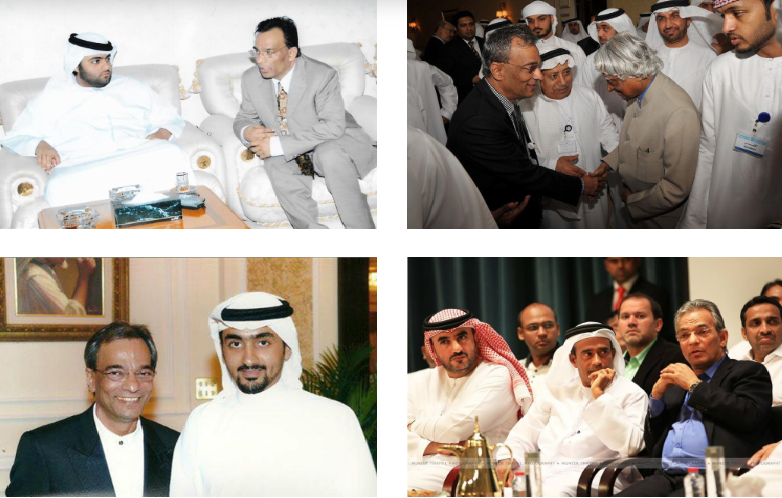
Among Gulf-based Malayalis, Rahman is often described as one of the most accessible community leaders — someone who answers phone calls at odd hours to help resolve emergencies involving workers, families or travel.Supporters say his decades of work have made him a natural representative of the expatriate community. With more than 3 million Keralites living abroad, many expatriates believe leaders who have spent their lives working with migrant communities deserve greater representation in Kerala’s political system. Rahman himself rarely comments directly on such matters. Instead he often repeats a simple philosophy that has guided his work for decades: “Be a human first.”
A life between two homes:
Today Rahman continues to live in Fujairah with his family, still active in community organisations and charitable initiatives. More than forty-five years after arriving in the Gulf as a young man seeking refuge from political turmoil, he remains deeply connected to the diaspora community that grew alongside him. For many Malayalis in the Emirates, his story reflects the broader experience of the Gulf migration itself — a journey marked by hardship, resilience and a long commitment to helping others along the way.