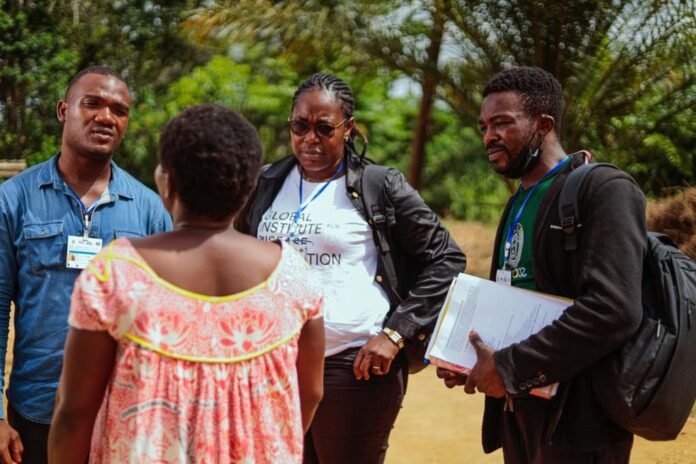


ABU DHABI, United Arab Emirates — The Global Institute for Disease Elimination (GLIDE) on Tuesday announced the winners of its Falcon Awards for Disease Elimination Integration Edit, recognizing 14 organizations advancing research and advocacy aimed at accelerating the elimination of infectious diseases through integrated approaches.
Selected from a competitive global field, the winning projects form a single, diverse cohort spanning Africa, the Middle East and the Americas. Together, they reflect a shared commitment to breaking down silos across disease programs and strengthening links among research, policy, advocacy and implementation.
The Falcon Awards are designed to spur innovation and collaboration by supporting projects that show how integration across diseases, sectors and systems can deliver greater impact, sustainability and resilience in elimination efforts.
The Integration Edit emphasizes bridging research and advocacy, strengthening surveillance and diagnostics, advancing vector control, and embedding elimination initiatives within national health systems.
“The Falcon Awards catalyze evidence-driven action to advance disease elimination through integrated, real-world solutions,” said Dr. Farida Al Hosani, CEO of GLIDE. “This cohort reflects the power of collaboration across borders and disease areas, and the critical role of locally grounded leadership in driving sustainable progress.”
GLIDE will work closely with each awardee throughout the life of the projects, supporting design, policy alignment, monitoring and dissemination of outcomes. The approach is intended to ensure that evidence generated through the awards contributes to national, regional and global elimination agendas.
The latest cohort includes advocacy-focused and research-driven initiatives addressing malaria, lymphatic filariasis, onchocerciasis, polio, dengue and other neglected tropical diseases. Projects range from AI-enabled multiplex diagnostics and integrated vector control to domestic financing advocacy and community-led resilience models.
Collectively, the projects represent an investment of about $2.6 million. While varied in geography and methodology, each is aimed at generating actionable evidence, strengthening policy and advocacy pathways, and accelerating progress toward disease elimination through integration.