
MUMBAI, India – India’s Ministry of External Affairs has recorded more than 16,000 grievances from Indian nationals abroad over a 23-month period, with the majority originating from Gulf Cooperation Council countries, official data released in Parliament shows.
Between 1 January 2024 and 30 November 2025, a total of 16,127 complaints were registered through government channels, primarily the MADAD portal (11,195 cases) and the Centralized Public Grievance Redress and Monitoring System (4,932 cases).
Saudi Arabia accounted for the highest number at 3,049, followed by the United Arab Emirates with 1,587. Other countries in the top ten included Malaysia (662), the United States (620), Oman (613), Kuwait (549), Canada (345), Australia (318), the United Kingdom (299) and Qatar (289).
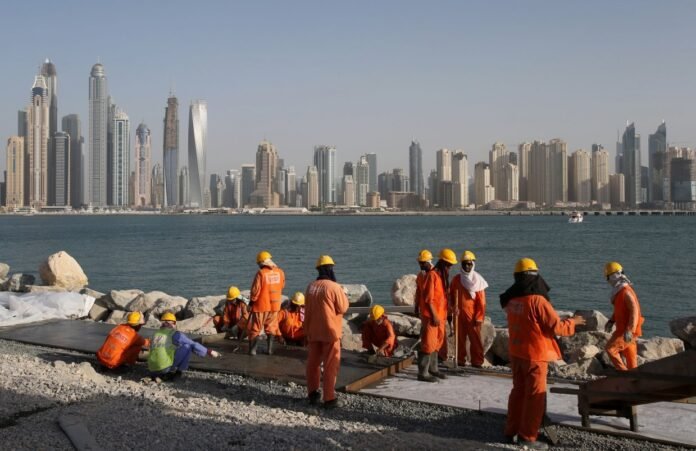
The grievances largely concern low-skilled and semi-skilled workers employed in construction, domestic service, hospitality and retail sectors. Reported issues include fraudulent recruitment practices, delayed or unpaid wages, workplace injuries, passport retention, denial of labour rights and delays in repatriating the remains of deceased workers.
These challenges affect families in India, who often face financial and emotional hardship as a result.
The high volume of complaints from Saudi Arabia and the UAE reflects the substantial Indian communities in both countries, estimated at approximately 2.75 million in Saudi Arabia and over 4.3 million in the UAE, according to Ministry figures.
Migration flows to the Gulf remain robust. In 2025, the UAE emerged as the leading destination for Indian blue-collar workers requiring emigration clearance, with 200,686 departures compared with 136,812 to Saudi Arabia.
In Saudi Arabia, authorities implemented significant labour reforms in 2025, including the replacement of the longstanding kafala sponsorship system with a contract-based employment model. The change aims to provide greater job mobility, facilitate exit and re-entry without sponsor approval, and strengthen access to grievance mechanisms through digital platforms.
Officials note that while the reform represents progress under Saudi Vision 2030, effective enforcement remains essential to address ongoing concerns such as recruitment irregularities and working conditions.
The Ministry of External Affairs maintains a comprehensive support framework for affected citizens. Services include round-the-clock multilingual helplines, consular assistance at embassies and consulates, walk-in facilities, social media channels, community outreach programmes and Pravasi Bharatiya Sahayata Kendras in major locations such as Dubai, Riyadh and Jeddah.
The Indian Community Welfare Fund provides emergency aid covering medical treatment, legal support, temporary accommodation, repatriation and transportation of mortal remains. Missions engage directly with employers and local labour authorities to facilitate resolutions.
Indian authorities encourage nationals encountering difficulties to register complaints promptly via the MADAD portal (madad.gov.in), CPGRAMS, the e-Migrate system or their nearest diplomatic mission.
Remittances from the Gulf continue to play a vital role in India’s economy, and bilateral cooperation seeks to promote safer, more equitable migration pathways through ongoing dialogue, skill enhancement programmes and labour agreements.